
Key Points
Sensex and Nifty50 fell nearly 1% on April 30, 2026, due to profit booking and weak global cues
Vedanta stayed in focus after the demerger-led price adjustment and strong commodity-driven outlook
HUL saw defensive buying as investors shifted toward stable FMCG stocks amid volatility
Meesho gained attention as optimism grew around India’s startup and e-commerce sector
Indian stock markets turned sharply lower on April 30, 2026, with the Sensex and Nifty50 slipping nearly 1% during volatile trading sessions. Rising global uncertainty, profit booking, and weak investor sentiment pressured major sectors like banking and IT. Yet a few names stood out from the broader decline.
Vedanta gained attention on strong demerger buzz, HUL attracted defensive buying, while Meesho sparked fresh interest in India’s startup economy. These stocks became the center of market conversations as traders searched for opportunities amid uncertainty.
Why Did Sensex and Nifty50 Fall Nearly 1%?
Indian stock markets turned weak on April 30, 2026, as investors booked profits after recent gains. The BSE Sensex crashed nearly 1,200 points during intraday trade, while the Nifty50 slipped close to the 23,800 level. Selling pressure was visible across banking, IT, and auto stocks. Market sentiment also remained cautious ahead of key global economic signals and corporate earnings announcements.
Global uncertainty added more pressure to equities. Rising crude oil prices, weak Asian markets, and foreign institutional investor (FII) selling pushed traders toward defensive positions. Investors also stayed alert ahead of the US Federal Reserve policy outcome and fresh inflation data.
Vedanta Shares Remain in Focus Despite Market Weakness
Why Did Vedanta Stock Suddenly Crash?
Vedanta shares created confusion in the market after appearing to crash nearly 63-65% on April 30. However, the sharp decline was mainly because the stock started trading ex-demerger. The company adjusted the share price after separating four businesses under its restructuring plan.
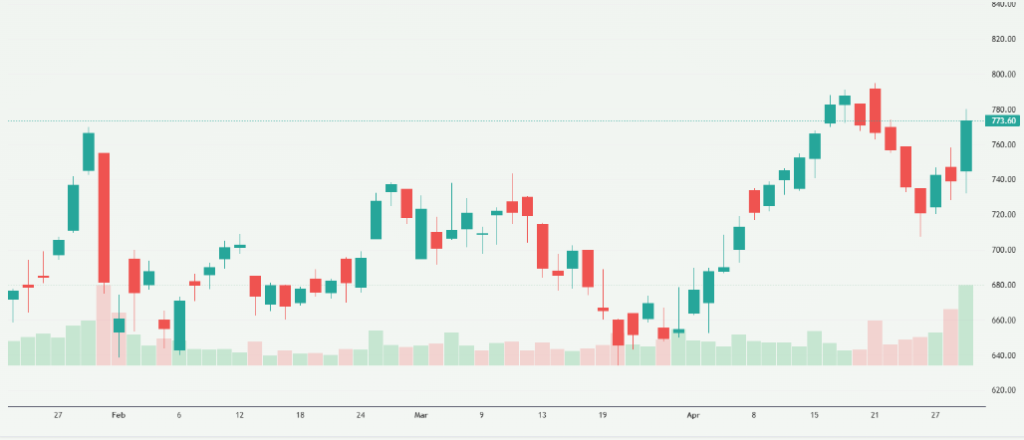
The stock opened near ₹289.50 on NSE after the adjustment. In reality, analysts said the actual value erosion was only around 5%.
What Is Driving Investor Interest in Vedanta?
Several factors are keeping Vedanta in the spotlight:
- Demerger expectations
- Strong dividend history
- Rising metal prices
- Strong quarterly earnings momentum
Vedanta recently reported strong Q4 FY26 performance. Profit jumped nearly 88.5% year-on-year, while revenue climbed 47.5%. The company also continues to benefit from strength in aluminum, zinc, and copper prices.
Vedanta Stock Details and Forecast
Short Stock Overview
Vedanta Limited is one of India’s largest diversified natural resources companies. It operates across metals, mining, oil, gas, and power businesses.
Key highlights:
- 52-week high: ₹795
- 52-week low: ₹268.70
- Dividend yield: Around 5.62%
- Promoter holding: 56.38% as of March 2026
Technical Analysis Summary
Technical analysts remain cautiously positive on Vedanta after the demerger adjustment.
Important levels:
- Immediate support: ₹260-270
- Resistance zone: ₹320-350
- Long-term trend: Positive due to commodity strength
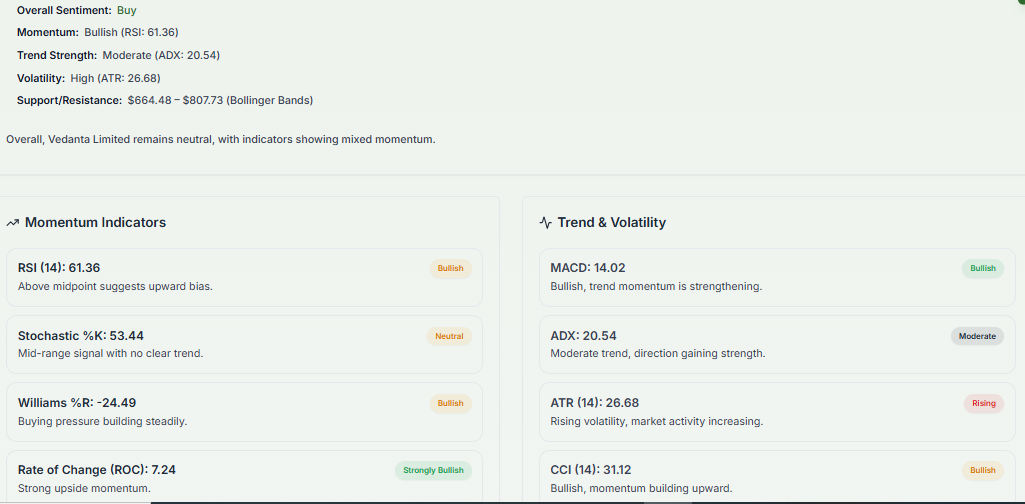
Analysts believe volatility may stay high in the short term because of the demerger transition.
What Meyka Says About Vedanta?
Meyka analysts reportedly view Vedanta as a long-term value play driven by:
- Commodity demand growth
- High dividend payouts
- Potential value unlocking after demerger
However, the platform also highlights risks from:
- Global commodity price swings
- Debt levels
- Regulatory uncertainties
What are Other Analysts Saying About Vedanta?
Brokerages remain mostly positive on the stock. According to Investing.com consensus data:
- Average 12-month target: Around ₹857
- Highest target: ₹960
- Lowest target: ₹729
- Most analysts maintain a “Buy” rating
Motilal Oswal estimates Vedanta’s possible 2026 valuation range between ₹480 and ₹686, depending on commodity cycles and debt reduction progress. Analysts believe stronger metal demand and improving cash flows could support future growth.
Why Is HUL Gaining Attention During Market Volatility?
Are Investors Moving Toward Defensive Stocks?
Yes. During uncertain markets, investors usually prefer stable sectors like FMCG. That is why Hindustan Unilever Limited attracted buying interest even as benchmark indices declined.
HUL is seen as a defensive stock because:
- Demand for daily-use products stays stable
- Cash flows remain strong
- Earnings are less volatile
What Is Supporting HUL Shares?
Investors are watching:
- Rural demand recovery
- Stable margins
- Lower raw material inflation
Market experts also expect steady Q4 FY26 earnings from the FMCG giant.
Why Did Meesho Become One of the Most Buzzing Names?
Is Investor Confidence Returning to Startup-Linked Businesses?
E-commerce platform Meesho became one of the most discussed names despite weak broader markets. Reports suggested strong investor optimism around India’s digital retail and startup ecosystem.
The company is benefiting from:
- Growing online shopping penetration
- Focus on profitability
- Expansion into smaller Indian cities
Analysts believe improving funding sentiment is helping startup-linked businesses regain market attention.
Why Does Meesho Matter for India’s Startup Sector?
Meesho represents India’s rapidly growing digital commerce industry. Investors are increasingly interested in companies that show:
- Revenue growth
- Better unit economics
- Strong customer expansion
The startup sector is slowly shifting from aggressive spending toward sustainable profitability models.
Which Sectors Performed Best and Worst Today?
Top Losing Sectors
The biggest pressure came from:
- Banking stocks
- IT companies
- Auto shares
Heavyweight financial stocks dragged benchmark indices lower throughout the session.
Which Sectors Outperformed?
Some sectors remained relatively strong:
- Metals
- FMCG
- Energy
Metal companies benefited from positive commodity trends, while FMCG stocks gained from defensive buying interest.
Wrap Up
The sharp fall in Sensex and Nifty50 on April 30, 2026, reflected growing caution in global and domestic markets. Still, stocks like Vedanta, HUL, and Meesho managed to stay at the center of investor attention due to strong sector themes and company-specific developments. While short-term volatility may continue, analysts believe selective opportunities remain available in metals, FMCG, and digital commerce segments for investors willing to stay focused on long-term fundamentals.
Disclaimer:
The content shared by Meyka AI PTY LTD is solely for research and informational purposes. Meyka is not a financial advisory service, and the information provided should not be considered investment or trading advice.
What brings you to Meyka?
Pick what interests you most and we will get you started.
I'm here to read news
Find more articles like this one
I'm here to research stocks
Ask Meyka Analyst about any stock
I'm here to track my Portfolio
Get daily updates and alerts (coming March 2026)