
Key Points
Asian stocks slipped as rising oil prices and Fed uncertainty weakened investor confidence
Brent crude surged above $120 per barrel amid Middle East supply concerns
Mixed Big Tech earnings raised fresh questions about costly AI investments
Higher U.S. bond yields and a stronger dollar pressured Asian markets and currencies.
The Asian stocks moved lower on April 30, 2026, as investors reacted to rising oil prices, fresh Federal Reserve signals, and mixed earnings from major U.S. tech companies. Brent crude climbed above $120 per barrel, increasing concerns about inflation and global economic pressure.
At the same time, uncertainty around future U.S. interest rate cuts added caution across financial markets. Strong AI-driven earnings from some tech giants offered support, but growing spending costs continued to keep investors on edge.
Asian Markets Slip as Investors Turn Cautious
Asian stock markets traded lower on April 30, 2026, as investors reacted to rising oil prices, uncertainty around U.S. interest rates, and mixed earnings from major technology companies. The MSCI Asia-Pacific index fell nearly 1%, while Japan’s Nikkei dropped 1.4% and Hong Kong’s Hang Seng declined 1.2%. Investors moved toward safer assets as market volatility increased.
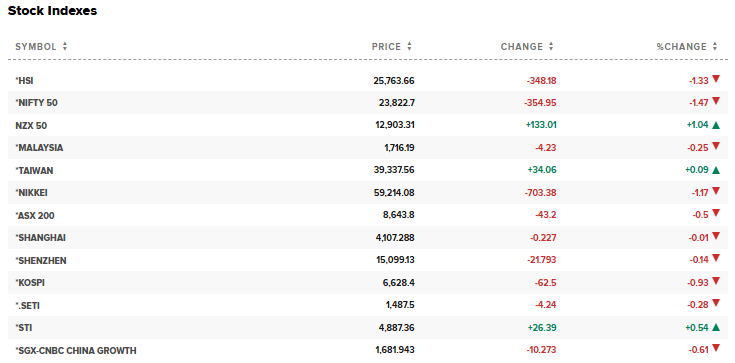
The pressure came from three major factors:
- Brent crude oil surged above $120 per barrel
- The Federal Reserve signaled a divided policy outlook
- Big Tech earnings raised fresh questions about AI spending
These developments pushed bond yields higher and weakened confidence across global equity markets.
Oil Rally Becomes the Biggest Risk for Asian Stocks
Why are Oil Prices Rising So Fast?
Oil prices climbed sharply after concerns grew over supply disruptions in the Middle East. Brent crude jumped more than 6% and briefly touched a four-year high near $125 per barrel. Reports suggested the U.S. could consider stronger military action related to Iran, increasing fears around supply routes near the Strait of Hormuz.
The market is also reacting to:
- Ongoing U.S.-Iran tensions
- Reduced Middle East oil exports
- The UAE’s decision to exit OPEC
- Concerns over future global energy shortages
Reuters reported that investors now expect oil prices to remain elevated longer than previously expected.
How Does Higher Oil Hurt Asian Markets?
Most Asian economies depend heavily on imported energy. Rising oil prices increase transportation and manufacturing costs, which can slow economic growth and raise inflation. Countries under pressure include:
- Japan
- India
- South Korea
- China
India, the world’s third-largest oil importer, already faces inflation concerns as Brent crude trades above $115 per barrel.
Higher fuel prices also reduce consumer spending and hurt company profits. Investors worry that central banks may keep interest rates higher for longer to control inflation.
Federal Reserve Outlook Adds Pressure to Global Markets
What Did the Fed Announce?
The U.S. Federal Reserve kept interest rates unchanged during its April 2026 meeting. However, the decision revealed the biggest policy split since 1992. Three Fed officials opposed the current easing bias because of inflation concerns linked to rising oil prices. This created uncertainty about future rate cuts.
Traders are now betting that:
- The Fed may not cut rates in 2026
- Interest rates could stay elevated into 2027
- Future hikes are possible if inflation worsens
Reuters reported that markets reduced expectations for policy easing almost immediately after the Fed statement.
Why are Bond Yields and the Dollar Rising?
After the Fed announcement, U.S. Treasury yields climbed to multi-month highs. The stronger dollar also pressured Asian currencies, especially the Japanese yen, which weakened beyond 160 per dollar.
Higher bond yields usually hurt stocks because investors shift money into safer fixed-income assets. Technology and growth stocks often face the biggest pressure because higher rates reduce the value of future earnings.
Tech Earnings Deliver Mixed Signals to Investors
Which Tech Companies Beat Expectations?
Several major U.S. technology companies reported strong earnings driven by artificial intelligence demand. Companies showing strong results included:
Cloud computing and AI infrastructure spending remained strong, helping support Nasdaq futures despite broader market weakness. Analysts say AI remains one of the biggest growth drivers in global markets.
According to LSEG data, expectations for 2026 earnings growth jumped from 16% earlier this year to nearly 20%, largely because of technology companies.
Why are Investors Worried About AI Spending?
Despite strong revenue growth, investors remain concerned about rising AI costs. Meta Platforms faced selling pressure after increasing its AI capital expenditure forecast. Shares dropped more than 6% after earnings.
The market now wants proof that massive AI investments can generate long-term profits. Some analysts also worry that:
- AI infrastructure spending is becoming too expensive
- Returns may take years to appear
- Market valuations are becoming stretched
Reuters noted that investors are growing impatient for measurable returns from AI spending.
Asian Semiconductor Stocks Remain in Focus
Are AI Chips Still Driving Market Growth?
Yes. Semiconductor companies linked to AI demand continue attracting investor attention. South Korean chipmakers performed better than the broader market because of strong demand for high-bandwidth memory chips used in AI systems. Taiwan and South Korea remain central to the global AI supply chain.
However, profit-taking activity in some semiconductor stocks limited gains across the region. Investors are now closely watching:
- AI server demand
- Chip exports
- Cloud infrastructure growth
- Future earnings guidance
What Meyka Says About Current Market Sentiment?
According to Meyka AI, investors are entering a high-volatility environment where oil prices, inflation, and AI spending trends are all moving markets at the same time.
Meyka Technical Analysis Summary
Meyka highlights several important market signals:
- Rising oil prices are increasing inflation risks globally
- Higher Treasury yields are pressuring growth stocks
- AI-related momentum remains strong despite valuation concerns
- Semiconductor stocks continue leading long-term tech optimism
Supporting Insights From Other Analysts
Reuters analysts noted that markets are struggling to balance strong AI growth with fears around inflation and geopolitical tensions.
Analysts from River Wealth Advisors also believe earnings growth remains the key support for equities, especially if AI demand continues accelerating.
Meanwhile, market strategists warn that prolonged oil strength could eventually hurt consumer demand and corporate profits worldwide.
Asian Stocks: What Investors Will Watch Next?
Several major events could shape market direction over the coming weeks. Key areas investors are monitoring include:
- Future developments in the Middle East conflict
- Oil price movements above $120
- Upcoming U.S. inflation and jobs data
- Additional Big Tech earnings reports
- Signals from the ECB and Bank of England
Volatility is expected to remain high as investors balance inflation risks against continued AI-driven growth.
Closing
Asian markets remain under pressure as rising oil prices, uncertain Fed policy, and mixed tech earnings continue to impact investor sentiment. While AI-driven growth supports semiconductor and cloud stocks, inflation fears and higher borrowing costs are keeping traders cautious in the near term.
Disclaimer:
The content shared by Meyka AI PTY LTD is solely for research and informational purposes. Meyka is not a financial advisory service, and the information provided should not be considered investment or trading advice.
What brings you to Meyka?
Pick what interests you most and we will get you started.
I'm here to read news
Find more articles like this one
I'm here to research stocks
Ask Meyka Analyst about any stock
I'm here to track my Portfolio
Get daily updates and alerts (coming March 2026)