
Key Points
Proxima Fusion raises €411 million from Google, RWE, and other investors.
Funding boosts Europe’s race toward commercial fusion energy.
Startup advances stellarator technology for future clean power plants.
Major engineering challenges remain before fusion reaches the grid.
On July 7, 2026, German fusion energy startup Proxima Fusion announced a €411 million funding round backed by major technology and energy companies, including Google and RWE. The investment supports the company’s plans to develop commercial fusion power using advanced stellarator technology. Proxima Fusion is working to address some of the technical challenges in fusion energy and bring the technology closer to future electricity generation.
Proxima Fusion Raises €411 Million in Landmark Energy Funding Round
Google and RWE Join Investors Backing Europe’s Fusion Ambitions
Proxima Fusion raised €411 million in a funding round announced on July 7, 2026. The German fusion startup received backing from major companies, including Google and RWE. The investment reportedly increased Proxima Fusion’s valuation to more than €2.4 billion, making it one of Europe’s highest-valued private fusion companies.
The funding comes as interest in fusion energy grows among technology and energy companies. Investors are looking at fusion as a possible long-term source of carbon-free electricity to meet rising demand from industries, data centers, and artificial intelligence infrastructure.
Why are Investors Turning Toward Fusion Energy?
Fusion energy is gaining attention because it could produce large amounts of electricity without creating the long-lived nuclear waste linked to traditional fission reactors. Unlike solar and wind power, fusion plants could potentially generate electricity continuously without depending on weather conditions.
Private investment in the global fusion sector has increased as companies work toward commercial reactor designs. Higher energy demand, climate targets, and the need for stable power sources are driving interest in fusion technology.
Inside Proxima Fusion’s Stellarator Technology and Reactor Vision
How Does Stellarator Fusion Technology Work?
Proxima Fusion is developing stellarator technology, a reactor design that uses powerful magnetic fields to control extremely hot plasma. The company’s work builds on research from the Max Planck Institute for Plasma Physics.
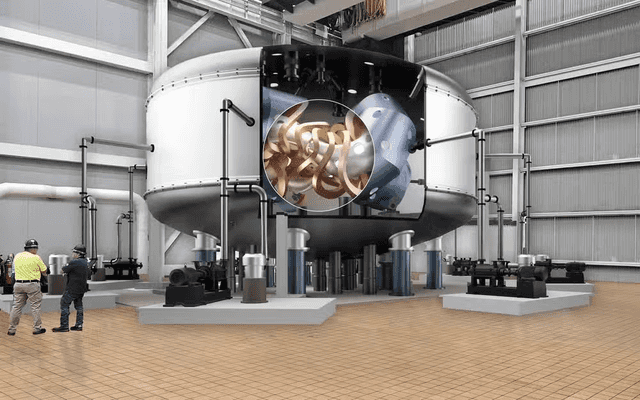
Stellarators differ from traditional tokamak reactors because they do not depend on a large electrical current passing through the plasma. This design could help improve plasma stability and support longer operating periods.
Proxima Fusion is focused on advanced quasi-isodynamic stellarators. These reactor designs aim to improve plasma control and increase the possibility of achieving practical fusion power.
Some potential advantages of stellarator technology include:
- Better plasma stability during long-duration operation
- Lower risk of plasma disruptions
- The possibility of continuous electricity generation
What Is Proxima Fusion’s Roadmap Toward Commercial Reactors?
Proxima Fusion plans to use the new funding to speed up reactor development and engineering work. The company is developing demonstration systems to test and validate its stellarator approach.
The startup has outlined plans for its Alpha demonstrator before moving toward commercial-scale fusion power plants. The company aims to support the development of Europe’s first private fusion reactors during the 2030s.
Germany’s Role in the Global Fusion Energy Race
Why Is Proxima Fusion Important for Europe’s Fusion Industry?
Proxima Fusion started as a spin-off from Germany’s Max Planck Institute for Plasma Physics. The company is part of Europe’s expanding private fusion sector, which is competing with fusion projects in the United States, China, and other regions.
Germany has increased support for advanced energy technologies as it works to reduce dependence on fossil fuels and improve energy security. Private investment from companies such as RWE brings industry experience to fusion research and development.
How Could RWE Support Future Fusion Deployment?
RWE has decades of experience in electricity generation and energy infrastructure. Its involvement could help connect fusion research with future commercial power projects.
The partnership between technology companies, utilities, and research institutions may help move fusion technology from experimental research toward practical energy systems.
Challenges Ahead Before Fusion Energy Becomes Commercial Reality
Fusion energy still faces major technical and financial barriers. Scientists and engineers need to achieve reliable net energy production and lower reactor construction costs before commercial fusion plants become possible.
Some major challenges include:
- Maintaining stable plasma conditions for extended periods
- Developing materials that can withstand extreme reactor environments
- Creating cost-effective designs for large-scale electricity generation
Although fusion research has advanced, no commercial fusion plant currently supplies electricity to the grid. Investors continue to support the sector because successful fusion technology could change how future energy systems operate.
AI-based platforms, including an AI stock analysis tool, are also helping investors study emerging technology sectors by tracking market trends, company performance, and investment risks.
What Proxima Fusion’s Funding Means for the Future of Clean Energy?
The €411 million investment gives Proxima Fusion more resources to develop its stellarator technology and compete in the global fusion industry. Support from Google, RWE, and other investors shows increasing private-sector interest in fusion energy development.
If Proxima Fusion succeeds in building practical stellarator reactors, the technology could contribute to future clean power generation. The company still needs to solve major engineering challenges before fusion can become a commercial energy source.
Conclusion
Proxima Fusion’s €411 million funding round gives the company new momentum as it develops stellarator-based fusion technology. Backing from Google, RWE, and other investors will support its research and reactor plans. While commercial fusion power remains years away, continued investment is helping companies like Proxima Fusion work toward making fusion electricity a possible part of future energy systems.
Disclaimer:
The content shared by Meyka AI PTY LTD is solely for research and informational purposes. Meyka is not a financial advisory service, and the information provided should not be considered investment or trading advice.
What brings you to Meyka?
Pick what interests you most and we will get you started.
I'm here to read news
Find more articles like this one
I'm here to research stocks
Ask Meyka Analyst about any stock
I'm here to track my Portfolio
Get daily updates and alerts (coming March 2026)