Oil Prices Drop Again: Brent Near $99, WTI Around $93 as US Offers Memo to Iran to Reopen Strait

Key Points
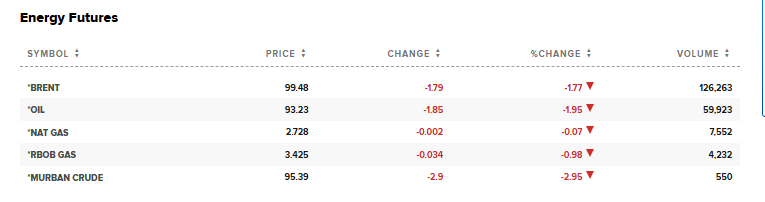
Oil prices fell, with Brent near $99 and WTI around $93 amid easing geopolitical tensions.
US-Iran memo talks raised hopes of reopening the Strait of Hormuz, reducing supply risk concerns.
Markets reacted to lower risk premiums, triggering sharp volatility in crude oil trading.
Analysts expect continued price swings depending on progress in peace negotiations.
Oil prices slipped again on May 7, 2026, as global markets reacted to fresh geopolitical signals. Brent crude hovered near $99 per barrel, while WTI stayed around $93. Traders responded to reports that the United States sent a memo to Iran about restarting talks and easing tensions around the Strait of Hormuz. The news added pressure on crude benchmarks and kept investors alert. Markets remain volatile as traders watch for further diplomatic updates in May 2026.
Why are Oil Prices Falling Despite Middle East Tensions?
Oil prices are dropping mainly due to easing fears of supply disruption in the Strait of Hormuz. Recent reports show that the US and Iran are discussing a one-page memorandum to restart negotiations and reduce conflict risks.
Key market drivers:
- Brent crude slipped near $99 per barrel after an 8% fall in a single session
- WTI hovered around $93 per barrel, reflecting soft demand pressure
- Traders reduced the “risk premium” after reports of diplomatic progress
- Expectations of a gradual reopening of shipping lanes boosted the supply outlook
Markets are highly sensitive right now. Even small political updates are moving crude prices sharply within hours.
What Is Happening With the US-Iran Memo?
The United States has reportedly shared a draft memorandum of understanding with Iran. The goal is to restart peace talks and reduce military tension in the region.
According to market reports:
- The memo suggests a phased reopening of the Strait of Hormuz
- Talks are focused on ending shipping disruptions and stabilizing energy flows
- Investors see this as a “soft de-escalation signal.”
Recent news confirms that optimism over this memo triggered a sharp drop in crude futures across global markets. However, analysts warn that no final agreement exists yet. This means volatility is still very high.
Why the Strait of Hormuz Controls Global Oil Prices?
The Strait of Hormuz is one of the most important energy routes in the world.
- Around 20% of global oil passes through it
- It connects Gulf producers to Asia, Europe, and the US
- Any closure instantly increases global oil prices
Recent disruptions have already impacted supply chains:
- Tanker traffic dropped significantly in early 2026
- Asia saw a sharp decline in refined fuel exports
- Jet fuel prices rose by more than 50-70% in some markets
Because of this, even rumors about reopening or closing the Strait can move oil prices by 5-10% in a single day.
Latest Brent vs WTI Price Trend
Current crude oil trading shows strong volatility:
- Brent crude: near $99-103 per barrel range
- WTI crude: around $92-95 per barrel range
Recent movement pattern:
- Sharp 6–11% drop after peace deal expectations
- Temporary rebounds when tensions return
- Intraday swings driven by news headlines, not demand fundamentals
Oil markets are currently behaving like a geopolitical trading asset rather than a pure commodity. This makes short-term forecasting difficult.
Technical Market View and Analyst Sentiment
From a technical standpoint, oil is showing weak momentum below the $100 Brent psychological level.
Key signals:
- Resistance forming near $102–$105 Brent zone
- Support levels seen around $95–$97 Brent range
- High volatility indicates an uncertain market direction
Analyst view:
- Some expect stabilization if diplomacy continues
- Others warn of a sharp rebound if talks collapse
- Long-term supply remains tight due to regional disruption risks
AI-based stock and commodity analysis tools also show a neutral-to-bearish short-term trend, mainly due to easing geopolitical risk pricing and improved supply expectations.
What Happens Next for Oil Prices?
Oil direction now depends on three key factors:
- US-Iran negotiations progress
- Strait of Hormuz access stability
- Global demand recovery in Q2 2026
If talks succeed, Brent may stay below $100 per barrel. If negotiations fail, prices could quickly jump back above $110-115 due to renewed supply fears. Markets are expected to remain highly reactive to political headlines throughout May 2026.
Final Words
Oil prices remain under pressure as Brent nears $99 and WTI holds around $93. The US-Iran memo has temporarily eased supply fears, pushing prices lower. However, uncertainty around the Strait of Hormuz keeps markets unstable. Until a final agreement is reached, crude oil will continue to swing sharply based on geopolitical news and shifting investor sentiment.
Disclaimer:
The content shared by Meyka AI PTY LTD is solely for research and informational purposes. Meyka is not a financial advisory service, and the information provided should not be considered investment or trading advice.
What brings you to Meyka?
Pick what interests you most and we will get you started.
I'm here to read news
Find more articles like this one
I'm here to research stocks
Ask Meyka Analyst about any stock
I'm here to track my Portfolio
Get daily updates and alerts (coming March 2026)