
Key Points
Micron urges stricter U.S. controls on chip equipment sales to China to limit competition
The MATCH Act aims to close loopholes and align export rules with global allies
Focus shifts from chips to manufacturing tools that power future production
Risk of global supply chain split and faster China self-reliance in semiconductors
In April 2026, the U.S. semiconductor debate took a sharper turn. Micron Technology urged lawmakers to tighten rules on selling chipmaking equipment to China. This comes as global chip demand surges, driven by AI, data centers, and smart devices.
The semiconductor market is expected to approach $1 trillion in value in the coming years. But instead of focusing only on advanced chips, attention is shifting to the machines that make them. These tools are harder to replace and critical for future production. The proposed MATCH Act aims to close gaps in current export controls. The big question now is simple: can restricting equipment slow China’s tech rise, or will it speed up its independence?
What Micron Is Asking From US Lawmakers?
Why is Micron pushing for stricter export controls?
In April 2026, Micron Technology increased pressure on U.S. lawmakers to tighten rules on chipmaking equipment exports to China. The company believes current restrictions are not strong enough.
Micron’s main concerns include:
- Chinese firms are gaining access to advanced manufacturing tools
- Faster development of domestic memory chips in China
- Rising competition in the DRAM and NAND markets
Micron argues that limiting equipment access will slow China’s ability to scale advanced chip production.
What is the MATCH Act, and why does it matter?
The MATCH Act (Multilateral Alignment of Technology Controls on Hardware) aims to strengthen export controls. Key goals:
- Expand licensing requirements for chip equipment exports
- Restrict servicing and maintenance support
- Align policies with allies like Japan and the Netherlands
Are there loopholes in current export rules?
Yes. Current policies still allow:
- Indirect access through third countries
- Equipment servicing after initial sales
- Technology transfer via subsidiaries
Lawmakers want to close these gaps to prevent long-term access.
Why Chip Equipment Matters More Than Chips?
What makes chipmaking equipment so critical?
Semiconductor equipment is the backbone of chip production. Without it, even advanced designs cannot be manufactured. Key tools include:
- Lithography machines
- Etching and deposition systems
- Testing and packaging equipment
These machines are complex and controlled by a few global players.
How has the US strategy changed recently?
Earlier, the U.S. focused on banning advanced chips. Now, the focus has shifted upstream. New strategy:
- Control the tools, not just the output
- Target production capability instead of finished products
This makes restrictions more effective over the long term.
Why is enforcement difficult?
Once equipment enters China, tracking usage is hard. Companies may:
- Modify tools
- Repurpose machines
- Reverse engineer technology
National Security vs Economic Interests
Is this about security or competition?
It is both.
From a security view:
- Chips power AI, defense systems, and surveillance
- Limiting access protects national interests
From a business view:
- U.S. firms want to protect market share
- China is a fast-growing competitor
How does this impact Micron’s position?
Micron competes directly with Chinese memory firms like YMTC and CXMT. Risks for Micron:
- Price competition
- Market share loss
- Government-backed Chinese expansion
Restricting equipment helps slow this threat.
What are industry concerns?
Not all companies agree. Concerns include:
- Loss of revenue from China sales
- Reduced global demand
- Risk of retaliation
Key Provisions of the MATCH Act
Which companies are being targeted?
The bill focuses on major Chinese chipmakers:
- SMIC
- YMTC
- CXMT
These firms are central to China’s semiconductor growth.
Will allies follow the same rules?
The U.S. wants global alignment. Countries involved:
- Netherlands (ASML)
- Japan (Tokyo Electron)
If allies do not comply, the U.S. may act alone.
What restrictions are included?
The Act goes beyond simple export bans. It includes limits on:
- Equipment sales
- Spare parts supply
- Technical support
- Software updates
This creates a full ecosystem restriction.
Has the bill changed recently?
Yes. Earlier versions were stricter. Some rules were softened due to industry pressure.
Global Semiconductor Supply Chain Impact
Will this affect global companies?
Yes. Many firms rely on China for revenue. Impact areas:
- Equipment makers may lose a major market
- Supply chains may shift to other regions
- Costs may rise globally
Is the industry heading toward fragmentation?
There is a growing risk of a split ecosystem. Two possible blocs:
- U.S. and allies
- China and partner nations
This could reshape global tech trade.
Will China become more self-reliant?
Restrictions often accelerate innovation. China may:
- Invest heavily in local equipment
- Develop alternative technologies
- Reduce dependence on foreign suppliers
Market Reactions and Industry Trends
How are markets reacting?
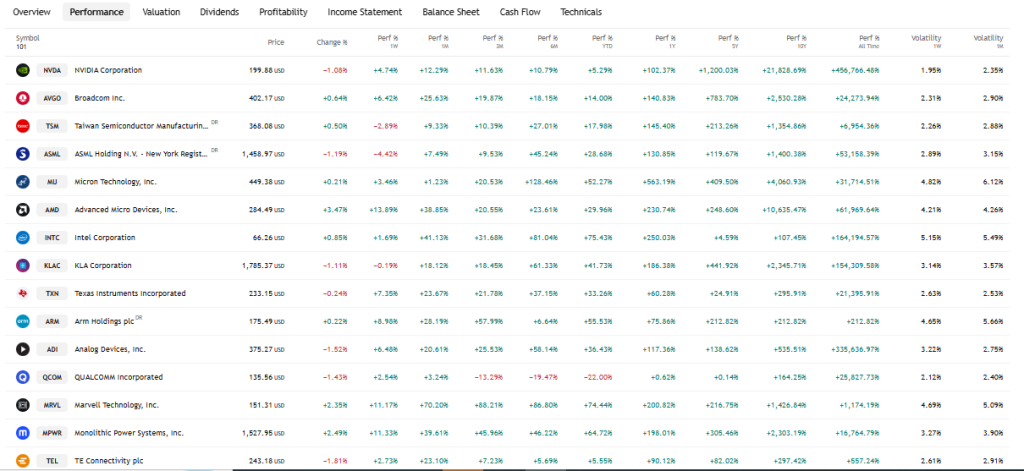
Semiconductor stocks show volatility after policy news. Key trends:
- Equipment stocks face uncertainty
- AI-driven demand remains strong
- Long-term growth outlook stays positive
What is driving chip demand in 2026?
Major growth drivers include:
- Artificial intelligence
- Cloud computing
- Electric vehicles
- 5G infrastructure
The global semiconductor market is moving toward $1 trillion in value.
What role does data analysis play here?
Investors are increasingly using platforms like AI stock analysis tool systems to track policy risks and predict sector movement. These tools help interpret complex geopolitical signals.
What Happens Next? Policy Outlook
Will the MATCH Act pass soon?
The bill is still in progress. Next steps:
- House approval
- Senate review
- Possible inclusion in defense legislation
How important is global coordination?
Very important. Without allies, restrictions may fail. The U.S. is negotiating with:
- Netherlands
- Japan
Alignment will decide effectiveness.
How might China respond?
China is expected to:
- Criticize the move as protectionism
- Increase domestic investment
- Introduce countermeasures
Final Words
Micron’s push highlights a major shift in the tech battle. The focus is no longer just on chips, but on the tools behind them. The MATCH Act could slow China’s progress, but it may also push faster innovation inside China. Global supply chains face uncertainty. The next few months will be critical as lawmakers, companies, and countries decide the future direction of the semiconductor industry.
Disclaimer:
The content shared by Meyka AI PTY LTD is solely for research and informational purposes. Meyka is not a financial advisory service, and the information provided should not be considered investment or trading advice.
What brings you to Meyka?
Pick what interests you most and we will get you started.
I'm here to read news
Find more articles like this one
I'm here to research stocks
Ask Meyka Analyst about any stock
I'm here to track my Portfolio
Get daily updates and alerts (coming March 2026)