
Key Points
Gold holds near $4,117 as safe-haven demand stays strong amid Iran tensions.
Fed meeting minutes are expected to guide the next move in gold prices.
Higher oil prices are raising inflation concerns and supporting bullion demand.
Stronger US dollar and Treasury yields continue to limit gold's upside potential.
On July 8, 2026, gold traded near $4,117 per ounce prices as investors weighed growing tensions between the United States and Iran against expectations for the Federal Reserve’s latest meeting minutes. Safe-haven demand continued to support the precious metal, even as a stronger US dollar and higher Treasury yields capped gains. With oil prices moving higher and inflation concerns resurfacing, traders are watching closely to see where gold heads next.
Gold Holds Near $4,117 as Investors Seek Safety
Gold remained close to $4,117 per ounce on July 8 as geopolitical tensions and expectations around US monetary policy kept investors cautious. During Asian trading, spot gold recovered from an earlier decline and traded around $4,128, while US gold futures hovered near $4,139.
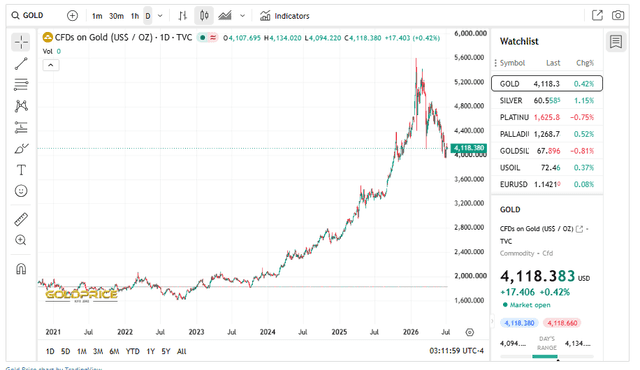
Despite a stronger US dollar and rising Treasury yields, demand for gold stayed firm. Normally, higher yields make non-interest-bearing assets such as gold less attractive. This time, uncertainty surrounding the Middle East helped offset that pressure and kept buyers in the market.
Latest Gold Prices Performance
Gold prices have moved sharply over the past few trading sessions as investors reacted to geopolitical headlines and changing expectations for interest rates.
- Spot gold traded between $4,117 and $4,128 per ounce on July 8.
- Prices briefly fell to their lowest level since July 2 before recovering.
- US gold futures continued to trade at a small premium to spot prices.
Why Does Safe-Haven Demand Remain Strong?
Military developments involving the United States and Iran have added fresh uncertainty to financial markets. During periods like these, investors often increase their exposure to gold because it has historically been viewed as a defensive asset.
Inflation worries have also contributed to demand. Combined with concerns about slowing economic growth, those factors have helped gold remain supported even as bond yields continue to rise.
Iran Tensions Push Oil Higher and Raise Inflation Concerns
Events in the Middle East have pushed oil prices higher. Brent crude climbed above $76 per barrel after renewed concerns about potential supply disruptions. Traders are also keeping a close watch on the Strait of Hormuz, one of the world’s busiest routes for global oil shipments.
How Do Higher Oil Prices Affect Gold?
When energy prices rise, inflation often follows. That can increase demand for gold as investors look for assets that may help preserve purchasing power.
At the same time, persistent inflation could encourage central banks to leave interest rates higher for longer. That tends to limit gains in gold because higher rates increase the appeal of interest-bearing investments.
For now, the market is balancing these opposing forces, and both remain major drivers of gold prices.
Fed Minutes Could Decide Gold’s Next Move
Attention has shifted to the release of the Federal Reserve’s June meeting minutes. Investors hope the document will offer more insight into how policymakers view inflation, economic conditions, and the path of future interest rates.
Market expectations tracked by the CME FedWatch Tool suggest traders have raised the odds of another US rate increase later this year after recent inflation concerns strengthened.
Why are the Fed Minutes So Important?
The minutes could provide answers to several questions, including:
- How concerned Federal Reserve officials remain about inflation.
- Whether policymakers are leaning toward another interest rate increase.
- How upcoming economic data could shape future policy decisions.
A more hawkish tone could strengthen both the US dollar and Treasury yields, adding pressure on gold prices.
Higher Rates vs. Safe-Haven Buying
Gold is currently being pulled in two directions. Safe-haven demand continues to support prices, while expectations for higher interest rates are limiting further gains.
Many analysts expect this balance to continue until the market receives clearer guidance from the Federal Reserve. Continued central bank purchases and geopolitical uncertainty are also expected to provide support over the medium term.
Gold Price Outlook: Key Levels and What Traders Should Watch Next
Gold’s next move will depend on several developments over the coming days. Traders will be paying close attention to:
- The Federal Reserve’s meeting minutes.
- Any new developments involving the United States and Iran.
- US Treasury yields and the direction of the US dollar.
- Oil prices and changing inflation expectations.
Many investors are also using advanced market research platforms and an AI stock analysis tool to monitor macroeconomic trends and identify possible shifts in precious metals before markets react.
Conclusion
Gold is holding near $4,117 as investors weigh geopolitical risks against expectations for future US interest rates. Rising oil prices and tensions in the Middle East continue to support safe-haven demand, while a stronger US dollar and higher Treasury yields are keeping gains in check. The Federal Reserve’s meeting minutes are likely to shape the market’s next move, making them the main focus for traders in the days ahead.
Disclaimer:
The content shared by Meyka AI PTY LTD is solely for research and informational purposes. Meyka is not a financial advisory service, and the information provided should not be considered investment or trading advice.
What brings you to Meyka?
Pick what interests you most and we will get you started.
I'm here to read news
Find more articles like this one
I'm here to research stocks
Ask Meyka Analyst about any stock
I'm here to track my Portfolio
Get daily updates and alerts (coming March 2026)