




Key Points
Brent crude jumped 3.2% to around $76.60 per barrel after fresh U.S. airstrikes on Iran.
Gold slipped 0.4% as a stronger U.S. dollar and profit-taking outweighed safe-haven demand.
Strait of Hormuz concerns raised fears of possible disruptions to global oil supplies.
Investors are watching geopolitical developments, OPEC+ decisions, and U.S. crude inventory data for the next market move.
Brent crude prices rose 3.2% to about $76.60 per barrel on July 8, 2026, after fresh U.S. airstrikes on Iran raised concerns about possible disruptions to Middle East oil supplies. At the same time, gold fell 0.4%, catching some investors off guard as the metal often gains during periods of geopolitical tension. The latest price moves show how quickly conflict can affect commodity markets, inflation expectations, and investor sentiment. Here’s a closer look at what pushed oil higher and why gold moved in the opposite direction.
Why Brent Crude Jumped Above $76 After the Latest US Airstrikes?
Fresh Middle East Tensions Shake Energy Markets
Oil prices climbed sharply on July 8, 2026, after the United States launched new airstrikes against Iran following attacks on commercial vessels near the Strait of Hormuz. The military action renewed concerns over crude exports from the region and whether oil shipments could face disruptions.
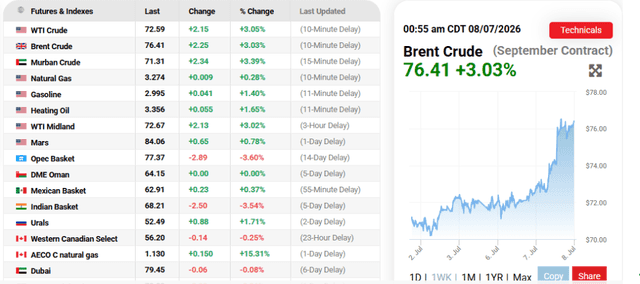
Traders reacted quickly by adding a geopolitical risk premium, lifting Brent crude above $76 per barrel. The move surprised many market participants, who had expected prices to remain relatively stable after signs that regional tensions were beginning to ease.
Why Is the Strait of Hormuz So Important?
The Strait of Hormuz carries roughly 20% of the world’s oil supply, making it one of the busiest energy shipping routes. Any threat to traffic through the passage can change supply expectations almost immediately. Even when oil production remains unchanged, concerns about transport delays or shipping risks are often enough to push crude prices higher as buyers prepare for possible supply constraints.
Brent Crude Price Performance: Latest Numbers and Market Reaction
Key Commodity Moves
Commodity markets responded quickly after news of the latest developments.
- Brent crude gained about 3.2% to an intraday high near $76.60 per barrel.
- U.S. WTI crude traded above $72 per barrel.
- Spot gold declined by around 0.4%.
- The U.S. dollar stayed firm, reducing demand for gold.
Why are Traders Buying Oil Again?
The rally was supported by several factors. Investors closed bearish positions as geopolitical risks returned to the market. Lower U.S. crude inventories also improved the near-term supply outlook. Although OPEC+ is expected to increase production from August, immediate concerns over Middle East supply outweighed expectations of additional output, allowing crude prices to extend their gains.
Why Did Gold Fall Despite Rising Geopolitical Risks?
Why Didn’t Gold Rise With Oil?
Gold often attracts investors during periods of uncertainty, but that was not the case this time. A stronger U.S. dollar made the metal more expensive for overseas buyers, limiting demand. Many investors also locked in profits after gold’s recent gains and shifted their focus to energy markets.
Rising oil prices can increase inflation expectations and influence forecasts for future interest rates, reducing the appeal of non-yielding assets like gold. As a result, gold slipped about 0.4% even as tensions in the Middle East intensified. The move shows that currency strength and interest-rate expectations can outweigh safe-haven demand.
What This Means for Inflation, Fuel Prices and Global Markets?
Could Higher Oil Prices Affect the Global Economy?
Yes. If Brent crude remains at elevated levels, fuel prices could increase across many countries. That would raise transportation and manufacturing costs and add pressure to inflation. Economies that rely heavily on imported oil may face higher energy bills, while airlines, shipping firms, and manufacturers could see operating costs increase.
Central banks will also be watching oil prices closely because sustained energy inflation can affect future interest-rate decisions. Investors should continue tracking crude inventory data, shipping activity through the Strait of Hormuz, and geopolitical developments. Many market participants also use an AI stock analysis tool alongside traditional research to understand how commodity price swings could affect energy companies and the wider market.
What Investors Should Watch Next?
Which Events Could Move Oil Prices Next?
Investors should keep an eye on:
- Any new U.S. or Iranian military action.
- Shipping conditions in the Strait of Hormuz.
- OPEC+ production decisions.
- Weekly U.S. crude inventory reports.
- Federal Reserve policy signals and movements in the U.S. dollar.
These developments are likely to determine whether Brent crude continues moving higher or gives back some of its recent gains.
Conclusion
Brent crude moved higher after renewed tensions between the United States and Iran increased concerns about oil supplies from the Middle East. Gold, meanwhile, weakened as the stronger U.S. dollar and shifting interest-rate expectations limited demand. In the coming days, investors will be watching events around the Strait of Hormuz, OPEC+ decisions, and fresh economic data to assess the next direction for oil prices and global commodity markets.
Disclaimer:
The content shared by Meyka AI PTY LTD is solely for research and informational purposes. Meyka is not a financial advisory service, and the information provided should not be considered investment or trading advice.
What brings you to Meyka?
Pick what interests you most and we will get you started.
I'm here to read news
Find more articles like this one
I'm here to research stocks
Ask Meyka Analyst about any stock
I'm here to track my Portfolio
Get daily updates and alerts (coming March 2026)