
Key Points
Gold falls 0.7% below $4,700 as a strong U.S. dollar pressures demand
Iran talks uncertainty boosts oil prices and supports dollar strength
Rising bond yields reduce gold’s appeal as a non-yielding asset
Short-term outlook bearish, but long-term gold trend remains positive
On April 23, 2026, gold prices slipped 0.7% to fall below the key $4,700 level, surprising many investors. This drop came at a time when global tensions, especially around Iran talks, were expected to push gold higher. Instead, a stronger U.S. dollar and rising oil prices changed the market mood.
Bond yields also moved up, making gold less attractive in the short term. These shifts show how today’s gold market reacts more to economic signals than just geopolitical risks. So, what does this sudden decline really mean for investors? And is this a short-term dip or the start of a bigger trend?
What Triggered the Latest Gold Price Drop?
Why is a stronger U.S. dollar hurting gold?
Gold prices fell as the U.S. dollar gained strength for the third straight session on April 23, 2026. A stronger dollar makes gold more expensive for buyers using other currencies. This reduces global demand.
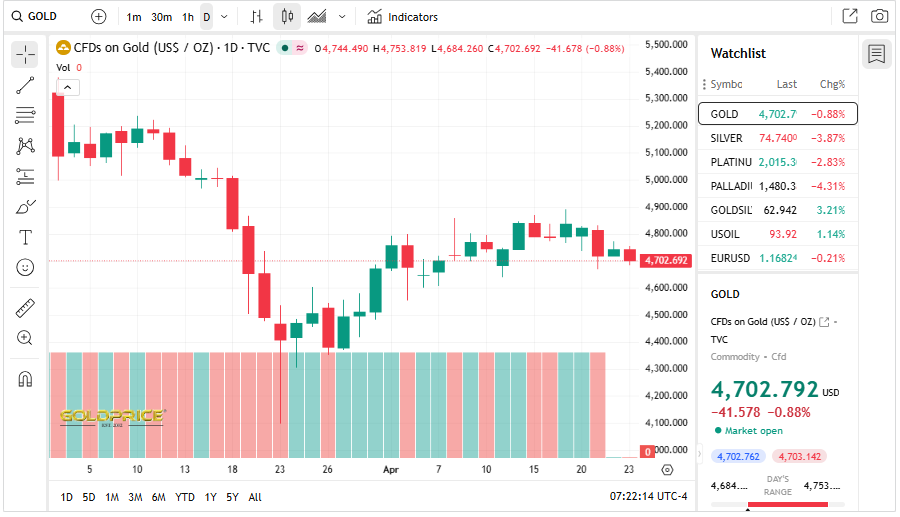
Investors moved money into the dollar due to rising uncertainty around Iran talks. The dollar index rose close to multi-week highs. This created pressure on gold prices.
Are rising bond yields reducing gold demand?
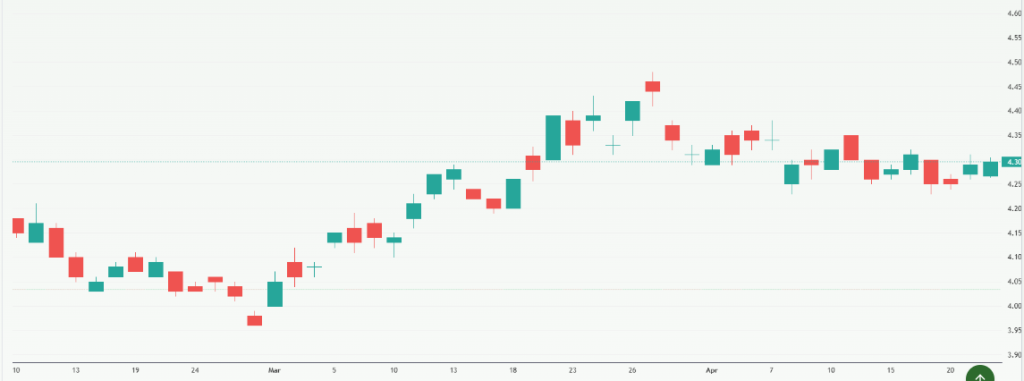
Yes. U.S. Treasury yields moved higher during the same period. Gold does not pay interest. So when yields rise, investors prefer bonds.
- 10-year U.S. Treasury yields stayed above 4.6%
- Higher yields increase opportunity cost
- This shift reduces gold’s short-term appeal
How are oil prices influencing gold markets?
Oil prices crossed $100 per barrel due to Middle East tensions. This pushed inflation fears higher. But instead of boosting gold, it raised expectations that the Federal Reserve will keep interest rates high. This created a negative environment for gold.
Iran Talks Uncertainty – The Core Market Catalyst
What is happening in U.S.-Iran negotiations?
Tensions between the United States and Iran increased in April 2026. Talks over sanctions and nuclear issues stalled.
Reports confirmed:
- Increased military presence in the Gulf
- Disruptions near the Strait of Hormuz
- Rising risks to the global oil supply
These events pushed investors toward safe currencies like the dollar.
Why didn’t geopolitics boost gold this time?
Traditionally, gold rises during conflicts. But this time, markets reacted differently. Reasons:
- Interest rate concerns dominated sentiment
- Dollar demand increased faster than gold demand
- Investors focused more on policy signals than risk
This shows a shift in how gold behaves in 2026.
Gold vs Macro Forces – The Real Battle
Is inflation helping or hurting gold right now?
Inflation is rising due to higher oil prices. Normally, this supports gold. But the impact is mixed.
- High inflation leads to higher interest rates
- Higher rates hurt gold prices
- This creates a push-and-pull effect
Is gold losing its safe-haven status?
Gold is still a safe-haven asset. But it now competes with other options. Investors are also choosing:
- U.S. dollar assets
- Government bonds
- Even digital assets, in some cases
This reduces gold’s dominance during crises.
Impact on Other Precious Metals
The fall in gold affected the entire metals market.
- Silver dropped around 3%
- Platinum fell nearly 2.9%
- Palladium declined about 3.3%
This shows a broad sell-off. It is not just gold facing pressure. Industrial demand also weakened sentiment for silver and platinum.
Technical Levels & Price Action to Watch
What are the key support and resistance levels?
Gold is now trading near a critical support zone.
- Immediate support: $4,640 – $4,700
- Strong resistance: $5,000
A break below support could push prices lower toward $4,500.
What does the current trend suggest?
Gold is down about 11% from its 2026 peak of $5,318. The short-term trend looks bearish. But the long-term trend remains positive. Markets may enter a consolidation phase before the next move.
Investor Sentiment & Market Behavior Shift
Investor mood has turned cautious. Many traders are waiting for clarity. Key focus areas:
- Federal Reserve interest rate decisions
- Oil price movements
- Iran conflict updates
Emerging markets are also under pressure due to a stronger dollar. This adds to global uncertainty.
Expert Outlook – Will Gold Recover or Fall Further?
What is the bullish case for gold?
Some analysts remain positive.
- Continued geopolitical risks
- Strong central bank buying
- Possible rate cuts later in 2026
Gold still acts as a long-term hedge against inflation.
What are the downside risks?
There are clear risks in the short term.
- Strong dollar may continue
- Interest rates could stay high
- Inflation may remain elevated
Some analysts expect gold to test $4,500 if support breaks.
Gold Price: What Should Investors Do Now?
Investors should stay calm during volatility. Smart strategies include:
- Avoid panic selling
- Buy gold on dips, not spikes
- Diversify across assets
Using an AI stock analysis tool like Meyka can help track gold trends, signals, and macro factors in real time.
Gold Market Snapshot – Meyka insights
- Short-term outlook: Neutral to bearish
- Long-term outlook: Bullish
- Volatility level: High
Technical Summary
- Momentum indicators show weak buying pressure
- Support zone is being tested
- Breakout needed above $5,000 for bullish reversal
What Meyka Says?
Meyka suggests a cautious approach. It highlights that macro factors like interest rates and dollar strength are key drivers right now.
Other Analyst Views
- Commodity strategists see gold stabilizing if rates peak
- Some expect recovery in the second half of 2026
- Others warn of short-term downside risk
Investors should watch global signals closely before making decisions.
Final Words
Gold’s fall below $4,700 shows how market dynamics are changing in 2026. Interest rates and dollar strength now play a bigger role than geopolitical risks. While short-term pressure remains, long-term fundamentals are still strong. For investors, this phase is more about patience and strategy than panic, as the next move will depend on macro trends.
Disclaimer:
The content shared by Meyka AI PTY LTD is solely for research and informational purposes. Meyka is not a financial advisory service, and the information provided should not be considered investment or trading advice.
What brings you to Meyka?
Pick what interests you most and we will get you started.
I'm here to read news
Find more articles like this one
I'm here to research stocks
Ask Meyka Analyst about any stock
I'm here to track my Portfolio
Get daily updates and alerts (coming March 2026)