
Key Points
FTSE 100 Index falls as oil prices surge above $95 on Middle East tensions
Energy stocks gain, while airlines, retail, and banking sectors decline
Rising oil prices fuel inflation fears and delay expected rate cuts
Global markets turn volatile, with Europe and US indices reacting to oil-driven risks
Oil prices jumped above $95 per barrel on April 20, 2026, as fresh tensions in the Middle East rattled global markets. The move quickly hit equities, with the FTSE 100 Index slipping after a cautious open. Investors reacted to growing risks around key oil supply routes, especially near the Strait of Hormuz, which handles a large share of global crude flows.
Rising energy costs are now reviving inflation fears and reshaping market expectations. While oil companies gained, most sectors struggled to hold ground. The sudden shift highlights how quickly geopolitical shocks can move markets, and why traders are watching every headline closely.
FTSE 100 Today – Latest Performance Snapshot
Index Movement and Key Levels
The FTSE 100 Index traded lower on April 20, 2026, slipping between 0.8% and 1% in early sessions. The index struggled to hold gains as oil prices surged and risk sentiment weakened. It hovered near key support levels, reflecting cautious investor positioning.
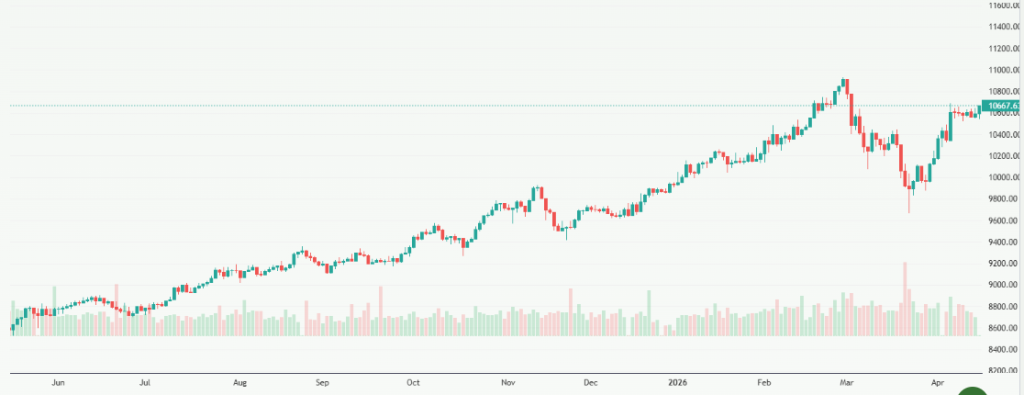
Over the past week, the FTSE 100 has dropped more than 5%, marking one of its weakest short-term performances in recent months. This decline follows rising geopolitical risks and inflation concerns.
Sector-Wise Performance
- Energy stocks like BP plc and Shell plc gained on higher crude prices.
- Airlines and travel stocks fell due to rising fuel costs.
- Financial and consumer sectors remained under pressure due to inflation fears.
Oil Prices Surge Above $95 – What’s Driving the Rally?
What triggered the latest oil price spike?
Oil prices climbed sharply due to escalating tensions in the Middle East. The key concern is supply disruption near the Strait of Hormuz, which carries nearly 20% of global oil shipments.
Recent military activity and shipping risks increased uncertainty. Traders reacted quickly, pushing Brent crude above $95 per barrel on April 20, 2026.
What are analysts forecasting next?
- Analysts expect oil to remain in the $90-100 range in the short term.
- Supply disruptions could reach millions of barrels per day if tensions escalate further.
- Banks and energy agencies warn that prolonged conflict could push prices even higher.
Why Rising Oil Prices Drag Down the FTSE 100?
How does oil impact inflation?
Higher oil prices increase transport and production costs. This leads to rising prices across goods and services. In the UK, this trend is raising fresh inflation concerns. As inflation rises, consumers spend less. Businesses face higher costs. This reduces overall market confidence.
What does it mean for interest rates?
- The Bank of England may delay rate cuts.
- Markets now expect tighter monetary policy for longer.
- Bond yields are rising, which adds pressure on equities.
Winners and Losers in Today’s Market
Which stocks are gaining?
Energy companies are the clear winners. Higher crude prices improve their profit outlook.
- BP plc and Shell plc led gains.
- Strong oil trading margins boosted investor confidence.
Which sectors are under pressure?
- Airlines face higher fuel costs, reducing margins.
- Retail stocks fall as consumers cut spending.
- Banks decline due to economic slowdown fears.
Overall, gains in energy stocks are not enough to offset broader losses across the index.
Global Market Reaction – FTSE vs Europe & US
How are European markets reacting?
Major indices like the DAX Index and CAC 40 Index also moved lower. The sell-off reflects a broader risk-off sentiment across Europe.
What is happening in the US markets?
Wall Street showed volatility as investors reacted to oil-driven inflation fears. The S&P 500 Index saw mixed movement, influencing global sentiment. Global markets remain closely linked. Any shift in oil prices quickly impacts equities worldwide.
Historical Context – Oil Shocks and FTSE 100 Trends
Historically, sudden oil price spikes have led to FTSE 100 declines. Markets react quickly to geopolitical risks.
In past events, the index dropped 1% or more in a single day during oil shocks. Energy stocks usually rise, but broader sectors fall.
This pattern is repeating in 2026. Rising oil prices are again driving market volatility. Investors are becoming more cautious as uncertainty grows.
Oil Price: What Investors Should Watch Next?
What are the key market triggers now?
- Developments in Middle East tensions
- Oil price movement above or below $100
- Central bank signals on interest rates
What is the short-term outlook?
Markets may remain volatile in the coming weeks. Investors are reacting quickly to news headlines. Defensive sectors could perform better during this phase.
Using an AI stock analysis tool can help track real-time market trends and reduce emotional decisions during high volatility.
Stock Insights and Analysis – Meyka-Based Section
FTSE 100 – Short Forecast
- Near-term trend: Bearish with volatility
- Key resistance: Around recent highs before oil surge
- Support level: Psychological support near recent weekly lows
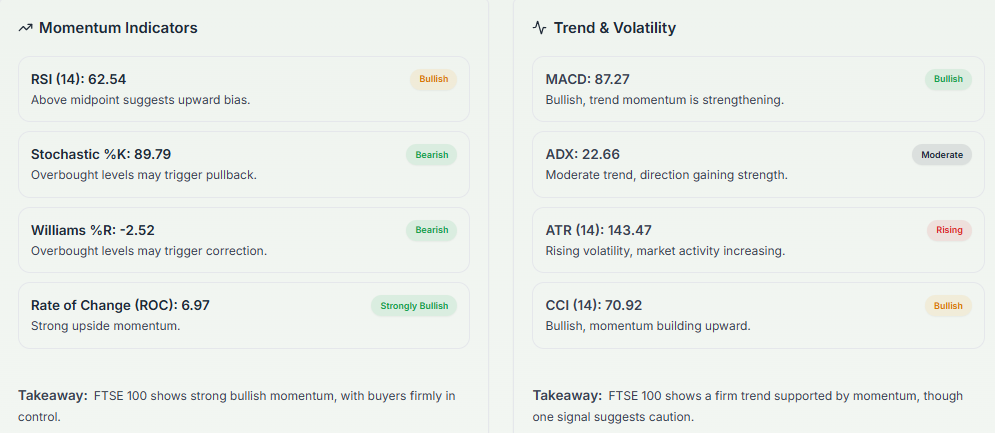
Technical Analysis Summary
- RSI indicates weak momentum
- Moving averages show downward pressure
- Volume spikes reflect panic selling
What Meyka Says?
Meyka highlights increased volatility in the FTSE 100 due to macroeconomic risks. It suggests cautious positioning and close monitoring of oil price trends.
What Other Analysts Say?
- Investment banks warn of prolonged inflation risk
- Energy analysts expect oil prices to stay elevated
- Equity strategists suggest rotating into defensive sectors
Final Words
The FTSE 100 remains under pressure as oil prices surge above $95 and geopolitical risks intensify. Energy stocks provide some support, but broader market sentiment is weak. Investors should stay alert to oil trends and central bank signals. Volatility is likely to continue, making careful sector selection and risk management essential in the current environment.
Disclaimer:
The content shared by Meyka AI PTY LTD is solely for research and informational purposes. Meyka is not a financial advisory service, and the information provided should not be considered investment or trading advice.
What brings you to Meyka?
Pick what interests you most and we will get you started.
I'm here to read news
Find more articles like this one
I'm here to research stocks
Ask Meyka Analyst about any stock
I'm here to track my Portfolio
Get daily updates and alerts (coming March 2026)