
Key Points
U.S. futures fall as Dow, S&P 500, and Nasdaq react to renewed Strait of Hormuz tensions
Oil prices surge sharply, raising global inflation and cost concerns
Energy stocks gain while tech and airline sectors face selling pressure
Markets turn volatile as investors shift to risk-off sentiment amid uncertainty
On April 20, 2026, U.S. stock market turned lower as fresh tensions around the Strait of Hormuz shook global markets. Dow futures pointed to a drop of nearly 300 points, while S&P 500 and Nasdaq futures slipped after last week’s strong rally. At the same time, oil prices jumped sharply, with Brent crude moving closer to $95 per barrel due to supply fears.
The Strait, which carries about one-fifth of the world’s oil, remains a critical pressure point. Investors are now reacting fast to every headline, shifting from risk-taking to caution. This sudden market swing highlights how quickly sentiment can change, and why global events still play a powerful role in shaping Wall Street trends.
Why Dow, S&P 500, and Nasdaq Futures are Falling?
What triggered the latest sell-off in U.S. futures?
U.S. stock futures dropped on April 20, 2026, after renewed fears around the Strait of Hormuz disrupted market confidence. Investors reacted quickly to reports of restricted shipping routes and rising geopolitical tensions.
- Dow futures indicated a fall of around 250-300 points
- S&P 500 futures slipped by nearly 0.5%
- Nasdaq futures declined as tech stocks faced pressure
The market had just come off a strong rally. This made it more sensitive to sudden negative news.
How are geopolitical tensions impacting sentiment?
Tensions between Iran and Western forces increased uncertainty. Reports of tanker disruptions and naval activity raised fears of supply shocks. Markets dislike uncertainty. As a result:
- Investors moved away from risk assets
- Volatility levels increased sharply
- Safe-haven demand started rising
Is this just profit-taking or something bigger?
It is both. Investors are booking profits after recent highs. At the same time, the geopolitical risk adds a deeper concern. This combination is accelerating the downside move.
Oil Prices Surge – The Core Catalyst
Why is the Strait of Hormuz so critical?
The Strait of Hormuz handles nearly 20% of the global oil supply. Any disruption here has an immediate global impact. On April 19-20, 2026:
- Oil prices surged over 4-5% in a single session
- Brent crude moved close to $95 per barrel
- Shipping disruptions reduced supply visibility
How do rising oil prices affect stocks?
Higher oil prices increase costs across industries. This impacts:
- Transportation and logistics companies
- Airlines facing higher fuel expenses
- Manufacturing firms with rising input costs
At the same time, energy companies benefit from higher prices.
Could this trigger inflation again?
Yes. Rising energy costs often lead to broader inflation. This could delay central bank rate cuts. That is why markets reacted negatively.
Sector-Wise Market Impact
Which sectors are gaining right now?
Energy stocks are leading gains due to rising crude prices.
- Oil majors are seeing higher pre-market demand
- Exploration companies benefit from price spikes
- Commodity-linked stocks are gaining traction
Why are tech stocks under pressure?
Tech stocks are sensitive to interest rates and global risk. With uncertainty rising:
- Investors reduce exposure to high-growth stocks
- Nasdaq futures fall faster than the Dow
- Valuations come under scrutiny
Are airlines and transport stocks the worst hit?
Yes. These sectors react immediately to oil price increases.
- Fuel costs directly reduce profit margins
- Travel demand may weaken if prices stay high
- European airline stocks have already shown declines
What about defense and industrial stocks?
Mixed reaction here:
- Defense stocks may rise due to conflict fears
- Industrial stocks face supply chain risks
- Shipping delays impact global trade flows
Global Market Reaction Beyond Wall Street
How are European markets reacting?
European indices moved lower on April 20, 2026.
- Energy concerns hit manufacturing-heavy economies
- Airline and logistics stocks declined
- Investors shifted toward safer assets
Are Asian markets at risk, too?
Yes. Asia depends heavily on Middle East oil.
- Countries like China and India face higher import costs
- Supply disruptions can slow industrial output
- Market volatility is expected to rise
What is happening with currencies and commodities?
- Oil and gas prices are rising sharply
- Gold is gaining as a safe-haven asset
- Emerging market currencies are weakening
Key Events Driving Market Volatility – Timeline
- February 28, 2026: Strait of Hormuz disruption begins amid conflict
- March 2026: Oil prices cross $120 during peak tensions
- April 17, 2026: Temporary reopening boosts global stocks
- April 20, 2026: Fresh fears trigger another market sell-off
This timeline shows how quickly sentiment shifts based on geopolitical updates.
US Stock Market: What Investors are Watching Next?
Will corporate earnings impact the market?
Yes. Earnings season is critical this week.
- Major firms are reporting results and guidance
- Investors will watch cost pressures from rising oil prices
- Weak outlooks could add more downside
What geopolitical signals matter most?
Markets are tracking:
- Any confirmation of the Strait reopening
- Diplomatic negotiations or military escalation
- Shipping activity and oil supply updates
How important are oil price trends now?
Very important. Oil is the main driver.
- Sustained prices above $90-100 increase risk
- Volatility in crude will directly impact equities
- Central bank expectations may shift again
U.S. Market Outlook – Short-Term vs Long-Term
What should investors expect in the short term?
Short-term volatility is likely to stay high.
- Markets will react to headlines quickly
- Intraday swings may increase
- Risk sentiment may remain weak
What are the long-term implications?
- Global supply chains may adjust permanently
- Energy security will become a bigger focus
- Investors may rotate toward commodities and defensive sectors
From a data perspective, tools like Meyka.com provide real-time signals and forecasts that help track such volatile conditions.
Stock Market Technical Snapshot – Meyka Insights
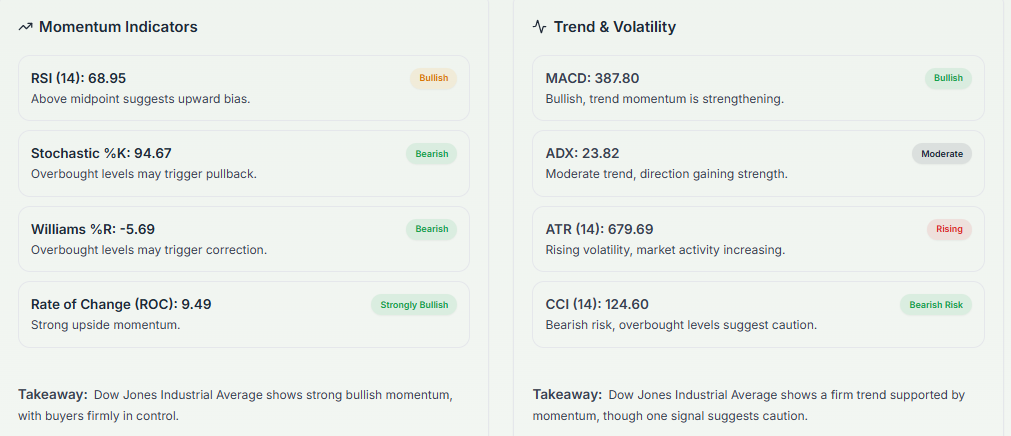
Dow Jones Industrial Average
- Trend: Short-term bearish
- Support level: Near recent breakout zone
- Resistance: Previous highs from last week
- Momentum: Weakening due to external shocks
S&P 500
- Trend: Neutral to bearish
- Key factor: Oil-driven inflation concerns
- Technical signal: Consolidation breakdown risk

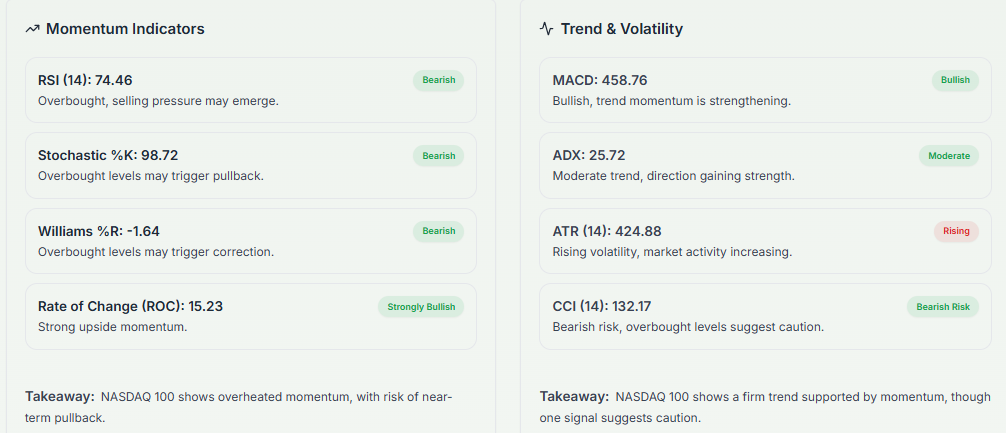
Nasdaq Composite
- Trend: Bearish in the short term
- Pressure: Growth stock sell-off
- Indicator: Rising volatility index
What does Meyka say?
Meyka’s AI stock analysis tool signals caution in the near term. It highlights:
- Increased volatility risk
- Weak momentum in tech-heavy indices
- Better relative strength in the energy sector
Supporting analyst insights
- Analysts note geopolitical risk as the main trigger
- Many expect a short-term correction, not a long-term crash
- The energy sector remains a key outperformer in current conditions
Final Words
Markets are reacting fast to the Strait of Hormuz crisis. Falling futures and rising oil prices show how sensitive global equities are to geopolitical risks. Short-term volatility is likely to continue. Investors should stay cautious and watch oil trends, earnings, and global developments closely.
Disclaimer:
The content shared by Meyka AI PTY LTD is solely for research and informational purposes. Meyka is not a financial advisory service, and the information provided should not be considered investment or trading advice.
What brings you to Meyka?
Pick what interests you most and we will get you started.
I'm here to read news
Find more articles like this one
I'm here to research stocks
Ask Meyka Analyst about any stock
I'm here to track my Portfolio
Get daily updates and alerts (coming March 2026)