Ericsson reported its latest Q1 2026 earnings in April 2026, showing a slight miss on market expectations. The company came in just below analyst forecasts, highlighting ongoing pressure in the global telecom equipment market. At the same time, demand from artificial intelligence is reshaping the tech supply chain.
Strong AI growth is pushing up demand for advanced semiconductors, which is increasing chip costs across the industry. This cost pressure is now affecting telecom players like Ericsson more directly. Investors are closely watching how the company balances rising expenses with steady demand for 5G and network infrastructure.
Ericsson Q1 2026 Earnings Snapshot: Slight Miss, Stable Core Business
Ericsson released its Q1 2026 results in April 2026, and the numbers showed a small but notable miss against market expectations. The company reported slightly lower revenue and operating profit than analysts had forecast, according to its investor update shared via official earnings disclosure (Ericsson Investor Relations, April 2026).
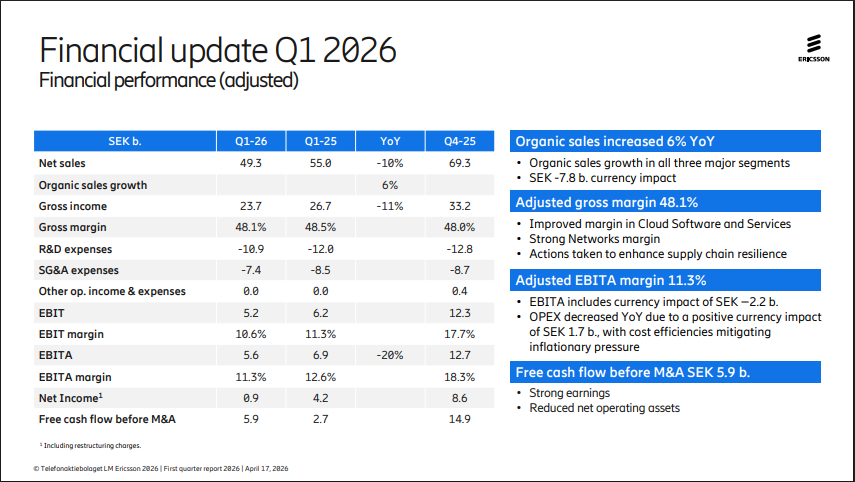
Despite the miss, the core telecom business remained stable, supported by long-term 5G infrastructure contracts in key markets like North America and Europe.
The main concern was not demand weakness, but rising cost pressure across the supply chain. In particular, semiconductor and advanced chip pricing increased due to strong artificial intelligence demand worldwide. This is now becoming a key margin challenge for telecom equipment makers.
Why did Ericsson miss forecasts despite stable demand?
Ericsson’s revenue performance remained steady, but profitability came under pressure.
The main reasons include:
- Higher input costs, especially semiconductor chips
- Increased competition in telecom infrastructure deals
- Slower telecom investment cycles in parts of North America
Analysts from major financial research desks, including Reuters market commentary, noted that telecom equipment firms are facing a “cost squeeze phase” where demand is stable but margins are tightening due to AI-driven supply chain inflation.
How is AI increasing chip costs across the telecom industry?
Artificial intelligence is reshaping the global semiconductor market. Large-scale AI models require advanced GPUs and high-performance chips. This has created strong competition for chip supply between:
- AI data centers
- Cloud computing companies
- Telecom infrastructure providers like Ericsson
Because of this demand surge, chip manufacturers are prioritizing high-margin AI customers. As a result, telecom firms face higher prices and longer lead times.
This trend is not temporary. Industry analysts expect AI-driven semiconductor demand to remain strong through 2026, according to global tech supply chain reports from Bloomberg Intelligence.
Is North America slowing down telecom investment?
What is happening in the U.S. telecom market?
Yes, telecom investment in North America has shown signs of moderation. After aggressive 5G rollout phases in previous years, operators are now focusing on optimization instead of large-scale expansion.
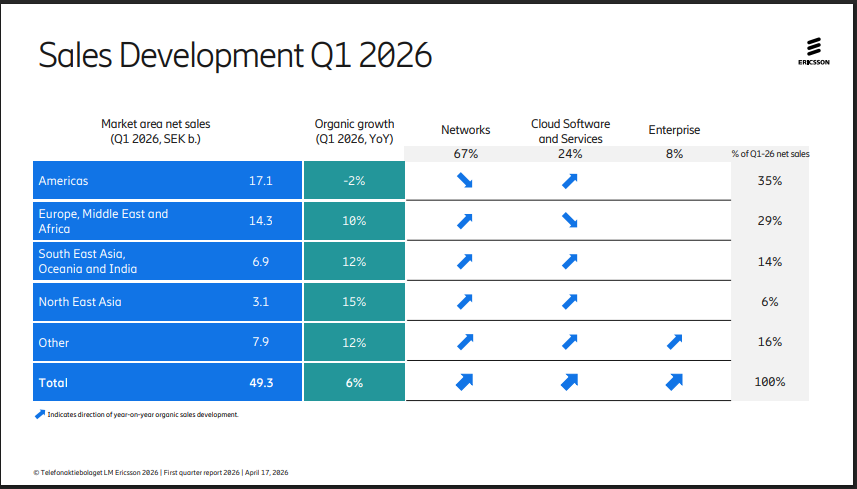
This leads to:
- Delayed infrastructure spending
- More selective vendor contracts
- Stronger pricing competition
Why does it matter for Ericsson?
North America is one of Ericsson’s most important revenue regions. Even a small slowdown there impacts global performance.
However, long-term demand for network upgrades, especially for 5G Advanced and early 6G planning, remains intact.
AI demand vs telecom margins: what is the bigger trend?
The telecom industry is going through a structural shift. AI is not just a growth driver. It is also increasing cost pressure.
Key insight:
- AI boosts demand for network capacity
- AI also increases chip costs and hardware competition
- Telecom firms are stuck between higher demand and tighter margins
Ericsson is investing in AI-native networking solutions to stay competitive. These include smarter network automation and cloud-native infrastructure systems. This shift is expected to define the next phase of telecom evolution.
What do analysts say about Ericsson’s outlook?
Market analysts remain cautiously neutral.
- Short-term: margin pressure due to chip costs
- Medium-term: stable 5G demand recovery
- Long-term: potential growth from AI-driven network infrastructure
Many research notes highlight that Ericsson’s profitability will depend on how quickly it adapts to AI-optimized network systems while controlling hardware costs.
Ericsson stock outlook and technical view
Ericsson’s stock performance has reflected mixed investor sentiment after the earnings release.
Short stock outlook (market view)
- Near-term bias: Neutral to slightly negative
- Support comes from stable 5G contracts
- Resistance comes from margin pressure concerns
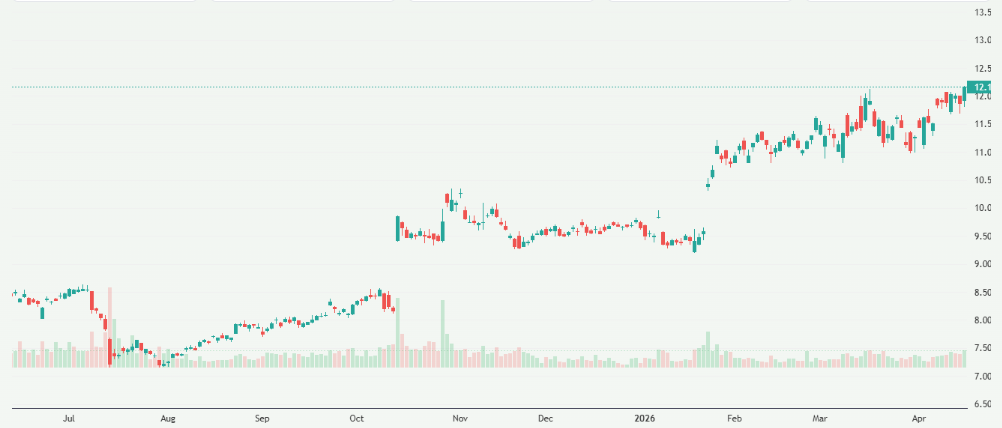
Technical analysis summary
- Stock trend remains range-bound in the short term
- No strong breakout signal yet
- Volume activity suggests cautious investor positioning
What does Meyka say about Ericsson?
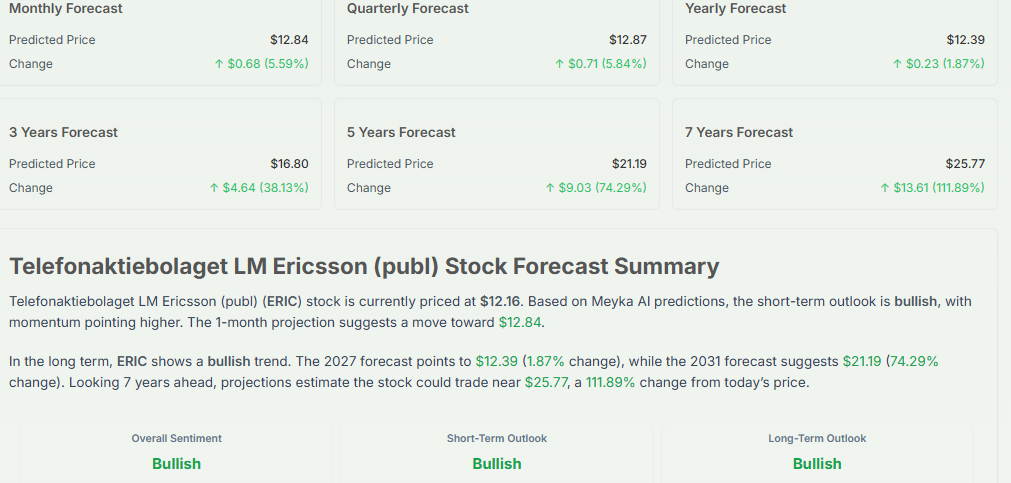
According to the Meyka.com AI stock analysis tool, Ericsson’s sentiment is typically categorized as cautious-neutral in a high-cost environment. The platform’s AI-driven evaluation framework factors in earnings trends, sector momentum, and macro cost pressures to assess risk levels for telecom stocks.
Broader analyst comparison
- Morgan Stanley-style research outlook: steady but cost-sensitive
- Goldman Sachs-type view: long-term AI infrastructure opportunity offsets short-term margin pressure
- Market consensus: hold with monitoring of chip cost inflation trend
How are other telecom companies reacting?
Ericsson is not alone in facing pressure. Other telecom and infrastructure players are also reporting:
- Higher hardware costs
- Slower enterprise spending in developed markets
- Stronger demand from AI-related network expansion
This shows that the challenge is industry-wide, not company-specific.
Final Words
Ericsson’s latest results highlight a shifting telecom landscape where stable demand is being offset by rising AI-driven chip costs. While short-term margins are under pressure, long-term demand for advanced connectivity remains strong.
The balance between AI opportunity and cost inflation will define Ericsson’s performance in the coming quarters. Investors are now watching whether efficiency gains can offset rising semiconductor expenses.
Disclaimer:
The content shared by Meyka AI PTY LTD is solely for research and informational purposes. Meyka is not a financial advisory service, and the information provided should not be considered investment or trading advice.
What brings you to Meyka?
Pick what interests you most and we will get you started.
I'm here to read news
Find more articles like this one
I'm here to research stocks
Ask Meyka Analyst about any stock
I'm here to track my Portfolio
Get daily updates and alerts (coming March 2026)