




Key Points
Asian FX weakens as Iran tensions raise global risk aversion.
Indian rupee hits record low near 95.6 per US dollar.
Rising crude oil prices and strong dollar pressure on emerging markets.
Foreign outflows and inflation fears intensify currency volatility.
Asian currencies fell, Asia FX sharply on May 12, 2026, as rising tensions between Iran and global powers shook financial markets. The Indian rupee slipped to a record low near 95.6 per US dollar, reflecting strong pressure from higher oil prices and weak investor sentiment. Risk aversion spread across Asia, pushing currencies lower almost everywhere. Traders turned cautious as global uncertainty increased, making emerging market currencies more vulnerable than before.
Asia FX Under Pressure as Risk Aversion Intensifies
Why are Asian currencies falling right now?
Asian currencies weakened on May 12, 2026, as global risk sentiment turned negative. Investors reacted to rising tensions in the Middle East, especially between Iran and global powers. This pushed safe-haven demand for the US dollar higher.
Key drivers include:
- Rising geopolitical uncertainty in West Asia
- Higher crude oil prices are increasing import costs
- Strong US dollar due to global safe-haven buying
- Foreign fund outflows from emerging markets
According to recent market updates reported by Reuters, Asian FX markets broadly slipped as investors reduced exposure to risk assets amid oil-driven inflation fears.
Which Asian currencies are most affected?
Not all currencies are falling equally. Some are under stronger pressure due to trade deficits and oil dependence.
- Indian rupee: Near record low (~95.5-95.6 per USD)
- Indonesian rupiah: Weak due to capital outflows and oil import pressure
- Philippine peso: Under pressure from dollar demand
- Thai baht: Declining due to tourism and trade concerns
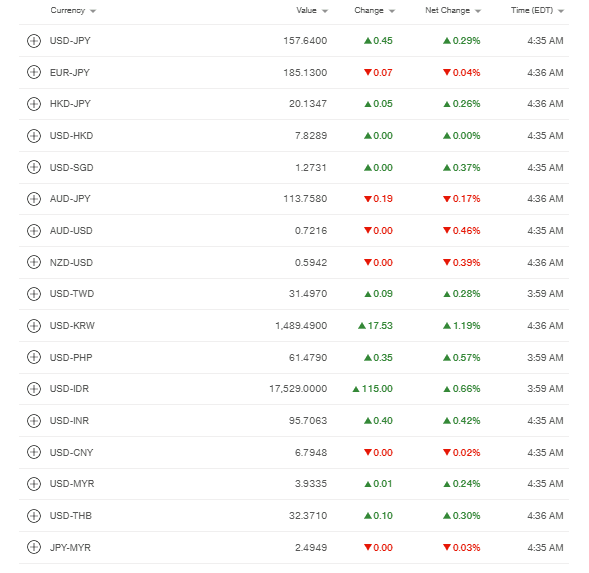
The weakness is broad-based, showing that the issue is regional, not country-specific.
Indian Rupee Hits Record Low Amid Oil Shock
Why did the Indian rupee fall to a record low?
The Indian rupee fell to its weakest level around May 12, 2026, touching near 95.6 per US dollar. The main reason is rising crude oil prices, combined with global uncertainty.
India imports most of its oil. When oil prices rise, the demand for US dollars increases. This weakens the rupee.
Other key factors:
- Foreign investors are pulling money out of Indian equities
- Strong dollar index due to global risk aversion
- Higher import bill widens current account pressure
Reuters reported that the rupee’s fall was directly linked to concerns over US-Iran tensions pushing oil prices higher.
How is the Reserve Bank of India responding?
The Reserve Bank of India (RBI) is believed to be actively monitoring the currency market.
Possible actions include:
- Selling US dollars from reserves to slow rupee fall
- Smoothing volatility through market intervention
- Ensuring orderly currency movement, not fixed levels
However, analysts say intervention can only reduce speed, not reverse the trend, unless global oil prices stabilize.
Oil Prices and Dollar Strength Deepen Pressure
How do oil prices affect Asian currencies?
Oil is the most important factor behind the current FX weakness. Brent crude prices surged above the $100 per barrel mark during the geopolitical tensions.
Impact on Asia:
- Higher import bills for oil-dependent economies
- Rising inflation pressure in domestic markets
- Increased demand for US dollars for trade payments
This creates a cycle where weaker currencies lead to even higher inflation risks.
Why is the US dollar getting stronger?
The US dollar strengthened because global investors are moving toward safer assets. This is called a “risk-off” environment.
Main reasons:
- Geopolitical tensions in the Middle East
- Fear of global supply disruptions
- Expectations of higher inflation globally
A stronger dollar automatically pressures emerging market currencies, including those in Asia.
Asia FX: Market Spillover Across Equities and Bonds
Are stock markets also affected?
Yes, currency weakness is spreading into equity markets. Recent trends:
- Indian stock indices saw sharp intraday volatility
- Foreign institutional investors (FIIs) continue selling
- Banking and energy stocks show higher volatility
When currencies weaken, foreign investors often pull out further, increasing market pressure.
What is happening in bond markets?
Bond yields in several Asian economies are rising. This reflects:
- Inflation expectations
- Higher risk premiums
- Reduced foreign bond inflows
This creates stress across both equity and debt markets at the same time.
What Does Meyka AI Analysis Suggest About Currency Trends?
AI-driven market tools like Meyka’s stock and macro analysis models generally highlight a few consistent signals in such conditions:
- Short-term FX weakness during geopolitical shocks
- Oil-linked currencies underperforming
- Dollar strength likely to continue in risk-off phases
- Emerging markets are facing higher volatility than developed markets
Supporting analysis from global economists also suggests that currency pressure usually persists until oil stabilizes or geopolitical risks ease.
Outlook for Asia FX and Indian Rupee
Will the rupee recover soon?
Near-term outlook remains weak. Analysts expect volatility to continue. Key levels to watch:
- INR support zone near 95-97 per USD
- Possible further weakness if oil stays above $100
What factors could stabilize Asian currencies?
Recovery depends on:
- Cooling of Iran-related tensions
- Stabilization of crude oil prices
- Return of foreign investment inflows
- Improved global risk sentiment
Until then, Asian FX markets are likely to remain sensitive and unstable.
Final Words
Asian currencies are under strong pressure as geopolitical tensions and rising oil prices reshape global markets. The Indian rupee’s record low highlights how deeply external shocks can affect emerging economies. In the near term, currency volatility is likely to continue. Markets will closely watch oil prices and geopolitical developments for any sign of relief or further stress.
Disclaimer:
The content shared by Meyka AI PTY LTD is solely for research and informational purposes. Meyka is not a financial advisory service, and the information provided should not be considered investment or trading advice.
What brings you to Meyka?
Pick what interests you most and we will get you started.
I'm here to read news
Find more articles like this one
I'm here to research stocks
Ask Meyka Analyst about any stock
I'm here to track my Portfolio
Get daily updates and alerts (coming March 2026)