
Key Points
Zee Entertainment shares fell nearly 7% after reporting a Q4 FY26 net loss.
Revenue dropped due to weak advertising demand and higher content costs.
EBITDA turned negative, raising concerns over margin pressure and profitability.
Despite losses, the company declared a ₹2 per share dividend, boosting mixed sentiment.
On May 20, 2026, shares of Zee Entertainment Enterprises dropped nearly 7% after the company reported a quarterly loss for Q4 FY26. Revenue fell as weak advertising demand and rising content costs hurt profits across its TV business. Despite the disappointing earnings, the board announced a ₹2 per share dividend, surprising many investors. The sharp market reaction has now raised fresh questions about Zee’s recovery plans, digital growth strategy, and future profitability in India’s fast-changing media industry.
Zee Entertainment Q4 FY26 Results: Why Did the Stock Fall Sharply?
Shares of Zee Entertainment Enterprises dropped nearly 7% on May 20, 2026, after the company reported a weak fourth-quarter earnings report for FY26. The stock slipped below ₹82 during intraday trading as investors reacted to falling revenue, a quarterly loss, and weak advertising demand. Despite the poor results, the company announced a final dividend of ₹2 per share.
The latest earnings show how pressure in the Indian media industry is hurting traditional broadcasting businesses. Rising content costs and weak ad spending also added pressure on margins.
According to company filings, Zee posted a consolidated net loss of about ₹102–104 crore in Q4 FY26, compared to a profit of ₹188 crore a year earlier. Revenue also declined more than 5% year over year.
Zee Entertainment Q4 FY26 Results Snapshot
Revenue Declines as Advertising Demand Weakens
Zee Entertainment’s revenue from operations fell to around ₹2,025 crore in the March 2026 quarter. That was down from nearly ₹2,184 crore in the same quarter last year.
The company said weak advertising demand hurt its television business. Ad revenue declined about 3.5% year over year. Management also pointed to the ongoing Middle East crisis, which reduced corporate advertising spending during March 2026.
Advertising contributes nearly 40% of Zee’s overall revenue. That makes the company highly sensitive to economic slowdowns and corporate spending cuts.
Key Q4 FY26 numbers:
- Net loss: ₹102-104 crore
- Revenue: ₹2,025 crore
- Advertising revenue decline: 3.5%
- EBITDA turned negative
- Dividend announced: ₹2 per share
Net Profit Swings Into Loss
The biggest shock for investors was the company’s move from profit to loss. In Q4 FY25, Zee had reported a profit of ₹188 crore. But in Q4 FY26, the company reported a loss exceeding ₹100 crore. Higher operational costs and weak TV monetization played a major role in the decline.
Expenses rose nearly 20% during the quarter. The increase came from:
- Higher movie and content rights costs
- Bigger marketing spending
- Legal expenses
- New content launches, including KidZ programming
EBITDA and Margins Come Under Pressure
Operational profitability also weakened sharply. The company reported an EBITDA loss of nearly ₹255 crore compared to a profit of around ₹298 crore last year. EBITDA margins contracted significantly during the quarter.
Media companies depend heavily on operating leverage. So when revenue falls and costs rise together, margins can weaken very quickly. Analysts believe margin recovery will now become one of the biggest themes investors watch in FY27.
Why Did Zee Entertainment Shares Fall Nearly 7%?
Is Weak Advertising Demand the Biggest Concern?
Yes. Advertising weakness remains the biggest issue for Zee Entertainment right now. Management said January and February showed healthy momentum. But March advertising demand weakened sharply due to geopolitical tensions and cautious corporate spending.
Large sectors like FMCG, consumer goods, and retail reduced media spending during the quarter. That directly impacted TV broadcasters across India.
Since Zee still depends heavily on television advertising, investors became concerned about future revenue visibility.
Rising Costs Also Hurt Investor Sentiment
While revenue declined, costs moved sharply higher. Operational costs increased due to:
- Content acquisition expenses
- OTT investments
- Promotion spending
- Digital expansion
This created a double-pressure effect on earnings. The market also reacted negatively because investors expected a gradual recovery after Zee’s stronger FY25 performance.
Why Did Zee Still Announce a ₹2 Dividend?
Despite reporting a quarterly loss, Zee’s board recommended a final dividend of ₹2 per equity share for FY26. The payout is subject to shareholder approval at the upcoming AGM.
What Does the Dividend Signal?
Companies sometimes maintain dividends even during difficult quarters to show confidence in long-term cash flow stability.
For Zee, the dividend announcement may help:
- Support shareholder confidence
- Maintain investor trust
- Signal long-term optimism
However, analysts say dividend payouts alone may not improve sentiment unless earnings stabilize.
Is ZEE5 Becoming the Company’s Strongest Growth Driver?
Digital Business Shows Strong Improvement
One positive area in Zee’s results was the performance of ZEE5. The streaming platform continued improving operationally during FY26. Subscription revenue increased nearly 4%, supported by growth in paying users and higher ARPU.
Reuters also reported that ZEE5’s core losses narrowed sharply compared to last year. Revenue from the platform surged nearly 71% year over year. This suggests Zee’s digital strategy may finally be gaining traction.
Why Is OTT Growth Important for Zee?
India’s media market is moving toward digital consumption quickly. Streaming platforms now compete directly with traditional TV channels. Younger viewers increasingly prefer mobile-based entertainment over cable television.
That means long-term growth for Zee could depend more on:
- ZEE5 subscriber growth
- Digital advertising
- Regional streaming content
- OTT profitability
If ZEE5 continues improving, it could eventually become one of the company’s biggest valuation drivers.
Zee Entertainment Stock Analysis and Market Outlook
Short Stock Details and Forecast
Zee Entertainment remains one of India’s largest media and entertainment companies. The stock has struggled over the past 12 months due to weak earnings visibility and slower ad growth.
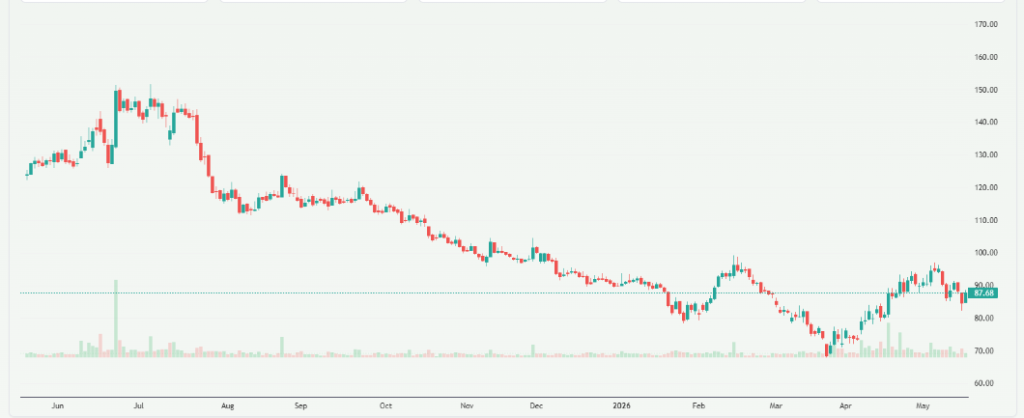
Current market trends suggest:
- Near-term sentiment remains weak
- Volatility may stay high after earnings
- Investors will closely monitor FY27 recovery signals
Analysts expect advertising demand recovery to play a major role in future stock performance.
Technical Analysis Summary
From a technical perspective, the stock remains under pressure after the sharp post-results decline.
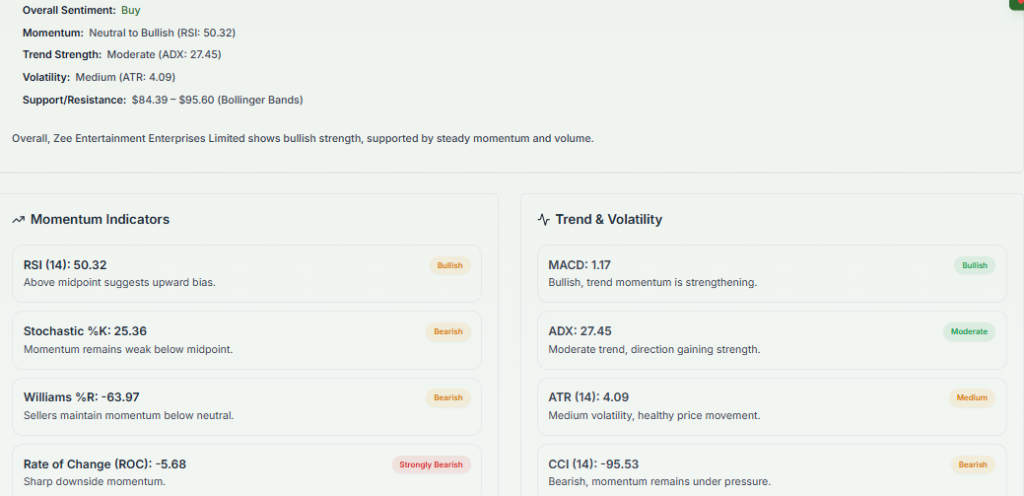
Key observations include:
- Strong resistance near ₹90–95
- Immediate support around ₹80
- Weak short-term momentum
- High trading volumes after earnings
If the stock stays below key resistance levels, bearish pressure may continue in the short term.
What Meyka Says About Zee Entertainment?
According to Meyka AI stock analysis tool, investors should watch margin recovery, advertising demand trends, and digital subscriber growth closely over the next few quarters.
The platform also highlights that OTT profitability and content monetization could become critical long-term growth drivers for Zee Entertainment.
What Other Analysts are Saying?
Several analysts believe Zee’s weak Q4 was partly caused by temporary macroeconomic factors rather than a complete structural collapse.
Reuters reported that the Middle East conflict heavily impacted March advertising demand. Business Standard also noted that the company’s subscription revenue remained stable despite weakness in advertising.
Still, most analysts agree that consistent execution will be necessary before investor confidence fully returns.
What Should Investors Watch in FY27?
The next few quarters will be extremely important for Zee Entertainment.
Investors will closely monitor:
- Advertising revenue recovery
- ZEE5 profitability
- Subscription growth
- Content spending discipline
- EBITDA margin improvement
The company also needs to show that its digital transformation strategy can deliver stable long-term growth.
If ad demand improves and OTT performance strengthens further, the stock could gradually stabilize. But if margins remain weak, pressure on the shares may continue.
Wrap Up
Zee Entertainment’s weak Q4 FY26 results pushed the stock sharply lower as falling ad revenue and rising costs hurt profitability. However, ZEE5’s improving digital performance offers some hope for recovery in the coming quarters.
Disclaimer:
The content shared by Meyka AI PTY LTD is solely for research and informational purposes. Meyka is not a financial advisory service, and the information provided should not be considered investment or trading advice.
What brings you to Meyka?
Pick what interests you most and we will get you started.
I'm here to read news
Find more articles like this one
I'm here to research stocks
Ask Meyka Analyst about any stock
I'm here to track my Portfolio
Get daily updates and alerts (coming March 2026)