




Key Points
Volkswagen's Q2 2026 operating profit fell 33% as weak demand and intense EV competition in China hurt earnings.
The company lowered its 2026 sales outlook, citing pricing pressure, tariffs, and slower growth in key markets.
Volkswagen is accelerating cost cuts and restructuring to improve efficiency and protect long-term profitability.
Investors are watching China sales, new EV launches, and margin recovery as key drivers of future performance.
Volkswagen reported a sharp drop in earnings on July 24, 2026, as tougher competition in China continued to weigh on its business. The German automaker said profit fell 33%, driven by weaker vehicle sales, intense price competition, and growing pressure from local electric vehicle (EV) manufacturers. The latest results also led Volkswagen to lower its outlook for the year, adding to investor concerns about the pace of its recovery.
Why Did Volkswagen’s Profit Fall 33%?
Weak performance in China hits earnings
China remains Volkswagen’s largest market, but it has become one of its toughest. Domestic EV makers continue to win over buyers with lower prices, faster product launches, and technology-focused vehicles. As a result, Volkswagen has seen demand weaken while profit margins have come under pressure.
The company also faced higher tariff-related costs and an unfavorable sales mix during the quarter. Together, these factors dragged down its second-quarter earnings.
Key financial highlights
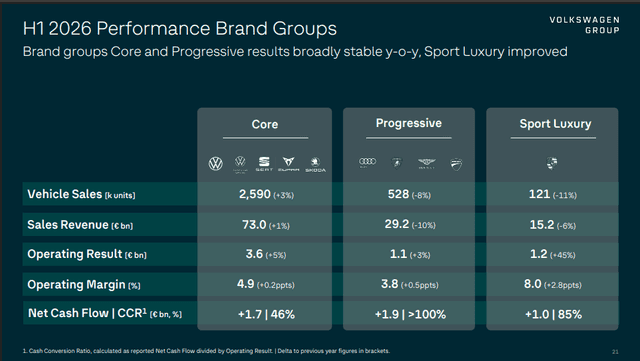
Volkswagen posted a second-quarter 2026 operating profit of €3.5 billion, missing analyst estimates. Revenue rose to €82.4 billion, while the operating margin came in at 4.2%.
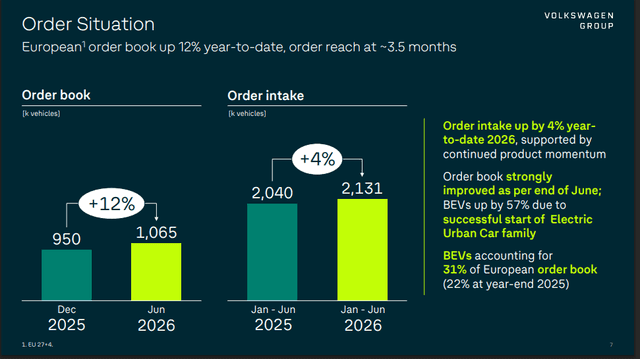
Vehicle deliveries declined overall as weaker performance in China outweighed stronger demand in Europe and North America. After the earnings announcement on July 24, 2026, Volkswagen shares slipped about 3% in early trading as investors reacted to the weaker results and revised guidance.
China Is Becoming the Biggest Challenge for Global Carmakers
Why are Chinese EV brands gaining market share?
Chinese carmakers have changed the pace of competition. Companies including BYD, Xiaomi, and Geely continue introducing lower-priced EVs with advanced software, longer driving ranges, and frequent model updates.
They are also responding more quickly to changing customer preferences, making it harder for established global brands to keep up.
Why is Volkswagen under pressure?
Volkswagen is dealing with several issues at the same time:
- Fierce price competition from Chinese automakers.
- Slower demand for foreign vehicle brands.
- Rapid advances in EV technology by domestic rivals.
- Declining market share in the world’s largest auto market.
These pressures have pushed Volkswagen to adjust its strategy in China while increasing investment in electric vehicles designed specifically for local customers.
Volkswagen Responds With Cost Cuts and Restructuring
What changes is Volkswagen making?
Volkswagen is speeding up one of its largest restructuring efforts in recent years. Chief Executive Officer Oliver Blume is focused on cutting costs, simplifying operations, and improving efficiency across the business.
The company is reviewing its manufacturing network, reducing the number of vehicle models, and evaluating additional workforce reductions as it works to improve long-term profitability.
Updated business outlook
Volkswagen has revised its expectations for 2026 and no longer expects revenue growth. It now forecasts sales revenue to range from flat to a 3% decline, compared with its earlier forecast of growth of up to 3%.
The company kept its operating margin guidance at 4.0% to 5.5%. Management expects cost-cutting measures and upcoming EV launches to support results during the second half of the year.
What Investors Should Watch Next?
Investors will be watching whether Volkswagen can improve sales in China and rebuild its profit margins. Progress on restructuring, cost reductions, and new EV launches will remain in focus over the coming quarters.
Analysts are also tracking delivery trends in Europe and North America, where demand has held up better than in China. Investors using the Meyka AI stock analysis tool can combine technical indicators, earnings data, and analyst research to follow Volkswagen’s performance alongside broader developments in the global auto industry.
Conclusion
Volkswagen is facing mounting pressure from China’s fast-growing EV market, while higher costs and weaker demand continue to affect earnings. The company has responded with cost-cutting measures, restructuring, and a stronger focus on electric vehicles. Whether those efforts are enough will depend on sales in China, the success of new EV launches, and the company’s ability to improve margins over the next few quarters.
Disclaimer:
The content shared by Meyka AI PTY LTD is for research and informational purposes only. Meyka is not a financial advisory service, and the information provided should not be treated as investment or trading advice.
What brings you to Meyka?
Pick what interests you most and we will get you started.
I'm here to read news
Find more articles like this one
I'm here to research stocks
Ask Meyka Analyst about any stock
I'm here to track my Portfolio
Get daily updates and alerts (coming March 2026)