
Key Points
S&P 500 futures fell 0.2% on June 19, 2026, after a strong chip-led market rally.
Semiconductor stocks stayed strong, with AI demand and Intel-led gains driving sentiment.
Iran truce optimism eased oil prices and supported risk assets across global markets.
Investors remain cautious ahead of Federal Reserve signals and key economic data releases.
U.S. stock futures slipped on June 19, 2026, with S&P 500 futures falling 0.2% after a powerful rally led by semiconductor stocks. The recent market surge was fueled by strong demand for AI-related chips and growing optimism over a reported Iran truce that helped ease concerns about global oil supplies.
While investors welcomed the positive momentum, the pullback suggests caution remains. As markets weigh geopolitical developments and interest-rate expectations, traders are closely watching what could drive Wall Street’s next move.
Why S&P 500 Futures Turned Lower After a Strong Rally?
Futures Pull Back After Multi-Day Gains
S&P 500 futures slipped 0.2% on June 19, 2026, after a powerful rally driven by technology and semiconductor stocks. The previous session saw the benchmark index gain 1.08%, while the Nasdaq climbed 1.9%.
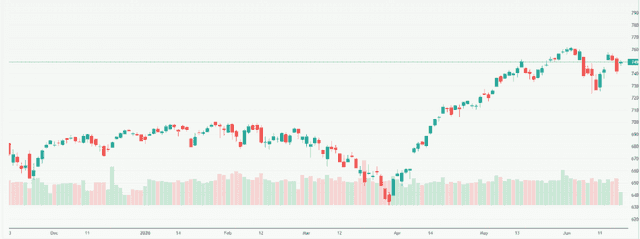
The S&P 500 closed at 7,500.58, near record territory. Investors appeared to take profits after several days of strong gains rather than react to any major negative development. Market pullbacks of this size are common after sharp advances and often reflect healthy consolidation rather than a shift in trend.
Investor Focus Shifts to Risk Management
Investors are also becoming more selective. While optimism remains high, traders are watching inflation data, Treasury yields, and Federal Reserve signals closely. The recent hawkish tone from Fed Chair Kevin Warsh has increased uncertainty around future rate decisions.
Higher rates can pressure growth stocks, especially technology companies with elevated valuations. As a result, many investors are balancing bullish momentum with cautious positioning.
Semiconductor Stocks Continue to Drive Market Sentiment
Chip Stocks Lead Technology Surge
Semiconductor companies remain the biggest force behind current market strength. The Philadelphia Semiconductor Index surged 6.4% during the latest session, significantly outperforming the broader market.
Strong demand for artificial intelligence infrastructure continues to fuel spending on advanced chips, servers, and data centers. This trend has helped semiconductor stocks recover quickly from recent volatility.
Intel Sparks Renewed Optimism
One of the session’s biggest winners was Intel. Shares jumped more than 10% after news emerged of a strategic partnership with Apple focused on chip design and manufacturing in the United States. The announcement strengthened confidence in domestic semiconductor production and reinforced the long-term growth outlook for the sector. Other chip companies, including Micron, Nvidia, and Marvell, also benefited from strong investor demand linked to AI expansion.
Why Semiconductor Performance Matters for the S&P 500?
Technology is the largest sector within the S&P 500. That means semiconductor performance has a direct impact on the index. Many investors now use advanced AI stock analysis tools to monitor semiconductor trends because chipmakers often act as early indicators of broader market sentiment. When semiconductor stocks rally, the wider market frequently follows.
Iran Truce Optimism Eases Inflation Fears
Peace Agreement Supports Risk Assets
Investor confidence improved after the announcement of a preliminary U.S.-Iran peace agreement. Markets welcomed signs of reduced geopolitical tension and greater stability in global energy markets. The agreement helped shift attention away from conflict risks and toward economic growth opportunities.
Oil Prices Fall as Supply Concerns Ease
Energy markets reacted immediately. Brent crude dropped about 1.6% to $78.29 per barrel, while West Texas Intermediate fell 1.9% to $74.57. Lower oil prices can reduce transportation and manufacturing costs, easing inflation pressure across the economy.
Impact on Stocks
Several sectors benefited from declining energy costs:
- Technology companies gained from lower inflation expectations.
- Travel and airline stocks improved as fuel costs eased.
- Growth stocks attracted renewed investor interest.
The market viewed the peace deal as a positive development for corporate earnings and economic stability.
Federal Reserve Remains the Key Market Risk
Traders Still Worry About Interest Rates
Despite the positive geopolitical news, Federal Reserve policy remains the biggest challenge for investors. Recent labor market data showed unemployment claims staying low, suggesting the economy remains resilient. This could give policymakers room to keep rates elevated for longer.
Upcoming Economic Data Could Move Markets
Markets are now focused on upcoming inflation and employment reports. Stronger-than-expected data could push Treasury yields higher and increase expectations for future rate hikes. Conversely, softer readings could support further gains in stocks, especially technology names.
What Investors Should Watch Next?
Key Catalysts for the Coming Sessions
Several factors will likely determine market direction:
- Semiconductor earnings and AI-related announcements.
- Progress on implementing the U.S.-Iran agreement.
- Oil price trends and inflation data.
- Federal Reserve commentary.
- Technical resistance levels for the S&P 500 and Nasdaq.
Investors should expect continued volatility as these catalysts unfold.
Conclusion
The recent 0.2% decline in S&P 500 futures looks more like a pause than a warning sign. Strong semiconductor demand, AI-driven investment, and optimism surrounding the U.S.-Iran peace agreement continue to support market sentiment.
However, interest rate uncertainty remains a major risk. If chip stocks maintain their momentum and inflation pressures continue to ease, the broader market could remain on a positive path through the second half of 2026.
Disclaimer:
The content shared by Meyka AI PTY LTD is solely for research and informational purposes. Meyka is not a financial advisory service, and the information provided should not be considered investment or trading advice.
What brings you to Meyka?
Pick what interests you most and we will get you started.
I'm here to read news
Find more articles like this one
I'm here to research stocks
Ask Meyka Analyst about any stock
I'm here to track my Portfolio
Get daily updates and alerts (coming March 2026)