Power Grid Corporation Q4FY26 Revenue Falls to ₹11,665.61 Crore From ₹12,275.35 Crore YoY

Key Points
Power Grid Q4FY26 revenue falls to ₹11,665.61 crore, down from ₹12,275.35 crore YoY.
Net profit rises nearly 10% due to deferred tax adjustments despite weak core performance.
Transmission revenue and EBITDA margins show clear pressure in the quarter.
Stock falls after results, but dividend payout and long-term outlook stay supportive.
Power demand in India continued to rise in early 2026, but Power Grid Corporation of India reported weaker quarterly revenue numbers. On May 16, 2026, the company posted Q4FY26 revenue of ₹11,665.61 crore, down from ₹12,275.35 crore a year earlier, even as net profit climbed nearly 10% due to deferred tax gains. The mixed results have raised fresh questions about margin pressure, transmission growth, and whether Power Grid can maintain investor confidence in FY27.
Power Grid Q4FY26 Results Snapshot: What Do the Numbers Really Show?
Power Grid Corporation of India reported Q4FY26 results on May 16, 2026. Revenue from operations stood at ₹11,665.61 crore, compared to ₹12,275.35 crore in Q4FY25. This shows a clear year-on-year decline.
Net profit moved in the opposite direction. It rose to about ₹4,546 crore, helped by tax adjustments. The company still maintained strong profitability, but core revenue weakness stood out.
Key highlights include:
- Revenue decline of nearly 5% YoY
- Net profit growth close to 10% YoY
- Margins under pressure compared to last year
The results reflect a mixed quarter for India’s largest transmission utility.
Why Did Power Grid Revenue Decline in Q4FY26?
Is the transmission business slowing down?
The main reason behind the lower revenue is weakness in the transmission segment. This is the core business of Power Grid. Reports show transmission revenue dropped compared to last year.
Power Grid works under a regulated tariff model. This means:
- Revenue growth is capped
- Earnings depend on project commissioning cycles
- Delays directly impact income
So even if electricity demand rises, revenue does not always grow fast.
Did regulatory and operational factors play a role?
Yes. Some additional pressure came from:
- Slower commissioning of new transmission assets
- Lower other income during the quarter
- Changes in tax structure impacting reported numbers
These combined factors reduced overall revenue visibility for the quarter.
Why Did Profit Rise Despite Falling Revenue?
Was profit growth real or accounting-driven?
Net profit increased mainly due to a deferred tax adjustment. This boosted reported earnings even when operating performance slowed. This is important because:
- It does not reflect core business strength
- It improves reported PAT only temporarily
Are operating margins under stress?
Yes. EBITDA margins fell compared to last year. Key pressure points:
- Higher operating costs
- Lower transmission income
- Reduced efficiency from delayed projects
This shows that core profitability is weaker than headline profit suggests.
How Did the Stock Market React After Q4 Results?
Why did Power Grid shares fall after the results?
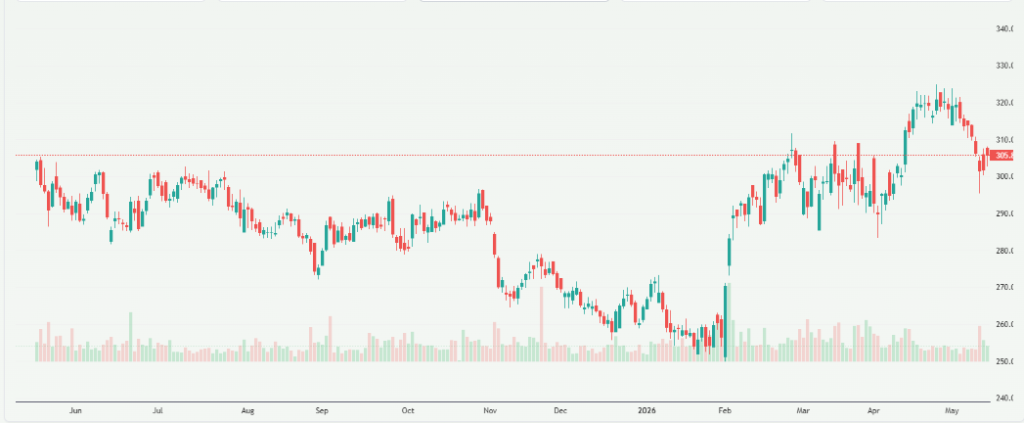
After the announcement, the stock fell nearly 4% in intraday trade. Investors reacted to:
- Revenue miss versus expectations
- Weak EBITDA performance
- Concerns about margin sustainability
Did dividends support investor sentiment?
Yes, partially. The company declared a final dividend of ₹1.25 per share. Total FY26 dividend stood at around ₹9 per share. This helped limit downside pressure.
Power Grid FY26 Full-Year Performance: Is the Base Still Strong?
How big is Power Grid’s infrastructure now?
Despite weak quarterly revenue, the company continues to expand its network:
- Over 1.8 lakh circuit km of transmission lines
- More than 290 substations
- High transmission availability above 99%
Is long-term growth still intact?
Yes, structurally. India’s power demand is rising due to:
- Renewable energy expansion
- Industrial electrification
- Grid modernization needs
Power Grid remains central to this transition.
What Do Analysts and AI Tools Suggest for Power Grid Stock?
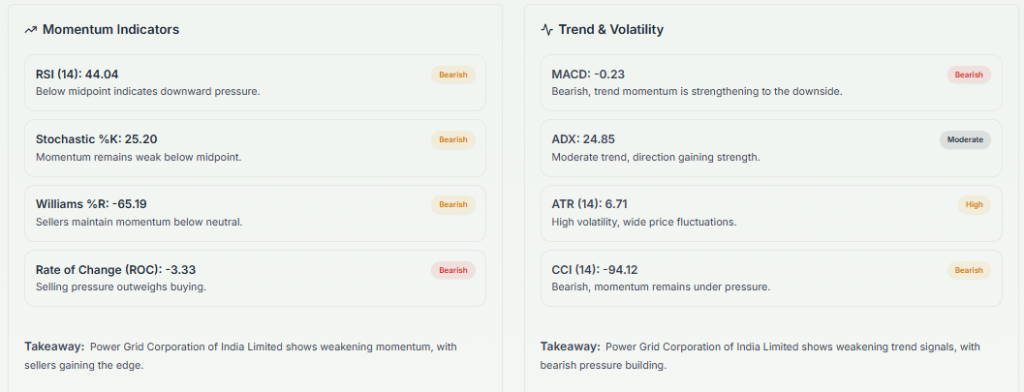
What is the technical outlook?
Market analysts note that:
- The stock is consolidating after recent volatility
- Support levels remain strong due to PSU stability
- Resistance is forming near recent highs
What does AI-based stock analysis indicate?
An AI stock analysis tool view suggests:
- Short-term pressure due to weak earnings momentum
- Medium-term stability driven by regulated returns
- Long-term upside linked to infrastructure capex cycle
How do analysts compare expectations?
Brokerages like Motilal Oswal and JM Financial highlight:
- Earnings quality concerns
- But stable cash flow generation
- Defensive nature of the stock in volatile markets
These views show a balance between risk and stability.
How Does Power Grid Compare With Other Power Stocks?
The broader power sector shows mixed performance:
- Tata Power saw revenue decline in Q4FY26
- JSW Energy reported strong revenue growth
- PFC posted a profit expansion
Power Grid stands out because:
- It is fully regulated
- It is less exposed to fuel price risk
- Growth is slower but more stable
What Should Investors Watch Next?
Will margins recover in FY27?
Key triggers include:
- Faster project commissioning
- Improved tariff realizations
- Stable operating costs
Can transmission demand boost growth?
Yes. India’s renewable expansion requires massive grid upgrades. This can support long-term earnings visibility.
Final Words
Power Grid’s Q4FY26 results show a clear gap between revenue weakness and reported profit strength. The fall in transmission income and margin pressure raises short-term concerns.
However, strong infrastructure scale and India’s rising power demand still support the long-term story. Investors will closely track execution speed and margin recovery in FY27 before deciding the next direction of the stock.
Disclaimer:
The content shared by Meyka AI PTY LTD is solely for research and informational purposes. Meyka is not a financial advisory service, and the information provided should not be considered investment or trading advice.
What brings you to Meyka?
Pick what interests you most and we will get you started.
I'm here to read news
Find more articles like this one
I'm here to research stocks
Ask Meyka Analyst about any stock
I'm here to track my Portfolio
Get daily updates and alerts (coming March 2026)