
Key Points
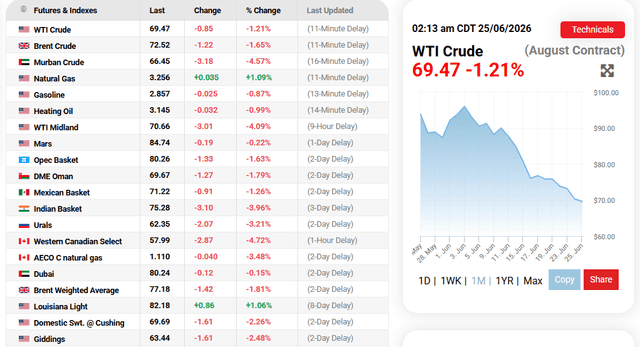
Brent crude fell 1.8% to $72.42, marking a fourth straight daily decline.
Oil prices returned to levels seen before Iran-related supply concerns emerged.
Recovery in Strait of Hormuz shipping eased fears of global supply disruptions.
Lower crude prices could benefit import-dependent economies while pressuring energy producers.
Oil prices continued their sharp decline on June 25, 2026, with Brent crude falling 1.8% to around $72.42 per barrel, marking its fourth straight day of losses. The drop has pushed prices back to levels seen before tensions involving Iran disrupted global energy markets.
As concerns over supply disruptions ease and tanker traffic through the Strait of Hormuz improves, investors are reassessing the outlook for crude oil. What does this sudden shift mean for markets, inflation, and energy stocks in the weeks ahead?
Brent Crude Falls to Its Lowest Level Since Before the Iran Conflict
Key Price Moves in Today’s Session
Brent crude extended its losing streak on June 25, 2026, falling 1.8% to around $72.42-72.52 per barrel. U.S. West Texas Intermediate (WTI) also dropped, trading near $69.30 per barrel. Both benchmarks reached their lowest levels since February 27, before the conflict involving Iran disrupted global energy markets.
The decline marks the fourth consecutive trading session of losses. It reflects a rapid shift in trader sentiment as supply concerns ease across the Middle East.
How Far Prices Have Fallen?
The latest drop has erased nearly all of the geopolitical premium added during the conflict. At the height of supply fears, Brent crude briefly traded above $100 per barrel. Now, prices have returned to levels seen before military tensions escalated.
Analysts note that the market is moving from fear-driven pricing back toward supply-and-demand fundamentals. This transition is one of the main reasons behind the sharp correction in oil prices.
What Is Driving the Sharp Decline in Oil Prices?
Supply Flows Through the Strait of Hormuz are Recovering
The biggest reason for the sell-off is the recovery in oil shipments through the Strait of Hormuz. U.S. Energy Secretary Chris Wright stated that nearly 20 million barrels of oil passed through the strategic waterway in the previous 24 hours. That represents a significant improvement in shipping activity.
The Strait of Hormuz handles roughly one-fifth of global oil consumption. Any disruption there can move energy markets quickly.
Increased Gulf Exports Add Pressure
Oil exports from Gulf producers are rising as logistical bottlenecks clear. According to Financial Times reporting, tanker departures from the Gulf increased by about 50% after tensions eased. More crude reaching global markets means buyers are no longer worried about immediate shortages.
Several previously stranded tankers have also resumed operations. This has created expectations of ample near-term supply.
Traders Remove Geopolitical Risk Premium
Energy traders are rapidly removing the risk premium that supported prices during the conflict. Market structure now signals short-term oversupply, with later-dated Brent contracts trading above front-month contracts.
Analysts at IG and Sparta Commodities say the market is pricing in a faster return of Middle Eastern barrels than expected. This shift has accelerated selling pressure across crude markets.
Market Impact: Winners and Losers from Falling Crude Prices
Oil-Importing Nations Benefit
Countries that depend heavily on imported crude are among the biggest winners. India, the world’s third-largest oil importer, saw investor sentiment improve as oil prices declined. Lower crude costs can reduce import bills, improve trade balances, and ease inflation pressures.
Indian benchmark indices, including the Sensex and Nifty 50, moved higher following the latest drop in oil prices.
Energy Producers Face Revenue Pressure
Oil-producing nations and energy companies face a different reality. Lower crude prices reduce revenue and can pressure earnings. Companies with higher production costs may become more cautious about expansion plans if prices remain weak. Many energy stocks that benefited from the conflict-driven rally could face renewed volatility.
Impact on Inflation and Consumers
Falling oil prices often translate into lower fuel and transportation costs. This can help central banks manage inflation and support consumer spending.
Benefits may include:
- Lower gasoline and diesel prices.
- Reduced logistics costs.
- Better profit margins for transportation and manufacturing firms.
However, economists warn that stronger demand resulting from lower energy costs could eventually support higher prices again.
Oil Price Forecast: Can Brent Rebound from Current Levels?
Bullish View
Some analysts believe Brent could recover toward the $80-$90 range once temporary oversupply conditions fade. Energy Aspects analysts argue that the current flood of exports may not be sustainable over the long term.
Bearish View
Others expect prices to remain under pressure. Reuters polling and market forecasts suggest Brent could average around $67 per barrel during the third quarter if supply growth continues and geopolitical tensions remain contained.
Key Factors to Watch
Investors should monitor:
- Strait of Hormuz shipping activity.
- Iran-related negotiations.
- OPEC+ production decisions.
- Global demand growth trends.
AI stock analysis tools and commodity forecasting platforms are also increasingly being used by traders to monitor changing market conditions and identify potential price trends.
Conclusion
Brent crude’s fall to pre-Iran war levels highlights how quickly energy markets can shift when supply fears fade. The recovery of oil flows through the Strait of Hormuz, rising Gulf exports, and easing geopolitical concerns have pushed prices lower for four straight sessions.
While cheaper oil benefits importing nations and consumers, producers face growing pressure. The next direction for crude prices will largely depend on Middle East stability, shipping activity, and global demand during the second half of 2026.
Disclaimer:
The content shared by Meyka AI PTY LTD is solely for research and informational purposes. Meyka is not a financial advisory service, and the information provided should not be considered investment or trading advice.
What brings you to Meyka?
Pick what interests you most and we will get you started.
I'm here to read news
Find more articles like this one
I'm here to research stocks
Ask Meyka Analyst about any stock
I'm here to track my Portfolio
Get daily updates and alerts (coming March 2026)