




Key Points
The Nikkei 225 dropped over 2% as a stronger Japanese yen triggered broad-based selling.
Export giants like Toyota, Honda, and Sony led losses due to currency-related profit concerns.
A stronger yen reduces overseas earnings and weakens the competitiveness of Japanese exporters.
Investors are closely watching the Bank of Japan, USD/JPY, and upcoming earnings for the market's next direction.
On August 3, 2026, the Nikkei 225 dropped more than 2% after the Japanese yen strengthened, triggering a wave of selling in export-driven stocks. Automakers and technology companies were among the hardest hit because a stronger yen reduces the value of overseas earnings when they are converted into Japan’s currency. The decline also raised fresh concerns about corporate profits and investor sentiment. So, what pushed the yen higher, and why is Japan’s stock market drawing so much attention?
Why Did the Nikkei 225 Fall More Than 2%?
Stronger Yen Triggers Broad Selling
The Nikkei 225 lost ground on August 3, 2026, as the Japanese yen climbed sharply against the U.S. dollar. The move followed confirmation of coordinated efforts by Japanese and U.S. authorities to support the yen. While a stronger currency can help reduce import costs, it creates problems for Japan’s export-focused companies.
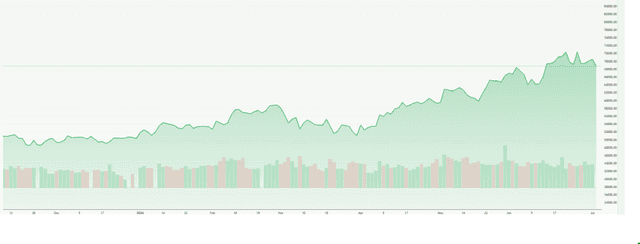
Revenue earned overseas is worth less when converted back into yen, putting pressure on earnings. That prompted investors to cut exposure to companies with large international businesses, sending the broader market lower.
Export Stocks Lead the Decline
Exporters bore the brunt of the selloff. Shares of Toyota, Honda, and Sony declined as traders reassessed earnings expectations under a stronger yen. These companies generate a significant share of their revenue outside Japan, making exchange-rate movements an important factor in their financial performance. The selling reflected concerns about future profits rather than any deterioration in the companies’ underlying businesses.
How Does a Stronger Yen Impact Japanese Exporters?
Currency Translation Reduces Overseas Profits
Japanese exporters usually benefit when the yen is weak. A stronger yen cuts the value of overseas revenue after it is converted into the local currency. It can also make Japanese products more expensive in global markets, reducing their price advantage against international competitors. If the currency stays strong for an extended period, companies may need to revise their earnings forecasts.
Which Industries Face the Most Pressure?
Some industries are more exposed to currency swings than others, particularly those that rely heavily on exports. These include:
- Automobile manufacturers
- Consumer electronics companies
- Industrial machinery makers
- Semiconductor equipment suppliers
Most of these businesses earn a large portion of their sales overseas. Even relatively small changes in exchange rates can affect profit margins and investor confidence.
Market Reaction Beyond the Nikkei
How Did the Broader Market Respond?
Selling was not limited to the Nikkei 225. The broader Topix index also moved lower as investors pulled back from export-related sectors. Automakers and electronics companies accounted for much of the decline, while a handful of technology names, including SoftBank and Lasertec, held up better than the rest of the market. As currency volatility increased, investors shifted part of their portfolios toward more defensive assets.
Impact on Asian and Global Markets
Japan’s market weakness spread across the region. South Korea’s Kospi also fell as investors reacted to changing currency markets and weaker risk appetite. At the same time, traders kept a close eye on U.S. stock futures and global foreign exchange markets. Demand for safe-haven assets supported the yen, while softer oil prices and changing geopolitical expectations added another layer of uncertainty.
What Investors Should Watch Next?
Will the Bank of Japan Act Again?
Attention has now shifted to the Bank of Japan and Japan’s Finance Ministry. Investors are looking for any further action to manage currency volatility if the yen continues to strengthen. U.S. monetary policy is also in focus because changes in interest rates can influence the USD/JPY exchange rate and affect Japanese equities.
Nikkei 225 Forecast, Technical Analysis and Meyka View
Short-term outlook: Market volatility is likely to remain elevated until the yen stabilizes and companies provide updated earnings guidance.
Technical analysis summary: The recent decline weakened several support levels, leaving short-term momentum bearish. Even so, the longer-term trend remains positive after the strong gains recorded earlier this year.
What Meyka says: According to Meyka, pullbacks driven by currency movements can create opportunities in fundamentally strong companies with solid pricing power. Investors can also use the Meyka AI stock analysis tool to track technical indicators, market sentiment, and potential risk before making investment decisions.
Supporting analyst insights: Reuters and AP say the latest decline is mainly the result of the stronger yen rather than weaker business performance. That means future currency moves are likely to remain the main driver of Japanese stocks in the near term.
Conclusion
The Nikkei 225’s recent decline shows how sensitive Japanese equities are to movements in the yen. While a stronger currency can lower import costs for consumers and businesses, it also reduces the overseas earnings of many companies that dominate the index. For now, investors will be watching the yen, Bank of Japan policy decisions, and upcoming corporate earnings to judge whether the market can regain momentum or remain under pressure.
Disclaimer:
The content shared by Meyka AI PTY LTD is for research and informational purposes only. Meyka is not a financial advisory service, and the information provided should not be treated as investment or trading advice.
What brings you to Meyka?
Pick what interests you most and we will get you started.
I'm here to read news
Find more articles like this one
I'm here to research stocks
Ask Meyka Analyst about any stock
I'm here to track my Portfolio
Get daily updates and alerts (coming March 2026)