



Nikkei 225 Drops 1,526 Points (−2.33%) to 63,890.19 as Investors Eye BoJ Rate Decision and Overheated Valuations

Key Points
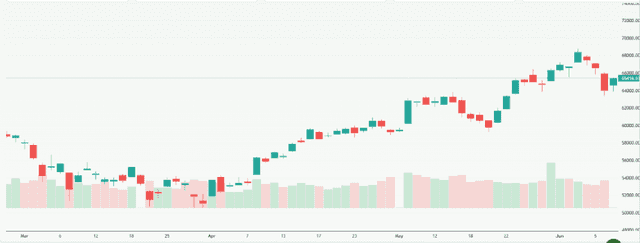
Nikkei 225 plunged 1,526 points (-2.33%) to close at 63,890.19 amid growing market uncertainty.
BoJ rate hike expectations triggered profit-taking after the index's record-breaking rally.
AI and semiconductor stocks, including Advantest and Tokyo Electron, led the market decline.
Investors are watching whether the pullback is a healthy correction or the start of a deeper downturn.
On June 10, 2026, Japan’s benchmark Nikkei 225 index fell 1,526 points, or 2.33%, closing at 63,890.19. The drop came after months of strong gains that pushed Japanese stocks near record highs. Investors are now focusing on the Bank of Japan’s upcoming rate decision, while concerns about overheated valuations and a possible slowdown in AI-related stocks add pressure. The market’s next move may depend on whether policymakers signal tighter monetary conditions.
Why the Nikkei 225 Fell 1,526 Points in a Single Session?
BoJ Rate Hike Expectations Intensify
The Nikkei 225 dropped 1,526 points, or 2.33%, to 63,890.19 on June 10, 2026, as investors prepared for the upcoming Bank of Japan (BoJ) policy decision. Markets have become increasingly sensitive to signs that the BoJ may continue normalizing monetary policy after years of ultra-low interest rates. Recent discussions around inflation, wage growth, and currency stability have strengthened expectations for tighter policy.
Several analysts believe the June meeting could be one of the most important events for Japanese equities this year. Higher rates typically increase borrowing costs and reduce the appeal of richly valued growth stocks, especially technology names that have driven much of the Nikkei’s rally.
Investors Lock In Profits After Historic Rally
The decline also reflects heavy profit-taking. The Nikkei recently surged above 68,000 for the first time in history and gained roughly 30% year-to-date before the correction. AI-driven enthusiasm, semiconductor demand, and a weak yen helped fuel the rally. However, valuations became stretched, prompting investors to reduce risk exposure.
After such a strong advance, many traders viewed the BoJ meeting as a reason to lock in gains rather than add new positions.
AI and Semiconductor Stocks Lead the Market Decline
Tech Stocks Face Renewed Selling Pressure
Technology stocks were among the biggest losers during the sell-off. Weak sentiment in global semiconductor markets spilled into Japan after concerns emerged that AI-related valuations had become too aggressive. U.S. technology weakness also added pressure to Asian markets.
Investors who previously chased AI winners began rotating into defensive sectors ahead of the BoJ decision.
Major Losers in the Session
Several heavyweight technology companies dragged the index lower:
- Advantest
- Tokyo Electron
- SoftBank Group
- Murata Manufacturing
These companies were among the biggest beneficiaries of the global AI boom. As investors reassessed risk, they became key targets for profit-taking. The broader concern is not weakening business fundamentals but rather whether stock prices ran ahead of earnings expectations.
How the BoJ Rate Decision Could Shape the Next Market Move?
Scenarios Investors are Watching
If the BoJ signals another rate increase or adopts a more hawkish tone, market volatility could remain elevated. Higher rates generally strengthen the yen and reduce liquidity available for risk assets.
However, if policymakers maintain a cautious approach, investors may return to growth stocks and resume buying Japanese equities.
Impact on Key Sectors
Different sectors could react differently:
- Banks may benefit from higher interest rates.
- Exporters could face pressure if the yen strengthens.
- Technology stocks may experience further valuation adjustments.
- Domestic-focused companies could become more attractive.
According to Meyka, the Nikkei’s long-term trend remains constructive despite recent volatility. The platform’s AI stock analysis tool continues to identify positive momentum signals, although short-term risks have increased. Meyka notes that support levels remain important as investors evaluate the next policy move.
Global Factors Adding Pressure to Japanese Equities
U.S. Interest Rate Uncertainty
Japanese markets are also reacting to global developments. Strong U.S. economic data recently pushed Treasury yields higher and revived concerns that interest rates may stay elevated longer than expected. Higher yields often reduce demand for risk assets worldwide.
Geopolitical and Risk-Off Sentiment
Geopolitical uncertainty remains another challenge. Tensions in the Middle East have increased volatility across global markets and lifted energy prices at times. Investors have responded by moving capital into safer assets and reducing exposure to high-growth sectors.
Is This a Healthy Correction or the Start of a Bigger Pullback?
Arguments for a Temporary Correction
Many analysts still see this decline as a normal correction within a larger bull market. Corporate earnings remain strong, foreign investment continues to support Japanese equities, and AI-related demand has not disappeared. Long-term forecasts remain broadly positive.
Risks Investors Should Monitor
Key risks include:
- Faster-than-expected BoJ tightening.
- Further weakness in semiconductor stocks.
- Rising global bond yields.
- Escalating geopolitical tensions.
Conclusion
The Nikkei 225’s sharp decline highlights growing caution after a historic rally fueled by AI optimism and strong foreign inflows. While concerns about valuations and the upcoming BoJ decision are driving short-term volatility, the longer-term outlook for Japanese equities remains supported by earnings growth and technology investment trends.
Investors should closely watch BoJ policy signals, semiconductor sector performance, and global interest-rate developments to determine whether this move is a healthy correction or the start of a deeper pullback.
Disclaimer:
The content shared by Meyka AI PTY LTD is solely for research and informational purposes. Meyka is not a financial advisory service, and the information provided should not be considered investment or trading advice.
What brings you to Meyka?
Pick what interests you most and we will get you started.
I'm here to read news
Find more articles like this one
I'm here to research stocks
Ask Meyka Analyst about any stock
I'm here to track my Portfolio
Get daily updates and alerts (coming March 2026)