




Key Points
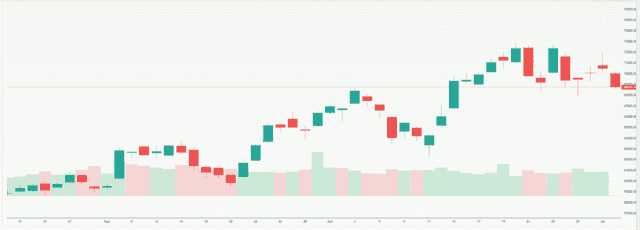
Nikkei 225 fell 1.91% on July 29, 2026, to its lowest level in over two months.
Semiconductor and AI stocks led the market decline amid global tech weakness.
U.S. tech earnings, Fed policy, and geopolitical risks remain key market drivers.
Long-term outlook for Japanese equities stays positive despite near-term volatility.
On July 29, 2026, Japan’s Nikkei 225 dropped 1.91% to its lowest close in more than two months as technology stocks drove a broad market decline. Semiconductor and AI-related companies came under heavy selling pressure after weak global market sentiment hurt investor confidence.
The selloff has raised fresh questions about whether Japan’s recent stock market gains can hold. Below is a closer look at what pushed the market lower, which stocks saw the biggest declines, and what investors are watching next.
Why Did the Nikkei 225 Fall to a Two-Month Low?
What triggered the latest tech selloff?
The Nikkei 225 ended July 29, 2026, down 1.91%, extending recent losses and finishing at its weakest level in more than two months. Technology companies accounted for much of the decline as investors continued trimming positions in AI and semiconductor stocks. Weakness in Wall Street’s technology sector carried into Asian trading, adding to the pressure.
At the same time, concerns about rising AI spending, renewed geopolitical tensions in the Middle East, and caution ahead of major U.S. technology earnings kept investors on the sidelines.
Why did global markets influence Japanese stocks?
Japan’s stock market has strong ties to the global semiconductor industry. Many of the Nikkei’s largest companies supply equipment and components used in advanced chip production, so weakness in U.S. chip stocks often spills over into Tokyo.
Investors also turned more cautious ahead of the latest Federal Reserve policy announcement and earnings from Microsoft and Meta. Higher oil prices and lingering inflation concerns added another reason to move away from higher-risk growth stocks.
Which Japanese Stocks Led the Decline?
Which semiconductor companies suffered the biggest losses?
Semiconductor-related shares were responsible for much of the Nikkei’s decline. Companies including Advantest, Tokyo Electron, Screen Holdings, and other suppliers tied to AI chip production all faced heavy selling. Many investors chose to lock in profits after a long period of strong gains.
These companies remain closely tied to expectations for AI investment because they supply equipment used to manufacture advanced semiconductors. Even solid earnings across the sector have not been enough to satisfy investors looking for continued rapid growth. That led to another wave of selling across Japanese technology stocks.
Were any sectors more resilient?
Not every part of the market moved lower at the same pace. Financial firms, railway operators, and several businesses focused on Japan’s domestic economy attracted buying as investors shifted toward more defensive sectors. That rotation is common during technology pullbacks because these industries often have more stable earnings. While the broader market stayed under pressure, those gains helped reduce losses in the Topix index.
What Does the Nikkei Decline Mean for Investors?
Should investors expect more short-term volatility?
Market volatility could remain elevated in the weeks ahead. Investors are waiting for earnings from major U.S. technology companies to gauge whether AI spending is still growing at the expected pace. Central bank decisions, inflation figures, and geopolitical developments could also influence trading. If earnings fail to meet expectations, semiconductor shares may remain under pressure despite their longer-term growth potential.
Does Japan still offer long-term investment opportunities?
Japan’s long-term investment case has not changed because of the recent market weakness. Corporate governance reforms, steady foreign investment, and continued demand for advanced semiconductor technology still support the market. Investors with a longer time horizon may find opportunities after recent declines.
An AI stock analysis tool, used alongside company fundamentals and technical indicators, can also help investors assess changing market conditions.
Nikkei 225 outlook, technical analysis and analyst views
According to Meyka, the Nikkei’s short-term trend has weakened after the index fell below recent support levels. The platform says investors should watch for signs of price stabilisation before expecting another recovery. Earlier analysis also pointed to resistance near the 70,000 level and noted that the index remains highly sensitive to developments in the global semiconductor sector.
Other analysts have reached a similar conclusion. Reuters reported that Japanese equities continue to track overseas chip stocks closely and remain sensitive to investor expectations for AI spending. Analysts believe upcoming U.S. technology earnings and central bank decisions are likely to shape the market’s next move.
Key Market Numbers Investors Should Know
- Nikkei 225 closed 1.91% lower on July 29, 2026.
- The benchmark finished at its lowest level in more than two months.
- Semiconductor and AI-related stocks recorded the largest declines.
- Investors are watching U.S. technology earnings, Federal Reserve policy, oil prices, and geopolitical developments for the market’s next direction.
Conclusion
The Nikkei 225 remains under pressure as investors reassess technology valuations and respond to global economic uncertainty. Market swings may continue while traders digest earnings reports and central bank decisions.
Even so, Japan’s long-term investment story still rests on corporate reforms and demand for advanced semiconductors. For now, investors are likely to focus on company fundamentals, technical levels, and developments in global technology markets before making new positions.
Disclaimer:
The content shared by Meyka AI PTY LTD is for research and informational purposes only. Meyka is not a financial advisory service, and the information provided should not be treated as investment or trading advice.
What brings you to Meyka?
Pick what interests you most and we will get you started.
I'm here to read news
Find more articles like this one
I'm here to research stocks
Ask Meyka Analyst about any stock
I'm here to track my Portfolio
Get daily updates and alerts (coming March 2026)