
Key Points
Nikkei 225 climbed near record highs, crossing 63,000 on strong AI and tech buying.
Semiconductor stocks like Ibiden, Sumco, and Kioxia led the rally.
Profit booking started as investors locked gains after a sharp market rise.
Weak yen and foreign inflows continue to support Japan’s stock market momentum.
Japan’s stock market reached another major milestone in May 2026 as the Nikkei 225 climbed nearly 1% to fresh record highs before investors began booking profits. Strong demand for AI and semiconductor stocks pushed the index higher, while a weaker yen also supported exporter shares.
However, the rally slowed as traders turned cautious after weeks of sharp gains. The latest move highlights both the strength and volatility of Japan’s fast-rising equity market, attracting global investor attention once again.
Why the Nikkei 225 Jumped to Fresh Record Levels?
Japan’s benchmark stock index, the Nikkei 225, climbed nearly 1% in May 2026 and briefly crossed the 63,000 mark for the first time in history. Investors rushed into technology and AI-linked stocks after strong global earnings and improving market sentiment boosted confidence. Reuters reported that the index surged 5.58% on May 7, 2026, reaching a record closing high of 62,833.84.
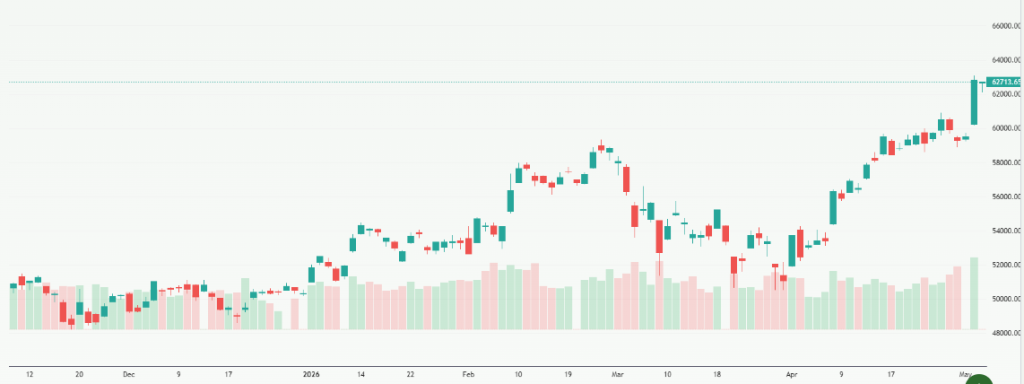
The rally also followed strong gains on Wall Street. Investors reacted positively to easing geopolitical fears and rising demand for semiconductor stocks. Japan’s stock market has now become one of Asia’s best-performing markets in 2026.
How Did AI and Semiconductor Stocks Lead the Rally?
Technology companies played the biggest role in pushing the Nikkei higher. Investors increased buying in chipmakers and AI-focused firms after strong earnings from global semiconductor companies.
Some of the top-performing stocks included:
- SoftBank Group
- Tokyo Electron
- Advantest
- Ibiden
- Sumco
Reuters data showed:
- Ibiden jumped 22.4%
- Sumco gained 19.7%
- Kioxia climbed 19.2%
The AI boom has continued to attract investors toward Asian technology stocks. Analysts believe Japan is benefiting from global demand for chips, AI servers, and data infrastructure.
Why Did Global Optimism Support Japanese Stocks?
Global market sentiment improved sharply in early May 2026. Investors became more confident after stronger U.S. earnings and hopes for reduced Middle East tensions.
Reuters noted that optimism around a possible Iran peace proposal supported risk assets across Asia. At the same time:
- Oil prices became less volatile
- Bond markets stabilized
- Investors moved back into growth stocks
This helped Japanese equities extend their rally after reopening from holidays.
Profit Booking Emerges After Historic Rally
After the sharp rise, many investors started locking in gains. This process is known as profit booking. It happens when traders sell stocks after a strong rally to secure profits before prices potentially fall. On May 11, 2026, the Nikkei slipped from record intraday highs as some investors became cautious about overheating valuations.
Why are Pullbacks Common After Strong Market Rallies?
Short-term pullbacks are normal during major bull markets. Rapid rallies often push technical indicators into overbought territory.
Several factors increased caution:
- High stock valuations
- Rising geopolitical risks
- Concerns about inflation
- Fear of sudden corrections
Analysts said traders remained optimistic overall, but many preferred to reduce exposure after the Nikkei’s historic surge.
Reddit discussions also reflected mixed investor sentiment. Some users praised the AI-driven momentum, while others warned that markets may be overheating after such rapid gains.
Key Drivers Behind Japan’s Stock Market Boom in 2026
Japan’s stock market rally is not based on one factor alone. Several economic and global trends have supported the Nikkei’s rise.
How Is the Weak Yen Helping Japanese Stocks?
The Japanese yen remained weak against the U.S. dollar during much of 2026. A weaker yen helps exporters because overseas earnings become more valuable when converted back into yen. Major exporters in:
- Automobiles
- Electronics
- Semiconductor equipment
have benefited from currency movements. Reuters reported the yen traded near 156 per dollar during recent rallies.
Why are Foreign Investors Returning to Japan?
Global investors are showing renewed interest in Japanese equities after years of weak participation. Several reasons explain this shift:
- Corporate governance reforms
- Strong shareholder returns
- Share buyback programs
- Better profit margins
Japan’s stock market is now seen as more shareholder-friendly than in previous decades.
What Role Does the Bank of Japan Play?
The Bank of Japan continues to influence market direction. Minutes from the BOJ’s March 2026 meeting suggested policymakers could consider future rate hikes if inflation remains elevated.
However, interest rates in Japan still remain relatively low compared with other major economies. That has continued to support equity markets.
Top Stocks Leading the Nikkei Rally
Several technology and semiconductor companies became major drivers behind the latest Nikkei gains.
Which Stocks Outperformed the Most?
The strongest performers included semiconductor-related shares. Key winners:
- Ibiden
- Kioxia
- Sumco
These stocks rallied as investors expected stronger AI-related demand throughout 2026.
Which Sectors Lagged Behind?
Not every sector moved higher. Energy companies struggled because falling oil prices reduced profit expectations. Reuters reported that Inpex declined 6.5% during the broader rally. Some automobile companies also faced pressure from rising competition and global supply concerns.
Historical Context – Nikkei’s Biggest Comeback Story
The Nikkei’s recent rally is historic because Japan spent decades recovering from its 1989 asset bubble crash.
How Long Did It Take the Nikkei to Recover?
Japan’s stock market peaked in 1989 before collapsing during the country’s economic slowdown. The market then entered a long period of stagnation that lasted more than three decades.
In May 2026, the Nikkei finally pushed to new all-time highs above 62,800. This recovery has become one of the biggest comeback stories in modern financial markets.
Why are Investors Comparing Japan to the U.S. AI Rally?
Analysts increasingly compare Japan’s market momentum with the U.S. technology rally. Both markets are benefiting from:
- AI investment growth
- Semiconductor demand
- Strong tech earnings
- Increased retail participation
FXEmpire analysts said the Nikkei remains in a bullish trend because AI optimism and yen weakness continue supporting Japanese equities.
Nikkei 225 Forecast and Technical Analysis
What Does Meyka Say About the Nikkei 225?
According to Meyka, the Nikkei 225 still shows strong momentum, although short-term volatility may increase after recent record highs.
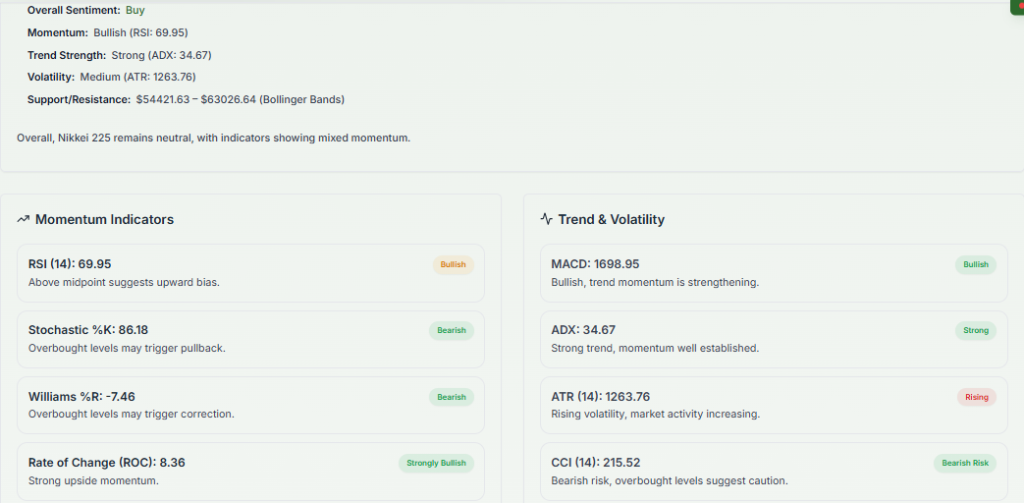
Meyka’s latest forecast noted:
- Near-term outlook remains volatile
- Support levels are near 57,000
- Resistance could extend toward 65,000
- Long-term sentiment remains cautiously bullish
The platform’s AI stock analysis tool highlighted that momentum indicators remain positive despite temporary overbought signals.
What are Other Analysts Saying?
Other market analysts also remain optimistic about Japanese equities. FXEmpire analysts believe:
- AI demand continues supporting tech shares
- The weak yen remains favorable for exporters
- A breakout above 60,000 could strengthen bullish momentum further
However, analysts also warned that future gains may depend on:
- Bank of Japan policy decisions
- Inflation trends
- Global economic stability
- Geopolitical developments
What Investors Should Watch Next?
The Nikkei’s next move may depend on both domestic and global events. Key factors investors are monitoring include:
- Future Bank of Japan rate decisions
- Yen volatility
- Global AI demand
- U.S. market performance
- Middle East tensions
Technical traders are also watching whether the Nikkei can hold support above 60,000 after its recent breakout.
If momentum continues, analysts believe the index could test new highs later in 2026. However, short-term corrections may still occur after such a rapid rally.
Final Words
The Nikkei 225’s rise to record highs shows growing confidence in Japan’s economy and technology sector. Strong AI demand, a weaker yen, and foreign investor interest continue to support the market.
However, recent profit booking also highlights rising caution after the sharp rally. Investors will now closely watch Bank of Japan policy decisions, global economic trends, and semiconductor demand to see whether the Nikkei can maintain its bullish momentum through the rest of 2026.
Disclaimer:
The content shared by Meyka AI PTY LTD is solely for research and informational purposes. Meyka is not a financial advisory service, and the information provided should not be considered investment or trading advice.
What brings you to Meyka?
Pick what interests you most and we will get you started.
I'm here to read news
Find more articles like this one
I'm here to research stocks
Ask Meyka Analyst about any stock
I'm here to track my Portfolio
Get daily updates and alerts (coming March 2026)