
Key Points
Azure growth remains the biggest driver for MSFT stock.
Investors are closely watching Microsoft’s AI spending plans.
The new OpenAI deal could reshape Microsoft’s AI strategy.
Strong earnings guidance may boost Microsoft's stock momentum.
Microsoft is entering a critical earnings week as investors closely watch the company’s AI and cloud business performance. MSFT stock has slipped in 2026 despite strong demand for artificial intelligence services and continued growth in Azure cloud revenue. Wall Street expects Microsoft to report fiscal Q3 2026 earnings this week, with revenue projected above $81 billion. At the same time, questions are growing around rising AI spending, data center expansion, and the company’s evolving partnership with OpenAI.
Analysts are especially focused on whether Azure can maintain its strong growth pace as competition in cloud computing and AI intensifies. The results could shape investor sentiment toward both Microsoft and the wider AI market for the rest of 2026.
Why Microsoft Earnings Matter More Than Ever in 2026?
AI Spending Is Becoming the Main Market Test
Microsoft is no longer seen as just a software company. In 2026, investors are treating it as one of the biggest AI infrastructure leaders in the world. The company has poured billions into AI chips, cloud servers, and data centers to support growing demand for tools like Copilot and Azure AI.
Wall Street is now asking one big question: Is all this spending creating enough profit?
Reports suggest Microsoft’s AI-related capital spending could approach $120 billion during fiscal 2026. That number has made some investors nervous as the company tries to balance growth with profitability.
Why Is MSFT Stock Under Pressure Despite Strong Revenue?
MSFT stock has struggled in 2026 even though Microsoft’s business remains strong. Shares are still down nearly 12% year-to-date ahead of earnings. Investors are worried about:
- Rising AI costs
- Slower cloud margin growth
- Dependence on OpenAI
- Slowing momentum in Copilot adoption
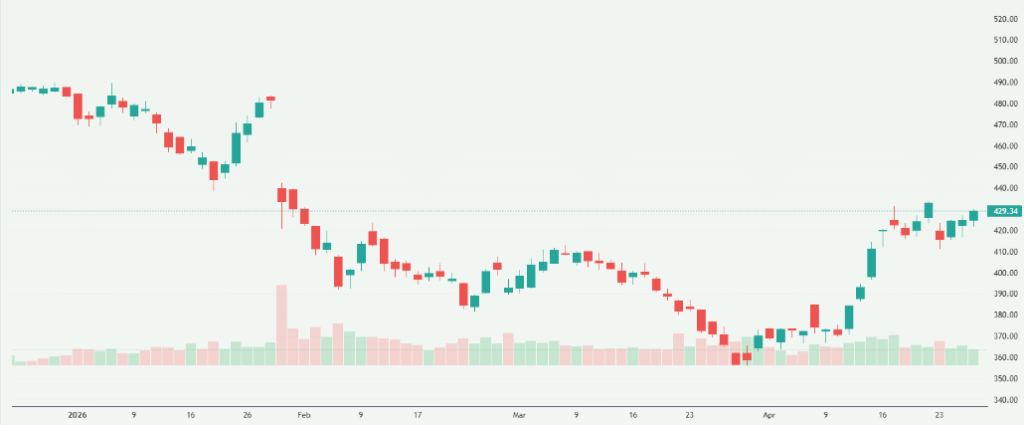
Markets are no longer rewarding AI hype alone. Investors now want proof that Microsoft’s AI investments can generate long-term cash flow and stronger earnings growth.
Azure Growth Remains the Biggest Earnings Catalyst
Why Is Azure So Important to Microsoft’s Future?
Azure has become Microsoft’s most important growth engine. The cloud platform powers enterprise AI services, OpenAI workloads, and Microsoft’s broader AI ecosystem.
Last quarter, Azure revenue growth reached about 39% in constant currency. Analysts said the business could have grown even faster if Microsoft had more AI capacity available. That performance raised expectations going into fiscal Q3 2026 earnings.
What are Analysts Expecting From Azure This Quarter?
Wall Street expects Azure growth to remain close to 38-40%. That would still place Microsoft ahead of many competitors in enterprise cloud AI adoption.
Key expectations include:
- Intelligent Cloud revenue is around $34 billion
- Overall, the company’s revenue is near $81.4 billion
- EPS forecast around $4.06-4.07
Analysts are watching whether Azure can stay above the critical 35% growth level. A slowdown below expectations could pressure the stock after earnings.
Can AI Demand Push Azure Higher?
Demand for AI computing remains extremely strong. Microsoft continues expanding global data center capacity to support enterprise AI customers.
The company is also integrating AI tools across its ecosystem, including:
- Microsoft 365 Copilot
- Azure AI Foundry
- GitHub Copilot
- AI-powered security products
Many analysts believe Microsoft still faces supply constraints rather than demand problems. That could support future cloud growth if capacity expands faster in late 2026.
The OpenAI Deal Restructuring Could Reshape Microsoft’s AI Future
What Changed in the Microsoft–OpenAI Partnership?
On April 27, 2026, Microsoft and OpenAI announced major changes to their long-term agreement. The updated partnership includes:
- Microsoft keeps access to OpenAI technology through 2032
- The license is now non-exclusive
- OpenAI can work with Amazon, Google, Oracle, and others
- Microsoft remains OpenAI’s primary cloud partner
- OpenAI products will still launch first on Azure in most cases
The companies also removed the older AGI-related clause that created uncertainty around future revenue sharing.
Why are Investors Watching This Deal So Closely?
The biggest concern is competition. Previously, Microsoft had exclusive cloud rights tied to OpenAI technology. That gave Azure a major advantage in enterprise AI. Now, OpenAI has more freedom to partner with rival cloud providers, including AWS and Google Cloud. Some investors fear that this could weaken Microsoft’s AI dominance over time.
At the same time, the new agreement may reduce regulatory pressure and simplify Microsoft’s future AI strategy.
Could the New Partnership Actually Help Microsoft?
Some analysts believe the changes may benefit Microsoft long-term. The updated agreement allows Microsoft to:
- Reduce revenue-sharing obligations
- Expand support for other AI models
- Lower dependency on OpenAI
- Build a broader AI ecosystem
Microsoft has already increased work with third-party AI models while also developing internal AI systems. That strategy may reduce long-term risk.
Copilot Adoption and AI Monetization are Under the Microscope
Is Copilot Generating Real Revenue Yet?
Microsoft’s AI tools have received strong attention, but investors want to see stronger monetization.
Reports estimate Microsoft now has roughly 15 million paid Copilot seats across enterprise customers. However, some analysts believe adoption growth has slowed compared to early expectations.
This earnings report could provide fresh updates on:
- Enterprise AI spending
- Copilot subscription growth
- AI contribution to revenue
- Customer adoption trends
Are AI Costs Hurting Microsoft’s Margins?
AI growth comes with heavy expenses.
Microsoft’s recent earnings reports showed cloud margins declining because of rising infrastructure and AI operating costs. The company continues investing heavily in chips, servers, and data center expansion.
Key pressure areas include:
- GPU demand
- AI server costs
- Data center construction
- Higher energy usage
Investors are now focused on whether Microsoft can improve margins while maintaining AI growth.
Analysts’ Expectations for Microsoft Q3 FY2026 Earnings
What Revenue and EPS Numbers are Expected?
Analysts expect Microsoft to report another strong quarter despite recent stock weakness. Consensus estimates include:
- Revenue: around $81.4-81.5 billion
- Adjusted EPS: around $4.06-4.07
- Revenue growth: roughly 16% year-over-year
The company will release fiscal Q3 2026 results after the market closes on April 29, 2026.
What Is Wall Street Saying About MSFT Stock?
Most analysts remain bullish on Microsoft’s long-term AI position. Several firms still rate the stock as a “Buy,” with average price targets ranging from $570 to $583 over the next 12 months.
Analysts believe Microsoft still has major advantages in:
- Enterprise software
- AI cloud infrastructure
- Productivity software
- Corporate AI adoption
How Much Could MSFT Stock Move After Earnings?
Options markets expect a major move after earnings. Current pricing suggests MSFT could swing about 6% in either direction following results. Investors expect high volatility because of growing pressure around AI spending and OpenAI risks.
Key Risks That Could Pressure MSFT Stock
What Happens If Azure Growth Slows?
Azure remains Microsoft’s most important business segment. If cloud growth drops below expectations, investors may worry that AI demand is cooling or that competition is increasing. That could trigger a sharp selloff in MSFT stock.
Could AI Spending Become Too Expensive?
Microsoft continues to spend aggressively on AI infrastructure. Some investors fear that:
- AI costs are rising faster than revenue
- Profit margins could weaken further
- AI returns may take years to fully appear
Those concerns remain one of the biggest risks for the stock in 2026.
Is Competition Becoming a Bigger Threat?
Competition in AI and cloud computing is growing rapidly. Major rivals include:
- Amazon AWS
- Google Cloud
- Anthropic
- Oracle AI services
OpenAI’s ability to work with multiple cloud providers may also increase pressure on Azure over time.
Microsoft (MSFT) Stock Forecast and Technical Analysis
Short MSFT Stock Forecast
Analysts remain optimistic about Microsoft’s long-term outlook because of its leadership in AI and enterprise software. Short-term expectations depend heavily on:
- Azure growth numbers
- AI monetization progress
- Earnings guidance
- OpenAI partnership stability
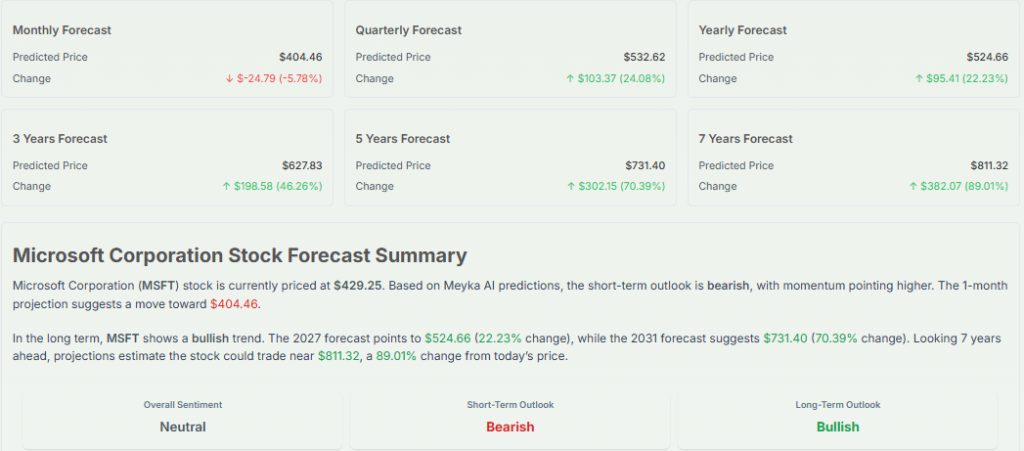
Many analysts expect volatility after earnings, but the long-term outlook remains positive if AI demand continues growing.
Technical Analysis Summary
Current technical trends show mixed momentum for MSFT stock. Key technical signals include:
- Shares remain below previous 2025 highs
- Support zones formed after the March 2026 decline
- Resistance near recent recovery levels
- Traders watching post-earnings breakout potential
Analysts say strong earnings guidance could trigger a bullish reversal trend. Weak cloud growth may create another correction phase.
What Meyka Says About Microsoft Stock?
According to market discussions around Microsoft coverage on Meyka and broader analyst commentary:
- Microsoft remains one of the strongest long-term AI infrastructure plays
- Azure growth is still the main stock driver
- OpenAI partnership changes create both risk and flexibility
- AI monetization progress will decide future valuation strength
Analysts continue viewing Microsoft as a leading enterprise AI company despite near-term volatility.
Conclusion
Microsoft’s upcoming earnings report could be a major test for both AI optimism and cloud market leadership. Investors are watching Azure growth, Copilot adoption, and the updated OpenAI partnership closely. Strong guidance and better AI monetization could help MSFT stock recover momentum, while weaker results may increase concerns about rising AI costs and competition.
Disclaimer:
The content shared by Meyka AI PTY LTD is solely for research and informational purposes. Meyka is not a financial advisory service, and the information provided should not be considered investment or trading advice.
What brings you to Meyka?
Pick what interests you most and we will get you started.
I'm here to read news
Find more articles like this one
I'm here to research stocks
Ask Meyka Analyst about any stock
I'm here to track my Portfolio
Get daily updates and alerts (coming March 2026)