
Key Points
Brent crude rises to $95.88 and WTI reaches $87.79 due to Strait of Hormuz tensions
Global oil stocks gain as energy firms benefit from higher crude prices
Geopolitical risks in the Middle East increase market volatility and shipping costs
Investors shift toward energy assets as oil becomes a key inflation hedge and safe haven
Brent crude oil has climbed to $95.88 per barrel, while WTI is trading near $87.79 as of April 2026. Global oil markets are reacting strongly to rising tensions around the Strait of Hormuz. This narrow waterway is one of the most important oil routes in the world. Even small disruptions here can shake global prices. Investors are now watching energy stocks closely as oil companies gain from higher crude prices.
At the same time, uncertainty is creating fear in broader markets. Trading remains highly sensitive to geopolitical news, especially in the Middle East. Let’s break down why oil prices are rising and what it could mean for global markets next.
Geopolitical Shockwaves Driving Oil Market Volatility
Strait of Hormuz as the Core Risk Factor
The Strait of Hormuz remains the most sensitive oil chokepoint in the world. Around 20% of global oil supply moves through this narrow passage. Any tension here quickly impacts global prices.
In early 2026, renewed regional instability raised shipping risks again. Tanker routes are being closely monitored. Even small disruptions increase insurance costs and delay deliveries.
Key facts:
- Roughly 17-20 million barrels per day pass through this route
- It connects major producers like Saudi Arabia, UAE, and Iraq to global markets
- It has no easy alternative route for large-scale exports
This is why traders react instantly to any military or political news from the region.
US-Iran Escalation and Shipping Disruptions – Why is the market reacting so fast?
Tensions between the US and Iran have increased uncertainty in the Gulf region. Reports of vessel interceptions and naval activity have added pressure on shipping lanes.
Markets are not waiting for actual supply cuts. They price at risk first. That is why oil surged even without confirmed shortages.
Key impacts:
- Higher tanker insurance premiums
- Slower cargo movement through the Gulf
- Rising freight costs for crude transport
- Increased speculative trading in oil futures
This creates short-term spikes in Brent and WTI prices, even if physical supply remains stable.
Market Reaction and Investor Sentiment
Oil markets are now heavily sentiment-driven. Traders are focusing more on headlines than fundamentals. A major reason is uncertainty. When risk rises, investors move toward energy assets as a hedge against inflation and supply shocks.
We are seeing:
- Strong inflows into energy ETFs
- Increased hedging in crude futures contracts
- Higher volatility in daily oil trading ranges
Global benchmarks like Brent and WTI are now reacting within hours to geopolitical updates instead of days.
Global Oil Prices Surge – Brent and WTI Movement Analysis
Brent Crude Performance Trends – Why is Brent near $95.88?
Brent crude has climbed close to $95.88 per barrel in April 2026. The rise is mainly driven by supply risk premiums and tight global inventories.
Recent drivers include:
- Fear of disruption in Middle East supply routes
- Strong demand recovery in Asia
- Lower-than-expected stock builds in OECD countries
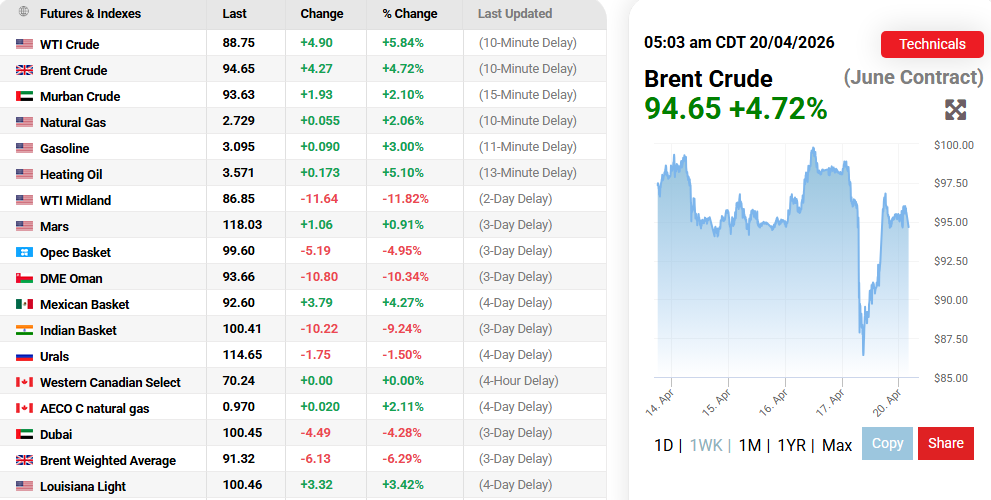
Historically, Brent tends to spike quickly when geopolitical risk rises, even before actual supply shortages occur.
WTI Price Movement and US Market Impact
WTI crude is trading near $87.79 per barrel, showing strong upward momentum. The gap between Brent and WTI is widening again. This signals:
- Stronger global supply pressure compared to US domestic supply
- Higher transport and export costs in international markets
- Increased demand for seaborne crude
US shale production remains stable, but global risk premiums are pushing WTI higher alongside Brent.
What is driving the oil rally right now?
The current rally is not driven by demand alone. It is a mix of risk, supply fear, and investor positioning.
Main triggers:
- Strait of Hormuz tension
- Geopolitical uncertainty in the Middle East
- Speculative trading in futures markets
- Strategic stockpiling by import-dependent economies
Global Oil Stocks Rally Amid Crude Price Surge
Energy Sector Outperformance – Who is gaining?
Energy companies are benefiting directly from higher crude prices. Upstream producers are seeing stronger margins.
Typical winners include:
- Oil exploration and production firms
- Integrated energy companies
- Offshore drilling service providers
Higher crude prices improve revenue per barrel, which boosts earnings expectations.
Stock Market Divergence – Why are markets moving differently?
Not all sectors are benefiting. Oil strength is creating a split in global markets.
Rising oil prices are:
- Supporting energy stocks
- Pressuring airlines and logistics companies
- Increasing costs for manufacturing sectors
This divergence shows how oil still acts as a key inflation driver.
What Meyka.com and AI stock analysis tools indicate?
According to AI-driven stock analysis platforms like Meyka.com, the energy sector is showing a short-term bullish bias due to rising crude prices and geopolitical risk premiums.
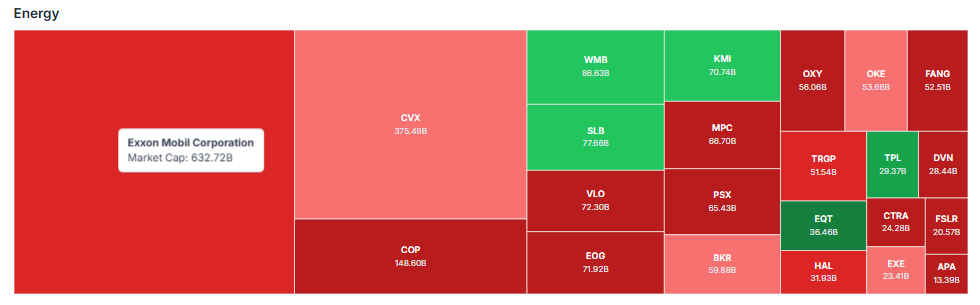
Key insights from AI-based analysis tools:
- Energy stocks often outperform during supply shock events
- Volatility remains high, favoring short-term trading strategies
- Oil-linked equities show stronger momentum than broader indices
Technical sentiment overview (energy sector):
- Trend: Bullish in short term
- Volatility: High
- Investor flow: Positive into oil majors and ETFs
Other analyst views (general market consensus):
- Goldman Sachs and other global research houses have previously noted that geopolitical risk can add $5-10 per barrel premium to crude prices during supply shocks
- Energy analysts warn that sustained $90+ oil may slow global GDP growth
You can track updated signals and charts using platforms like Meyka AI stock analysis tools for real-time sentiment shifts.
Supply Chain Risks and Global Economic Impact
Why are rising oil prices a global concern?
Higher oil prices increase costs across almost every sector. Transport, shipping, and manufacturing all depend on energy.
Key effects:
- Higher fuel prices for consumers
- Increased logistics and freight costs
- Inflation pressure in importing countries
Impact on Asia and Europe
Asia is the largest importer of Middle Eastern crude. Countries like India, China, and Japan are highly sensitive to price spikes.
Europe faces:
- Higher energy import bills
- Increased inflation risk
- Pressure on industrial output
Strategic Petroleum Reserves – Will they be used?
Governments may release reserves if prices stay elevated for long periods. This is a stabilizing tool used to:
- Prevent supply shocks
- Control inflation spikes
- Balance market volatility
Market Outlook – What Happens Next?
Will oil stay above $90?
Oil prices may remain volatile in the short term. If tensions continue, Brent could stay in the $90-100 range.
Key factors to watch
- Stability of shipping routes in the Strait of Hormuz
- US-Iran diplomatic developments
- OPEC+ production decisions
- Global inventory reports from IEA and EIA
Investor behavior shift
Investors are now treating oil as a risk asset, not just a commodity. This increases price sensitivity to news and geopolitical events.
Final Words
Oil markets are under strong pressure from geopolitical uncertainty, especially around the Strait of Hormuz. Brent and WTI are rising as risk premiums increase across global energy trade. While energy stocks benefit from higher prices, inflation risks are also growing worldwide. In the coming weeks, market direction will depend heavily on geopolitical stability and supply security in key oil routes.
Disclaimer:
The content shared by Meyka AI PTY LTD is solely for research and informational purposes. Meyka is not a financial advisory service, and the information provided should not be considered investment or trading advice.
What brings you to Meyka?
Pick what interests you most and we will get you started.
I'm here to read news
Find more articles like this one
I'm here to research stocks
Ask Meyka Analyst about any stock
I'm here to track my Portfolio
Get daily updates and alerts (coming March 2026)