
Key Points
FTSE 100 expected to fall as oil prices rise above $100 per barrel
Higher energy costs increase inflation fears and pressure global equities
UK deficit data remains in line, offering limited market support
Defensive sectors gain strength while cyclical stocks face selling pressure
Brent crude oil has climbed above $100 per barrel in April 2026, shaking global equity markets and putting pressure on risk assets. On Thursday, April 23, 2026, the FTSE 100 is expected to open lower as investors react to rising energy costs and renewed inflation concerns. Higher oil prices are increasing fears of squeezed corporate earnings, especially in the transport and manufacturing sectors.
At the same time, the latest UK fiscal deficit figures have come in largely as expected, offering little support to market sentiment. Traders are now focused on how long elevated oil prices will persist and whether central banks will adjust their policy stance.
Global Market Overview and FTSE 100 Sentiment
FTSE 100 under pressure as global risk sentiment weakens
The FTSE 100 is trading with a negative bias as global markets react to rising oil prices and inflation concerns. On April 23, 2026, European futures pointed lower, tracking weakness across Asia and the US.
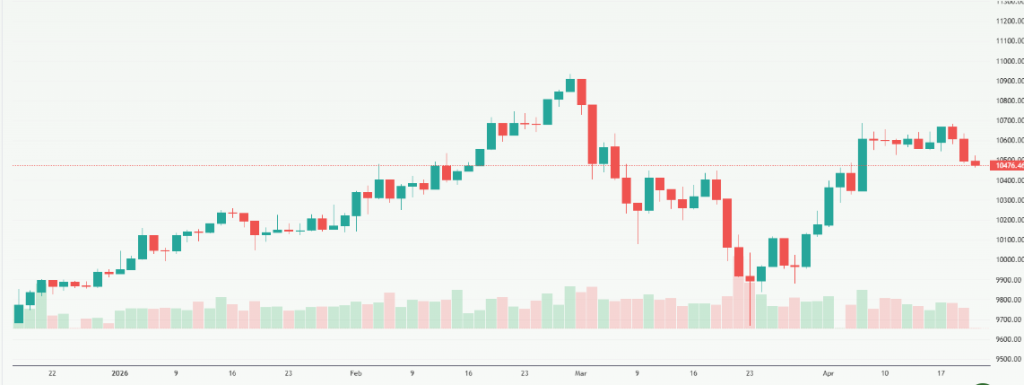
Key pressure points include:
- Brent crude holding above $100 per barrel
- Higher inflation expectations in developed economies
- Increased geopolitical risk in energy supply routes
- Weak risk appetite across equities
Recent market coverage from major financial desks such as Reuters and Bloomberg highlights that global equities are struggling to maintain momentum as energy-driven inflation fears return.
Defensive sectors like healthcare and utilities are showing relative strength, while cyclical sectors remain under pressure.
WHY IS OIL ABOVE $100 IMPACTING GLOBAL MARKETS?
What is driving the oil price surge in April 2026?
Oil prices have crossed the $100 mark due to a combination of supply concerns and geopolitical tension. Market analysts point to disruptions in key shipping lanes and reduced confidence in near-term supply stability.
Key drivers include:
- Tight global supply conditions
- Ongoing geopolitical tensions in the Middle East
- Lower-than-expected production increases from major producers
- Strong demand resilience despite high prices
According to recent energy market updates from Investing.com and Trading Economics, Brent crude stability above $100 is increasing inflation pressure globally.
How does $100 oil affect FTSE 100 companies?
Higher oil prices directly impact corporate earnings and investor sentiment. Main effects:
- Airlines face rising fuel costs and margin pressure
- Transport and logistics companies see higher operating expenses
- Consumer goods firms experience cost inflation
- Energy companies gain short-term revenue upside but face volatility risks
UK DEFICIT DATA: DOES IT MATTER FOR MARKETS?
Is UK fiscal data influencing FTSE 100 performance?
The latest UK fiscal deficit data released in April 2026 came broadly in line with expectations. This means there were no major surprises in government borrowing levels.
However, market reaction has been limited because:
- Inflation concerns dominate investor attention
- Oil price shock is a stronger macro driver
- Central bank policy expectations are still uncertain
The UK Office for Budget Responsibility (OBR) remains focused on maintaining fiscal discipline, but traders are currently prioritizing global energy trends over domestic data.
WHICH FTSE 100 SECTORS ARE WINNING OR LOSING?
How are FTSE 100 sectors reacting to oil and inflation pressure?
Sector performance is highly uneven as macro risks increase.
- Airlines and travel stocks: Higher fuel costs are directly hurting profitability. Investors are reducing exposure due to margin pressure.
- Energy sector: Oil majors are seeing short-term gains, but volatility remains a concern due to unpredictable price swings.
- Financials: Banks are mixed. Higher yields support earnings, but economic uncertainty limits upside.
- Industrials and manufacturing: These sectors are under pressure from rising input and transport costs.
Recent FTSE analysis from market trackers shows increased rotation into defensive stocks as volatility rises.
GLOBAL MARKET IMPACT: US, EUROPE, AND ASIA LINKAGE
Are global markets reacting the same way as the FTSE 100?
Yes. The FTSE 100 move is part of a broader global trend.
- US markets are pricing in inflation risks linked to oil
- European indices are weakening alongside the FTSE
- Asian markets are under pressure due to import-dependent energy costs
This synchronized weakness reflects one key driver: rising energy prices feeding global inflation expectations.
WHAT ARE INVESTORS WATCHING NEXT?
Key market triggers for the coming sessions
Investors are closely monitoring:
- Brent crude stability above $100
- Inflation data from the US and UK
- Central bank signals from the Federal Reserve and Bank of England
- Corporate earnings revisions
Market volatility is expected to remain elevated if oil prices stay at current levels.
MEYKA STOCK ANALYSIS INSIGHT -FTSE 100 OUTLOOK
According to Meyka AI stock analysis tools, FTSE 100 sentiment remains “cautiously bearish” in the short term due to inflation-linked pressure from energy markets.
Key insights from Meyka analysis:
- Short-term trend: Weak due to oil-driven inflation shock
- Medium-term outlook: Stable if oil corrects below $95-100
- Volatility index signals rising uncertainty in the energy and transport sectors
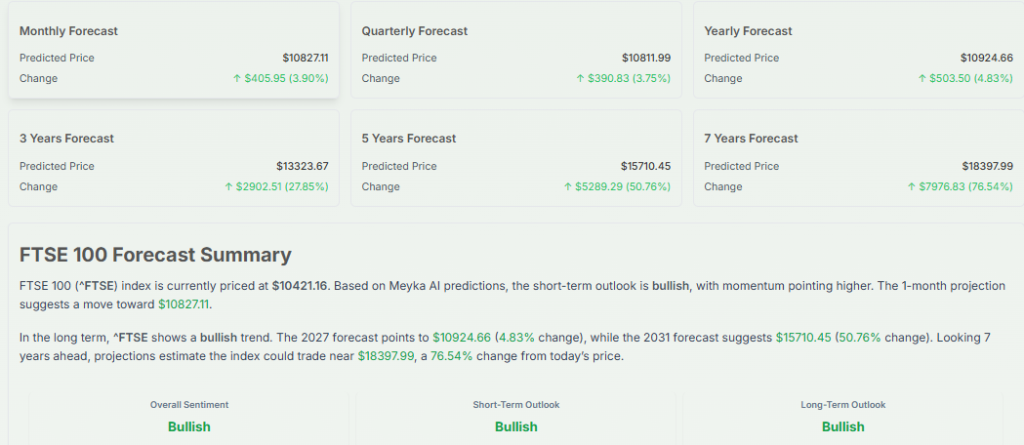
Meyka’s AI model also highlights increased divergence between energy stocks and cyclical sectors, suggesting a rotation strategy may dominate near-term trading.
Supporting analyst consensus from financial commentary platforms such as Reuters and MarketWatch also suggests that oil volatility remains the single biggest driver of equity direction.
Final Words
FTSE 100 remains under pressure as oil prices above $100 continue to drive inflation fears and weaken investor sentiment. Even though UK deficit data is stable, global energy volatility is dominating market direction. Until oil prices stabilize, equity markets are likely to stay sensitive and uneven, with defensive sectors outperforming cyclical stocks in the near term.
Disclaimer:
The content shared by Meyka AI PTY LTD is solely for research and informational purposes. Meyka is not a financial advisory service, and the information provided should not be considered investment or trading advice.
What brings you to Meyka?
Pick what interests you most and we will get you started.
I'm here to read news
Find more articles like this one
I'm here to research stocks
Ask Meyka Analyst about any stock
I'm here to track my Portfolio
Get daily updates and alerts (coming March 2026)