




Key Points
Quantum computing could break current crypto security by 2030-2035, putting billions in assets at risk.
Ethereum is building a structured roadmap for post-quantum upgrades.
Solana is testing early but faces major speed and scalability trade-offs.
Bitcoin remains secure today, but may struggle with slow, costly upgrades in the future.
In March 2026, researchers and major tech firms warned that quantum computers could break today’s cryptography much sooner than expected, possibly within the next decade. This is a serious concern for crypto markets. Networks like Bitcoin, Ethereum, and Solana all rely on encryption that may not survive a quantum attack. That means digital assets worth billions could be at risk.
Some blockchains are already preparing for this shift, while others are moving more slowly. The big question is simple: which network will adapt fast enough?
Understand the Quantum Threat to Blockchain Security
Why does quantum computing threaten crypto encryption?
Most blockchains, including Bitcoin, Ethereum, and Solana, use elliptic curve cryptography (ECC). This system keeps wallets secure today.
Quantum computers change that. They can run Shor’s algorithm. This can solve complex math problems much faster than classical computers. It means private keys could be derived from public keys.
- Current systems: Secure against classical attacks
- Quantum systems: Could break encryption in minutes
- Risk: Loss of funds and identity theft
When could this become real?
Recent research in 2026 suggests faster progress than expected.
- Experts estimate 2030-2035 as a possible risk window
- Some studies suggest a 10% chance of “Q-Day” by 2032
- Large firms like Google are actively advancing quantum hardware
What assets are most at risk?
- Wallets with exposed public keys
- Reused addresses
- Long-term stored crypto (“cold wallets”)
- DeFi contracts with fixed cryptography
This creates a new risk: “harvest now, decrypt later.” Attackers collect data today and break it later.
Ethereum’s Post-Quantum Roadmap: Long-Term, Structured Defense
What is Ethereum’s quantum strategy?
Ethereum is taking a planned approach. The goal is a gradual shift to post-quantum cryptography (PQC).
Key focus areas:
- Migration to quantum-safe signature schemes
- Maintaining backward compatibility
- Protecting DeFi ecosystems
Ethereum researchers target late-decade readiness (around 2028-2030).
Can Ethereum adapt faster than others?
Yes. Ethereum’s flexible design helps.
- Smart contracts allow upgrades
- Layered architecture supports transitions
- Strong developer community speeds testing
What are the strengths?
- High adaptability
- Active research and testing
- Clear long-term roadmap
What risks remain?
- Complex migration for DeFi apps
- Higher costs due to larger signatures
- Slower transaction speeds
Ethereum’s approach is balanced but slow-moving.
Solana’s Quantum Defense: Speed vs Security Trade-Off
Is Solana testing quantum-resistant tech already?
Yes. Solana is one of the most aggressive networks.
It is testing:
- Post-quantum signature algorithms
- New wallet migration methods
- Network-level upgrades
Does quantum security slow Solana?
This is the biggest issue.
- PQC signatures are 20-40x larger
- Network speed may drop significantly
- Some tests show up to 80-90% slowdown
Why is this a big challenge?
Solana’s main advantage is speed. It processes thousands of transactions per second. Quantum upgrades may:
- Increase latency
- Raise transaction costs
- Reduce scalability
What is Solana’s strategy?
- Test early
- Optimize performance
- Balance speed and security
Solana is pushing innovation but facing tough trade-offs.
Bitcoin’s Quantum Strategy: Conservative but Costly
How vulnerable is Bitcoin today?
Bitcoin uses ECDSA and Schnorr signatures.
Risk factors:
- Public key exposure during transactions
- Older wallets more vulnerable
- Limited upgrade flexibility
Estimates suggest millions of BTC could be exposed long-term.
Why is Bitcoin slower to adapt?
Bitcoin follows a conservative model.
- Changes require consensus
- Community resists rapid upgrades
- Security is prioritized over speed
Are there quantum-safe solutions?
Yes, but they come with costs.
- PQC integration is possible
- Transaction size increases
- Fees could rise sharply (some estimates exceed $100 per transaction)
What are Bitcoin’s strengths?
- Strong security track record
- Stable network
- High trust among investors
Key limitation
- Slow innovation cycle
Ethereum vs Solana vs Bitcoin: Quantum Defense Comparison
Which network is best prepared?
Each network takes a different path.
- Ethereum: Structured and planned
- Solana: Fast and experimental
- Bitcoin: Slow and cautious
Key comparison metrics
- Flexibility: Ethereum leads
- Speed impact: Solana is most affected
- Stability: Bitcoin strongest
What challenges affect all networks?
- Larger data sizes
- Higher computation costs
- Slower performance
- Governance delays
Quantum readiness is becoming a major factor in crypto design.
Market Implications for ETHUSD, SOL, and BTC Investors
What does Meyka.com say about ETHUSD, SOL, and BTC?
According to insights from meyka.com:
- Forecast: Moderately bullish long-term
- Strength: Strong upgrade pipeline
- Risk: Transition complexity
- Forecast: High growth but volatile
- Strength: Innovation speed
- Risk: Performance trade-offs
- Forecast: Stable but slower growth
- Strength: Market dominance
- Risk: Upgrade delays
Technical analysis summary
- ETHUSD: Holding key support zones, trend neutral to bullish
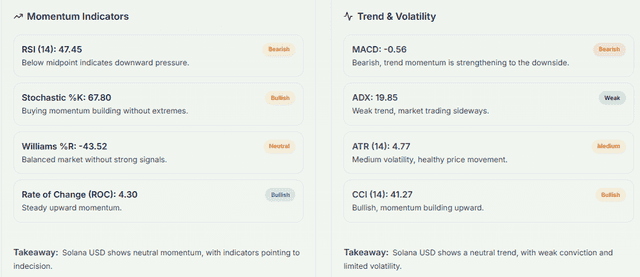
- SOL: High volatility, strong momentum swings
- BTC: Consolidation phase, long-term bullish bias
What does Meyka highlight?
Meyka’s AI stock analysis tool flags Ethereum as best positioned for future-proof upgrades, while noting Solana’s risk-reward profile and Bitcoin’s resilience.
What do other analysts say?
- Many analysts see Ethereum benefiting from early quantum preparation
- Solana is viewed as high-risk, high-reward
- Bitcoin remains a store of value, but a slower innovator
What should investors watch?
- Quantum computing breakthroughs
- Network upgrade announcements
- Regulatory and security developments
Quantum readiness is now a key investment theme in crypto markets.
Final Words
Quantum computing is no longer a distant threat. It is becoming a real factor in crypto strategy. Ethereum is planning ahead. Solana is testing limits. Bitcoin is staying cautious. Each approach has strengths and risks. The future will favor networks that adapt early without losing performance. Investors should track quantum developments closely, as they could reshape the entire crypto market in the coming decade.
Disclaimer:
The content shared by Meyka AI PTY LTD is solely for research and informational purposes. Meyka is not a financial advisory service, and the information provided should not be considered investment or trading advice.
What brings you to Meyka?
Pick what interests you most and we will get you started.
I'm here to read news
Find more articles like this one
I'm here to research stocks
Ask Meyka Analyst about any stock
I'm here to track my Portfolio
Get daily updates and alerts (coming March 2026)