
Key Points
Crude oil prices are hovering near $95 per barrel due to rising US-Iran tensions
Gold prices are edging higher as investors move toward safe-haven assets
The ceasefire deadline in April 2026 is driving market volatility
Supply risks from the Strait of Hormuz are keeping global energy markets on edge
Global oil prices are once again in focus as Brent crude trades close to $95 per barrel on April 21, 2026. Markets are reacting to rising tensions ahead of the US-Iran ceasefire deadline expected this week. Even small updates from the region are causing sharp price swings.
At the same time, gold is moving higher, showing that investors are looking for safety. This mix of risk and uncertainty is keeping traders on edge. Energy markets, inflation concerns, and global growth are all tied to what happens next. If the ceasefire holds, prices may ease. If not, volatility could spike again. That’s why this moment matters more than it seems.
Crude Oil Prices Hover Near $95: Latest Data & Market Snapshot
What are the current oil price levels?
Crude oil prices remain elevated as of April 21, 2026.
- Brent crude trades near $94.99 per barrel, up around 0.7% intraday.
- WTI crude holds in the $86-89 range.
- Prices briefly touched $96+ earlier this week due to geopolitical tension.
These levels show strong market sensitivity to global risks. Oil is not moving on demand alone. It is reacting to uncertainty.
How have prices moved recently?
- Oil jumped 5-8% in a single session last week.
- Prices stayed volatile within the $90-100 band.
- Futures markets show strong speculation activity.
This trend shows that traders are pricing in risk, not just supply-demand balance.
US-Iran Ceasefire Deadline: Why It’s Driving Oil Markets
What is the timeline of the ceasefire?
The temporary ceasefire between the US and Iran started on April 8, 2026. It is set to expire this week.
- Diplomatic talks are ongoing but uncertain
- Reports suggest low chances of a quick extension
- Regional negotiations are still fragile
This deadline has become a key trigger for oil markets.
Why are traders reacting so strongly?
Markets dislike uncertainty. That is the main reason.
- Traders are adding a risk premium to oil prices
- Any news update leads to instant price movement
- Conflicting signals from both sides increase volatility
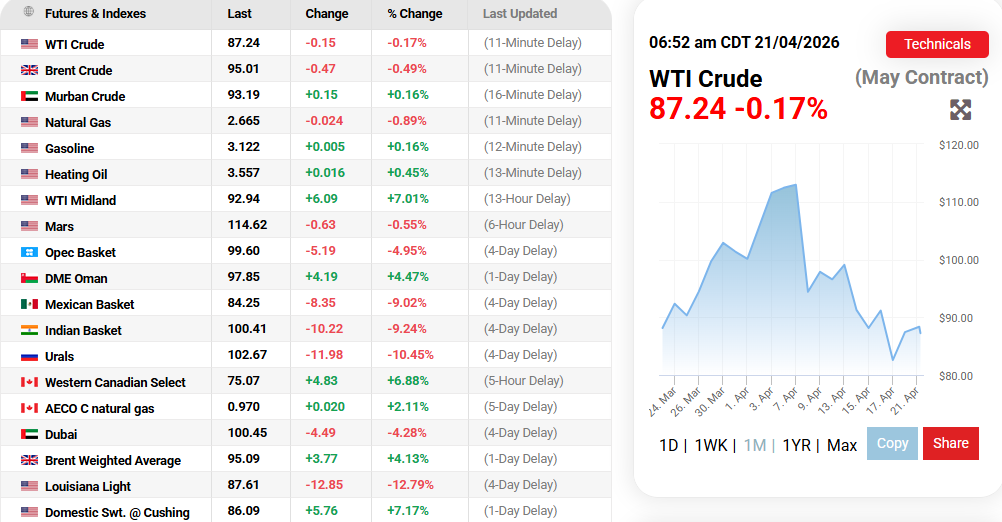
If tensions rise, oil supply could be disrupted. That fear alone is enough to push prices higher.
Strait of Hormuz Disruptions: The Core Supply Shock
Why is the Strait of Hormuz so important?
The Strait of Hormuz is one of the world’s most critical oil routes.
- Around 20% of the global oil supply passes through it
- It connects Middle East producers to global markets
Any disruption here affects global supply instantly.
What disruptions are happening now?
- Military activity has increased in the region
- Shipping routes have faced delays and rerouting
- Around 3-4 million barrels per day are at risk
Even the possibility of disruption creates panic. Traders react before actual shortages happen. That is why prices are rising fast.
Gold Edges Higher as Safe-Haven Demand Returns
What are current gold price trends?
Gold is moving up slowly but steadily.
- Prices are near $4,800-4,825 per ounce
- Gains remain modest at 0.1-0.2% daily
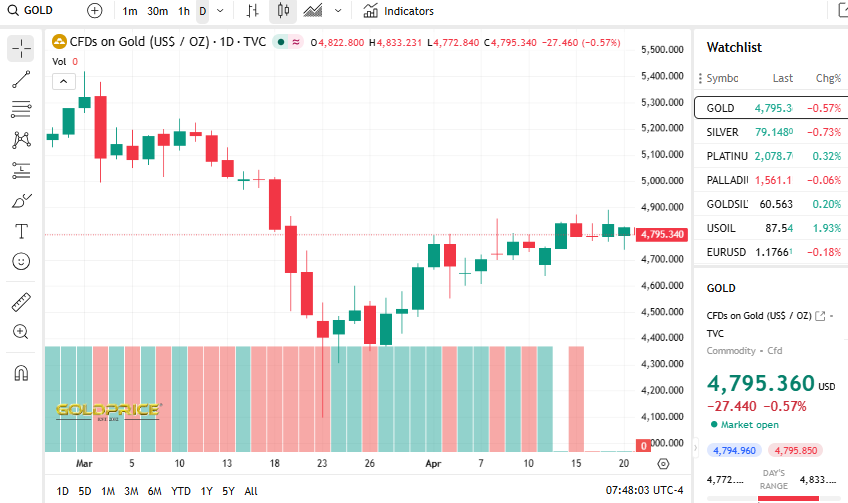
This shows cautious investor behavior.
Why is gold rising now?
Gold benefits during uncertainty.
- Investors shift to safe assets
- Fear of conflict boosts demand
- Rising oil prices increase inflation concerns
When inflation fears grow, gold becomes more attractive. This pattern is clearly visible in current markets.
Volatility Explained: Why Oil Swings are So Extreme
What factors are driving volatility?
Several factors are working together:
- Geopolitical tensions between major powers
- Supply chain risks in oil transport
- High speculation in futures markets
These factors create sharp price swings.
How does this compare to past events?
- Oil surged to $120-150 earlier in the crisis
- This is one of the biggest disruptions in recent years
Current prices reflect uncertainty more than actual shortages. Markets are reacting to what could happen, not just what is happening now.
Impact on Global Markets, Inflation & Energy Costs
How do rising oil prices affect the economy?
Higher oil prices impact daily life quickly.
- Fuel prices increase
- Transport costs rise
- Food prices follow
Experts estimate inflation could rise by around 0.5-0.8% globally if prices stay high.
What is happening in financial markets?
- Stock markets show mixed reactions
- Energy stocks are gaining
- Airlines and logistics stocks are under pressure
Currency markets are also reacting. The US dollar is slightly stronger due to safe-haven demand.
What Happens Next? Key Scenarios for Oil & Gold
What if the ceasefire is extended?
- Oil may drop below $90 per barrel
- Market confidence may improve
- Gold prices could stabilize
If tensions rise again?
- Oil could cross $100 quickly
- Supply fears will dominate
- Gold may rally further
What if uncertainty continues?
- Oil may stay in the $90-100 range
- Volatility will remain high
- Traders will react to every update
For investors, tools like an AI stock analysis tool can help track trends and manage risk during such uncertain times.
Wrap Up
Crude oil near $95 shows how sensitive global markets are to geopolitical risk. The US-Iran ceasefire deadline is now the key factor shaping prices. Gold is also rising as investors look for safety. The next few days will decide the market direction. If tensions ease, prices may fall. If not, volatility could increase sharply across commodities and global markets.
Disclaimer:
The content shared by Meyka AI PTY LTD is solely for research and informational purposes. Meyka is not a financial advisory service, and the information provided should not be considered investment or trading advice.
What brings you to Meyka?
Pick what interests you most and we will get you started.
I'm here to read news
Find more articles like this one
I'm here to research stocks
Ask Meyka Analyst about any stock
I'm here to track my Portfolio
Get daily updates and alerts (coming March 2026)