Brent Oil Prices Slip to $105 as Trump Flags Possible End to US‑Iran Conflict; Gold Up 0.3%

Key Points
Brent crude slipped near $105 after US–Iran peace optimism reduced risk premiums.
Oil remains volatile due to Middle East supply risks and Strait of Hormuz concerns.
Gold rose 0.3% as investors stayed cautious amid global uncertainty.
Markets are reacting strongly to geopolitical news and shifting interest rate expectations.
On May 21, 2026, Brent crude oil slipped near $105 per barrel after comments from U.S. President Donald Trump hinted at a possible end to the US-Iran conflict. At the same time, gold rose 0.3% as investors stayed cautious amid ongoing geopolitical uncertainty and shifting interest rate expectations, keeping safe-haven demand steady while energy markets reacted sharply to political signals and supply risk concerns in the Middle East.
Brent Crude Retreats to $105 Amid US-Iran Peace Optimism
Brent crude prices moved down toward the $105 per barrel level after fresh geopolitical signals reduced immediate supply risk concerns. Markets reacted strongly to comments linked to U.S. President Donald Trump, suggesting progress toward de-escalation in tensions involving Iran. Traders quickly adjusted risk premiums that had built up in earlier sessions.
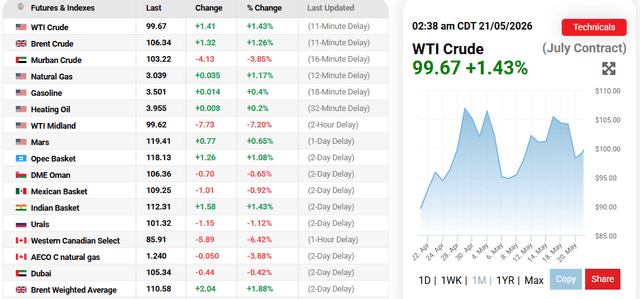
Intraday movement stayed volatile. Prices initially held higher before profit-taking started. The correction reflects how sensitive crude oil is to political headlines, especially in the Middle East.
Key market reactions included:
- Short-term easing of war-risk premium in oil pricing
- Reduced fear of immediate disruption in key shipping routes
- Increased selling pressure from speculative traders
At the same time, analysts note that this decline does not confirm stability. It only reflects short-term sentiment shifts. The oil market remains tightly linked to geopolitical developments, especially around Iran’s influence on regional supply chains.
Why Oil Prices are Still Elevated Despite the Drop?
Even after slipping toward $105, Brent crude remains at a relatively high level compared to historical averages. The main reason is persistent structural risk in global supply chains.
What is keeping oil prices high right now?
Oil is not reacting only to demand and supply fundamentals. It is also driven by geopolitical risk premiums. Key pressure points include:
- Ongoing uncertainty in the Middle East region
- Strategic importance of the Strait of Hormuz for global oil flow
- Limited spare production capacity among major producers
- Strong global demand recovery in key emerging markets
The Strait of Hormuz continues to be one of the most critical chokepoints. Any disruption there can quickly tighten global supply and push prices higher within hours.
Why do small political signals move oil so much?
Crude oil is highly sensitive to expectations. Even verbal signals about peace or conflict can trigger large moves because traders price future risks instantly.
Market behavior shows:
- A shift in sentiment can change pricing within minutes
- Risk premiums can rise or fall faster than physical supply changes
- Algorithmic trading increases short-term volatility
Recent energy market commentary from global research desks highlights that oil is currently trading in a “headline-driven phase,” where news flow matters as much as fundamentals.
Gold Prices Rise 0.3% as Safe-Haven Demand Persists
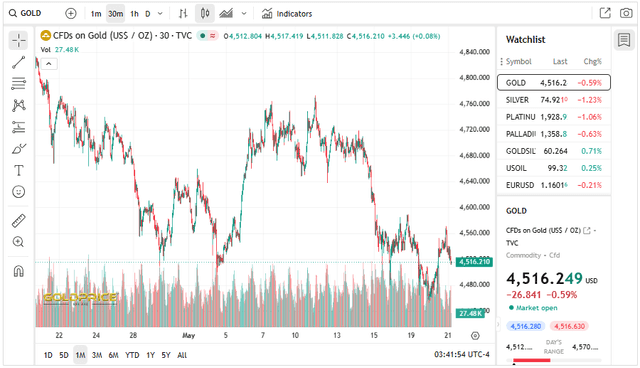
Gold prices edged up by around 0.3% as investors balanced easing geopolitical fears with continued uncertainty in global financial conditions. The modest rise shows that markets are still cautious rather than fully risk-on.
Why is gold rising when oil is falling?
Gold often moves in the opposite direction to risk sentiment. In this case, two forces are working together:
- Easing conflict fears reduces panic buying
- But ongoing uncertainty supports safe-haven demand
This creates a stable but slightly positive bias for gold.
What is supporting gold prices right now?
Several macro factors are influencing gold:
- Expectations of changing interest rate policy in the U.S.
- Weak movement in the U.S. dollar in recent sessions
- Continued geopolitical risk in global markets
Gold is currently behaving as a “cautious hedge” asset rather than entering a strong rally phase. Investors are not fully confident about long-term stability, so they maintain partial exposure.
Market analysts from global commodities desks suggest gold is holding a consolidation range, where small gains reflect uncertainty rather than aggressive buying.
Oil vs Gold Market Divergence
The current divergence between oil and gold highlights how different assets respond to risk. Oil is driven mainly by supply-side fears. Any threat to production or shipping routes immediately impacts prices. Gold, on the other hand, reacts more to macroeconomic stability and investor confidence.
Why are both moving differently?
The answer lies in market psychology:
- Oil reacts to physical disruption risks
- Gold reacts to financial and political uncertainty
This creates a split trend where:
- Oil falls on peace optimism
- Gold rises due to remaining caution
Such divergence is common during transitional geopolitical phases when markets are unsure whether tensions will fully resolve or return. In current conditions, traders are watching both assets closely as indicators of global risk sentiment.
AI-based market analysis tools used by institutional desks also show mixed signals, with short-term bearish pressure on oil but neutral-to-bullish sentiment on gold due to uncertainty clustering in global macro indicators.
Market Outlook for Brent Crude
Oil markets are expected to remain volatile as long as geopolitical developments continue to shift expectations. Brent crude near $105 suggests a temporary easing, not a structural decline. Gold is likely to stay range-bound with mild upward support as long as uncertainty persists in global politics and interest rate direction remains unclear.
Investors are now focusing on upcoming policy signals and any further updates on Middle East diplomacy to guide short-term positioning.
Final Words
Overall, Brent crude’s drop toward $105 reflects easing geopolitical fears, but not full stability. Oil markets remain highly sensitive to any new developments in the US–Iran situation. At the same time, gold’s slight rise shows that investors are still cautious and holding safe-haven assets. In the near term, both markets are likely to stay volatile as political signals and global risk sentiment continue to shift.
Disclaimer:
The content shared by Meyka AI PTY LTD is solely for research and informational purposes. Meyka is not a financial advisory service, and the information provided should not be considered investment or trading advice.
What brings you to Meyka?
Pick what interests you most and we will get you started.
I'm here to read news
Find more articles like this one
I'm here to research stocks
Ask Meyka Analyst about any stock
I'm here to track my Portfolio
Get daily updates and alerts (coming March 2026)