
Key Points
Bitcoin fell below $77K as rising oil prices and inflation fears weakened crypto market sentiment
Investors are closely watching Federal Reserve and global central bank decisions for rate guidance
Strong ETF inflows and institutional buying continue to support Bitcoin’s long-term outlook
Key Bitcoin support stands near $75K, while resistance remains strong around the $80K level
Bitcoin dropped below $77,000 on April 28, 2026, after a sharp surge in global oil prices shook financial markets and increased fears of persistent inflation. Brent crude climbed above $110 per barrel as tensions around key Middle East shipping routes raised concerns about energy supply disruptions. The sudden move pushed investors away from risky assets, including cryptocurrencies and tech stocks.
At the same time, traders turned cautious ahead of major central bank meetings from the U.S. Federal Reserve, the European Central Bank, and the Bank of Japan. Markets are now watching closely for signals on interest rates and future liquidity conditions.
Why Bitcoin Fell Below $77K Today?
Bitcoin dropped below $77,000 on April 28, 2026, as traders reacted to rising oil prices, geopolitical tensions, and upcoming central bank decisions. The world’s largest cryptocurrency briefly crossed $79,000 earlier this week but failed to maintain momentum. Investors quickly locked in profits near major resistance levels.
At the same time, global markets turned cautious after Brent crude oil surged above $109 per barrel due to disruptions around the Strait of Hormuz.
Why did Bitcoin fail near $79,500?
Bitcoin faced strong technical resistance between $79,000 and $80,000. Traders viewed this range as a major breakout zone. Selling pressure increased after multiple failed attempts to move higher.
Key reasons behind the rejection included:
- Profit booking after recent gains
- High leverage in futures markets
- Resistance near psychological $80K level
- Cautious sentiment ahead of the Federal Reserve meeting
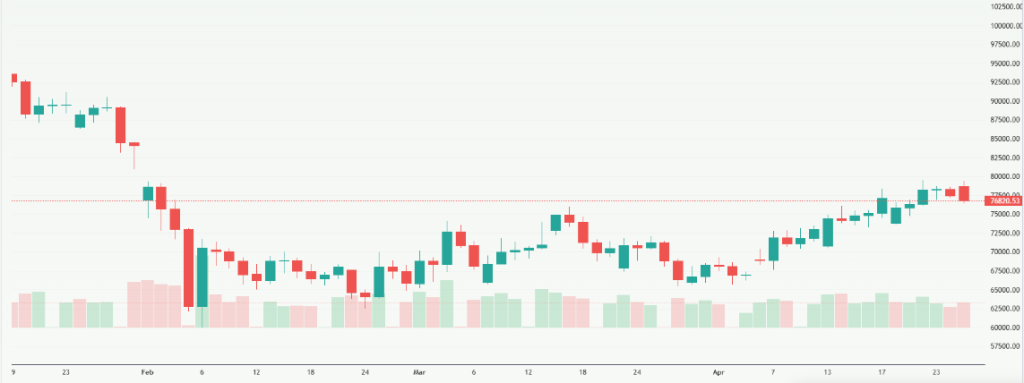
According to CoinCentral, Bitcoin failed to break $79,000 for the third time in eight trading sessions.
How Rising Oil Prices are Pressuring Crypto Markets?
Oil prices became the biggest macro driver behind the latest crypto pullback. Brent crude traded near $110 per barrel after concerns about supply disruptions in the Middle East intensified. Investors worried that higher energy costs could keep inflation elevated for longer.
Why do oil prices affect Bitcoin?
Bitcoin often reacts strongly to global liquidity conditions. When oil prices rise sharply, inflation fears usually increase. Central banks may then delay interest rate cuts or maintain tighter monetary policy.
This creates pressure on risk assets such as:
- Cryptocurrencies
- Tech stocks
- Growth-focused investments
Higher oil prices also increase Bitcoin mining costs because mining operations consume large amounts of electricity. Meyka noted that energy shocks frequently increase crypto volatility and reduce investor confidence in short-term rallies.
Inflation fears are changing investor behavior
Investors moved toward safer assets like gold and government bonds as geopolitical uncertainty increased. Risk appetite weakened across global financial markets.
Market concerns included:
- Persistent inflation in the US and Europe
- Delayed rate cuts by the Federal Reserve
- Stronger US dollar pressure
- Higher Treasury yields
This environment reduced demand for speculative crypto trades.
Central Banks are Now the Main Focus for Bitcoin Traders
Global investors are closely watching this week’s central bank meetings. The Federal Reserve, European Central Bank, Bank of Japan, and Bank of England are all expected to provide fresh guidance on inflation and interest rates.
What is the Federal Reserve expected to do?
Most analysts expect the Fed to keep interest rates unchanged. However, markets are more interested in future policy signals.
Traders want answers about:
- Future rate cuts
- Inflation forecasts
- Economic growth outlook
- Liquidity conditions
A hawkish Fed stance could create more downside pressure for Bitcoin and broader crypto markets. Investing.com reported that concerns over tighter monetary policy remain one of the main reasons behind Bitcoin’s recent weakness.
How is the Bank of Japan affecting crypto sentiment?
The Bank of Japan also added pressure after some policymakers supported future rate hikes. A stronger Japanese yen reduced risk-taking activity in global markets.
This matters because many institutional traders use low-cost yen borrowing for leveraged investments. When the yen strengthens, those trades become less attractive.
Bitcoin Liquidations Increased Market Volatility
The latest Bitcoin decline triggered a wave of crypto liquidations. Leveraged traders suffered heavy losses as prices dropped rapidly below key support zones.
How large were the liquidations?
Market analysts estimated that crypto liquidations exceeded $118 million during the recent selloff. Long positions faced the biggest damage as bullish traders expected Bitcoin to break above $80K.
This created a chain reaction:
- Bitcoin prices fell
- Leveraged positions closed automatically
- Selling pressure increased further
- Altcoins followed Bitcoin lower
Ethereum, Solana, and XRP all recorded losses between 3% and 5% within 24 hours.
What Meyka Says About Bitcoin’s Current Outlook?
According to recent reports from Meyka, Bitcoin remains highly sensitive to macroeconomic developments, especially oil prices and inflation trends.
Bitcoin technical analysis summary
Meyka’s latest Bitcoin analysis highlighted several important levels:
- Immediate support near $75,000
- Stronger support around $74,000
- Resistance near $79,000–$80,000
- Bullish breakout possible above $80K
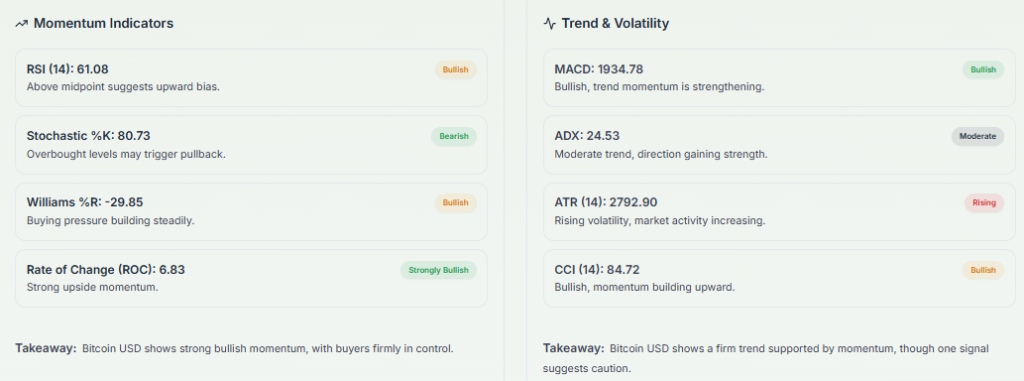
Meyka also noted that institutional support remains strong despite short-term volatility. Spot ETF inflows and long-term accumulation continue to support Bitcoin’s broader market structure.
Short Bitcoin forecast
Current short-term outlook remains cautious but not fully bearish.
Possible bullish drivers:
- Cooling oil prices
- Dovish Fed comments
- Strong ETF inflows
- Reduced geopolitical tensions
Possible bearish risks:
- Rising inflation
- Higher-for-longer interest rates
- Escalating US-Iran tensions
- Further rejection below $80K
Several analysts believe Bitcoin could remain volatile between $75K and $80K until central banks provide clearer guidance.
Institutional Demand Still Supports Bitcoin
Despite recent volatility, institutional investors continue buying Bitcoin. This remains one of the strongest bullish factors in the current market cycle.
Are institutions still buying Bitcoin?
Yes. Institutional demand remains steady even during short-term corrections. Recent developments include:
- Strong spot Bitcoin ETF inflows
- Continued whale accumulation
- Corporate treasury purchases
- Higher long-term holding activity
Moneycontrol reported that MicroStrategy added another 3,273 BTC worth nearly $255 million, increasing its total holdings to over 818,000 BTC.
Market analysts also noted that ETF inflows stayed resilient during the latest correction. This suggests that large investors still view Bitcoin as a strategic long-term asset.
Geopolitical Risks are Driving Crypto Volatility
The ongoing US-Iran tensions remain one of the biggest drivers behind recent oil and crypto market movements.
Why does the Strait of Hormuz matter for Bitcoin?
The Strait of Hormuz is one of the world’s most important oil shipping routes. Any disruption can quickly push energy prices higher. Higher oil prices affect Bitcoin indirectly by:
- Increasing inflation fears
- Pressuring global liquidity
- Reducing investor risk appetite
- Strengthening the US dollar
Reuters and Investing.com both reported that continued tensions around Hormuz are keeping financial markets on edge.
Community discussions on Reddit also showed that many traders believe geopolitical headlines are currently moving crypto markets more than technical indicators.
Key Bitcoin Price Levels Traders are Watching
Technical traders are now focused on several major Bitcoin levels.
Important resistance levels
Key upside levels include:
- $78,800
- $79,500
- $80,000
A breakout above these zones could trigger fresh buying momentum and renewed institutional interest.
Critical support zones
Major downside support levels include:
- $75,000
- $74,000
- $70,000
If Bitcoin loses support near $75K, analysts warn that deeper corrections could follow. However, many traders still expect buyers to defend this zone aggressively.
AI Stock Analysis Tool Is Becoming Popular Among Crypto Traders
Many retail investors now use AI-powered market platforms to track Bitcoin trends, macro signals, and technical indicators in real time. Platforms such as Meyka combine technical charts, news analysis, and AI stock analysis tools to help traders monitor fast-changing crypto conditions more efficiently.
Final Words
Bitcoin’s fall below $77K shows how deeply crypto markets are connected to global macroeconomic events in 2026. Rising oil prices, inflation fears, and central bank uncertainty continue to pressure investor sentiment. Still, institutional demand and ETF inflows remain supportive for Bitcoin’s long-term outlook.
Traders are now watching the Federal Reserve, oil market stability, and geopolitical developments closely. The next major move for Bitcoin could depend on whether buyers can successfully defend support near the $75,000 level.
Disclaimer:
The content shared by Meyka AI PTY LTD is solely for research and informational purposes. Meyka is not a financial advisory service, and the information provided should not be considered investment or trading advice.
What brings you to Meyka?
Pick what interests you most and we will get you started.
I'm here to read news
Find more articles like this one
I'm here to research stocks
Ask Meyka Analyst about any stock
I'm here to track my Portfolio
Get daily updates and alerts (coming March 2026)