
Key Points
Asian stocks trade unevenly as Iran-related geopolitical uncertainty impacts sentiment
South Korea’s KOSPI hits record high driven by strong AI and semiconductor demand
Oil price volatility adds inflation concerns and keeps investors cautious globally
AI boom continues to support tech stocks despite broader market weakness across Asia
The Asia stocks market traded unevenly on Tuesday, April 21, 2026, as uncertainty around Iran kept global investors cautious. Oil price concerns and geopolitical risks made trading mixed across the region. At the same time, South Korea’s KOSPI index hit a fresh record high, driven by strong gains in AI-linked semiconductor stocks.
Optimism around artificial intelligence continued to support tech-heavy markets even when broader sentiment stayed weak. Investors are now balancing risk from global tensions with opportunities in the fast-growing AI sector. This contrast is shaping market direction across Asia and keeping volatility high. Traders are closely watching whether tech momentum can continue to offset geopolitical pressure in the coming days.
Asian Markets Overview: Why are Stocks Trading Unevenly Across Asia?
Asian equity markets moved in different directions on Tuesday, April 21, 2026. The main reason is a mix of global risk and sector-specific strength. Investors are reacting to rising uncertainty in the Middle East while also chasing growth in technology stocks.
Japan’s Nikkei and South Korea’s KOSPI showed strength, while parts of China and Hong Kong stayed weak. The mood is not fully negative. It is selective.
Key market drivers today:
- Ongoing Iran-related geopolitical uncertainty
- Fluctuating global oil prices
- Strong demand for AI-linked technology stocks
- Cautious global investor sentiment ahead of key policy updates
According to recent market commentary from Reuters and Bloomberg, volatility in Asia is being driven more by external geopolitical risks than domestic weakness.
KOSPI Hits Record High: What Is Driving South Korea’s Stock Rally?
South Korea’s KOSPI index surged to a new record high on April 21, 2026, crossing the 6,300+ level for the first time. The rally is strongly linked to artificial intelligence demand and semiconductor strength.
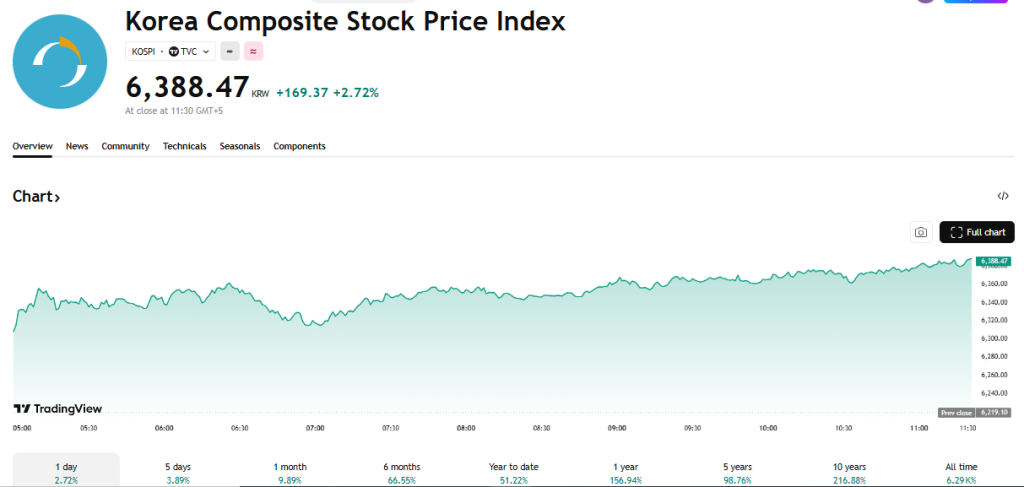
Why is KOSPI rising so fast?
The main reasons include:
- Strong buying in semiconductor stocks
- Global demand for AI chips
- Expectations of long-term tech growth
- Foreign inflows into Korean equities
Companies like Samsung Electronics and SK Hynix remain at the center of this momentum. These firms are key suppliers in the global AI hardware chain.
What does Meyka AI’s stock analysis tool indicate?
The AI-based stock analysis from Meyka suggests:
- Medium-term bullish trend in Korean semiconductor stocks
- Strong momentum continuation if AI chip demand stays high
- Possible short-term volatility due to global risk sentiment
The tool highlights that KOSPI’s strength is not broad-based but heavily tech-driven.
Technical market view
- Index trend remains above major moving averages
- Momentum indicators show overbought conditions in the short term
- Support zones are now forming after the breakout
Iran Uncertainty: How Is Geopolitics Affecting Asian Stocks?
Geopolitical tension around Iran continues to create pressure on global markets. Investors are closely watching developments linked to U.S.-Iran relations and regional stability.
Why does Iran matter for global markets?
The biggest concern is oil supply. The Strait of Hormuz is a key route for global crude shipments. Any disruption can quickly push oil prices higher.
Market impact so far:
- Oil prices remain volatile
- Energy stocks show mixed movement
- Risk-off sentiment increases in global equity markets
Higher oil prices also raise inflation risks. This affects interest rate expectations and investor confidence worldwide.
Why Is AI Still Driving Market Gains Despite Global Risks?
Artificial intelligence remains the strongest growth theme in global markets. Even when geopolitical risks rise, AI-related stocks continue to attract investors.
What is fueling the AI rally?
- Rapid expansion of AI infrastructure spending
- Rising demand for high-performance chips
- Growth in data centers and cloud computing
- Strong earnings outlook for semiconductor firms
Asia plays a central role in this trend, especially South Korea and Taiwan, due to their dominance in chip manufacturing.
Market insight
Many analysts believe AI is currently acting as a “buffer” for global markets. It helps reduce the impact of negative geopolitical news on equities.
Global Market Outlook: What Should Investors Watch Next?
Markets are expected to remain uneven in the short term. The balance between geopolitical risk and AI-driven growth will decide the next move.
Key factors to watch:
- Iran-related diplomatic updates
- Oil price direction
- U.S. Federal Reserve interest rate signals
- Earnings from major semiconductor companies
Investors are likely to stay selective. Technology stocks may continue to lead, while broader markets remain cautious.
Wrap Up
Asian markets are sending mixed signals as geopolitical uncertainty around Iran weighs on sentiment. At the same time, AI-driven demand is pushing South Korea’s KOSPI to record highs. This split trend shows how global markets are being shaped by both risk and innovation. In the coming days, oil prices, diplomacy, and tech earnings will decide whether this rally expands or stays limited to a few sectors.
Disclaimer:
The content shared by Meyka AI PTY LTD is solely for research and informational purposes. Meyka is not a financial advisory service, and the information provided should not be considered investment or trading advice.
What brings you to Meyka?
Pick what interests you most and we will get you started.
I'm here to read news
Find more articles like this one
I'm here to research stocks
Ask Meyka Analyst about any stock
I'm here to track my Portfolio
Get daily updates and alerts (coming March 2026)