
Key Points
The US dollar weakens as Fed rate cut expectations rise and global risk sentiment improves
Asian FX shows mixed performance, with export-driven currencies gaining selective strength
BOJ April 2026 meeting in focus as markets watch for signals on future yen policy direction
Fed and BOJ policy divergence likely to drive volatility in global currency markets ahead
Global currency markets are reacting to a clear shift in momentum as the US dollar continues to weaken in late April 2026. On April 27, 2026, traders are closely watching Asian foreign exchange markets, which are showing signs of steady firmness. The move comes as expectations build around upcoming central bank decisions from the Bank of Japan on April 28-29 and the US Federal Reserve shortly after.
Investors are repositioning as interest rate outlooks begin to diverge across major economies. Asian currencies are responding to improved risk sentiment and capital inflows, while the dollar loses some of its recent strength. This changing backdrop is creating fast-moving FX conditions and raising questions about the next direction of global currency trends.
US Dollar Weakness and Global FX Repricing
Dollar index softens as policy expectations shift
The US dollar has started 2026 on a softer note. On April 27, 2026, the Dollar Index (DXY) is trading near the 98-99 range, reflecting weaker momentum compared to earlier months.
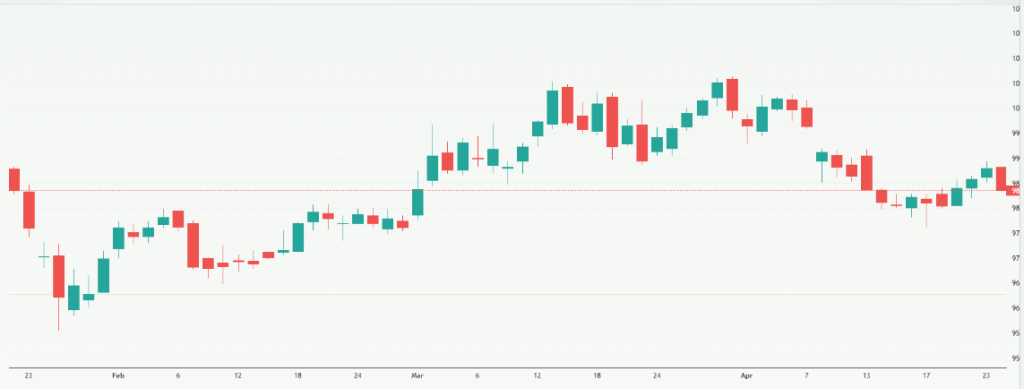
The main reason is changing expectations around US monetary policy. Traders are now pricing in a higher chance of rate cuts later in 2026, especially if inflation continues to ease.
Recent high-authority market updates show:
- Dollar pressure increased after improving global risk sentiment
- Reduced demand for safe-haven assets
- Investors shifting toward emerging and Asian currencies
What is driving the dollar weakness right now?
Key factors include:
- Slower inflation signals in the US economy
- Expectations of the Fed policy easing cycle
- Improved global equity markets, reducing safe-haven demand
- Stable US economic data reduces the urgency for dollar buying
This combination is creating a “soft dollar environment,” where even small policy changes can trigger large FX movements.
Asia FX Performance – Mixed but Strengthening Bias
Why are Asian currencies gaining attention in 2026?
Asian FX markets are showing selective strength, not a uniform rally. Export-driven economies are benefiting the most.
Recent market behavior shows:
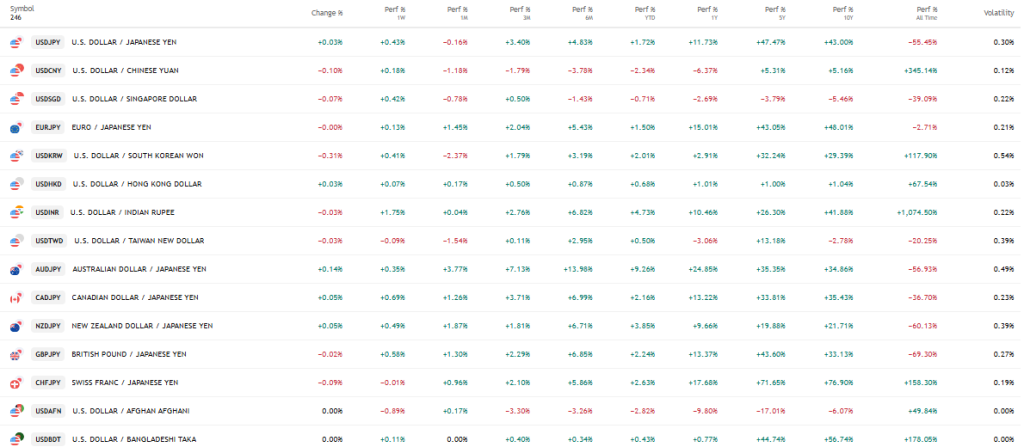
- The Taiwan dollar is gaining due to strong semiconductor exports
- Korean won supported by tech sector inflows
- The Chinese yuan is stable due to managed policy control
- Indian rupee and Indonesian rupiah under pressure from oil imports
According to regional outlooks, Asia FX is increasingly driven by domestic fundamentals instead of just the US dollar direction.
Which Asian currencies are strongest right now?
- Taiwan Dollar (TWD): supported by tech exports
- Singapore Dollar (SGD): stable due to strong macro buffers
- Japanese Yen (JPY): weak but closely watched
Why is Asia FX not moving as one block?
Because each economy is reacting differently to:
- Trade flows
- Inflation pressure
- Central bank policy paths
- Capital inflows into tech sectors
This divergence is making Asia FX more complex but also more opportunity-driven for traders.
BOJ Policy Meeting – Yen Stability or Volatility Trigger?
Will the Bank of Japan change interest rates in April 2026?
The Bank of Japan (BOJ) meeting on April 28-29, 2026, is one of the most important FX events this month.
Market expectations suggest:
- Policy rate likely to remain around 0.75%
- No aggressive tightening expected yet
- Focus on wage growth and inflation stability
However, analysts are watching for hints of a possible rate hike toward 1.0% later in 2026.
Why is the Japanese yen still weak?
The yen continues to struggle due to:
- Interest rate gap with the US
- High import costs, especially for energy
- Slow pace of BOJ tightening
- Capital outflows toward higher-yield markets
This has kept the yen near multi-decade lows, making it highly sensitive to BOJ signals.
Could BOJ intervention happen?
Yes, but only if volatility increases sharply. Policymakers may step in if:
- USD/JPY rises too fast
- Import inflation worsens
- Market disorder appears
For now, verbal warnings remain more likely than direct intervention.
US Federal Reserve – Direction of Global Liquidity
What is the Fed expected to do in 2026?
The US Federal Reserve meeting following BOJ’s decision is equally critical. Markets are focused on:
- Timing of possible rate cuts
- Inflation path vs labor market strength
- Signals from Fed officials about policy easing
Currently, traders expect the Fed to remain data-dependent, with no sudden moves.
How does Fed policy affect Asia FX?
Fed decisions directly shape global liquidity:
- Dovish Fed = weaker USD = stronger Asian currencies
- Hawkish Fed = stronger USD = pressure on Asia FX
- Neutral Fed = range-bound FX markets
This is why even small Fed statements can trigger global FX volatility.
Geopolitics and Risk Sentiment Impact on FX
How do global tensions affect currency markets?
Geopolitical risks remain a major FX driver in 2026. Key impacts include:
- Higher oil prices are increasing import bills in Asia
- Temporary spikes in US dollar demand as safe haven
- Volatility in emerging market currencies
Recent easing in global tensions has reduced panic flows, allowing Asian currencies to stabilize.
Why oil prices matter for Asia FX?
Most Asian economies are net importers of oil. So:
- Higher oil prices = weaker local currencies
- Lower oil = FX stability or strength
This link is especially strong for India, Pakistan, and Southeast Asia.
Outlook – What Will Drive Asia FX Next?
What should traders watch in the coming days?
The next direction of Asia FX depends on three key triggers:
- BOJ policy tone on yen direction
- Fed guidance on rate cuts
- Stability in global energy prices
Will Asia FX continue to strengthen?
It depends on the USD behavior. If the dollar continues to weaken, Asia FX may extend gains, especially in export-heavy economies. However, volatility will remain high due to policy divergence.
For traders analyzing FX-linked equities or global exposure, tools like Meyka AI stock analysis platform can help interpret cross-market signals and sentiment shifts in real time, especially where currency moves impact listed companies.
Final Words
Asia FX markets are at a turning point as the US dollar weakens and global central banks prepare major policy decisions. The BOJ meeting and Fed outlook will shape the next big move. While Asian currencies are showing early strength, the trend is still fragile. Clear direction will depend on policy signals, inflation data, and global risk sentiment in the coming weeks.
Disclaimer:
The content shared by Meyka AI PTY LTD is solely for research and informational purposes. Meyka is not a financial advisory service, and the information provided should not be considered investment or trading advice.
What brings you to Meyka?
Pick what interests you most and we will get you started.
I'm here to read news
Find more articles like this one
I'm here to research stocks
Ask Meyka Analyst about any stock
I'm here to track my Portfolio
Get daily updates and alerts (coming March 2026)