




Key Points
Alibaba's core profit dropped 84% despite revenue growth.
Cloud Intelligence revenue jumped nearly 38% year over year.
Heavy AI and e-commerce spending hurt margins and cash flow.
Investors remain focused on Alibaba’s long-term AI growth strategy.
Alibaba stock came under fresh pressure on May 13, 2026, after the company reported an 84% drop in core profit despite strong growth in its cloud and AI businesses. The results surprised many investors who expected Alibaba’s tech expansion to improve earnings. Instead, rising AI spending and fierce competition across China’s e-commerce market hurt margins. As Alibaba pushes deeper into artificial intelligence, investors are now asking a critical question: Can the company balance rapid innovation with stable profitability?
Alibaba Q4 FY2026 Revenue Growth Fails to Calm Investors
Key Numbers From the Latest Quarter
Alibaba Group reported mixed fiscal Q4 FY2026 results on May 13, 2026. The company posted revenue of 243.38 billion yuan ($35.84 billion), up 3% year over year. However, the figure still missed analyst expectations of around 247 billion yuan.
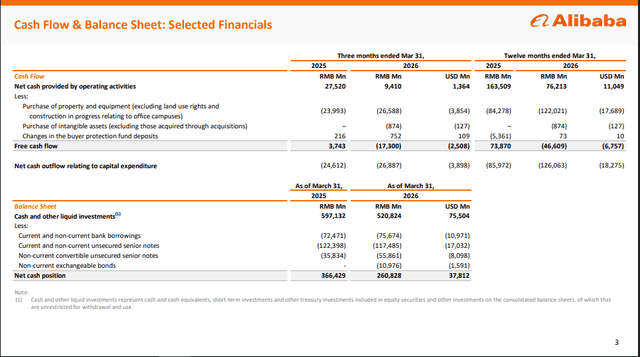
The biggest surprise came from profitability. Alibaba’s core operating profit dropped sharply as the company increased spending on artificial intelligence, cloud expansion, and e-commerce competition.
Key highlights included:
- Cloud Intelligence revenue jumped 38% year over year.
- China’s commerce revenue reached 122.22 billion yuan.
- AI-related cloud products continued posting triple-digit growth.
- International e-commerce remained weaker than expected.
- Free cash flow faced pressure from rising infrastructure investments.
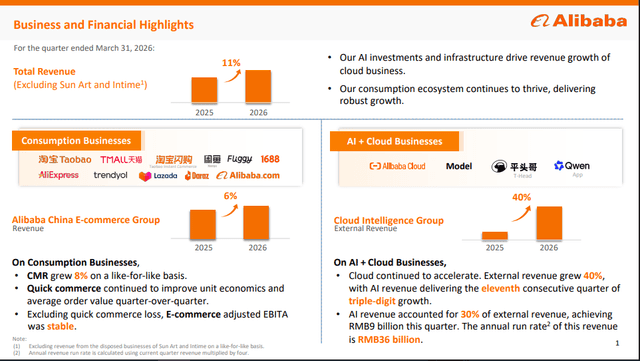
Investors expected stronger earnings after Alibaba’s aggressive AI push during the past year. Instead, rising costs became the market’s main concern.
Why Investors Reacted Negatively?
Alibaba’s stock faced pressure because investors focused more on shrinking margins than on revenue growth. The company spent heavily on AI computing infrastructure, cloud services, and fast-delivery commerce operations.
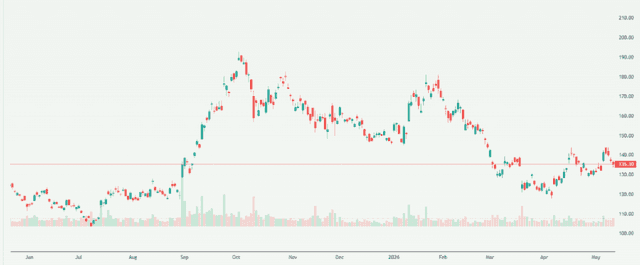
Analysts also pointed to slower international commerce growth and rising competition from Chinese rivals. Investors worry that Alibaba’s profit pressure may continue throughout 2026 as the company prioritizes long-term AI expansion over short-term earnings stability.
Why Alibaba’s Core Profit Collapsed Despite Strong Cloud Growth?
Massive AI Infrastructure Spending
Alibaba is investing aggressively in AI infrastructure to compete with global and Chinese technology giants. The company expanded its Qwen AI ecosystem, enterprise AI tools, and cloud computing capabilities during FY2026.
CEO Eddie Wu said Alibaba’s AI investments are moving from the development stage into large-scale commercialization. The company recently introduced enterprise AI agent tools that help businesses with research, transcription, automation, and document management.
Alibaba Cloud also continued building data centers and AI computing capacity across Asia. Industry reports showed the company maintained roughly 37% of China’s cloud infrastructure market during late 2025.
AI-related cloud products reportedly delivered triple-digit growth for several consecutive quarters. However, these investments significantly increased operational expenses.
Quick Commerce and Subsidy Pressure
Alibaba is also fighting an expensive battle in China’s e-commerce market. Rivals like JD.com and PDD Holdings continue offering aggressive discounts and fast-delivery services.
To defend market share, Alibaba expanded Taobao Instant Commerce and invested heavily in delivery logistics and consumer subsidies. These efforts boosted order activity but reduced profitability.
Reuters reported that ongoing food delivery and quick-commerce competition played a major role in Alibaba’s declining operating income.
Alibaba’s AI and Cloud Business Is Becoming the Company’s Main Growth Engine
Cloud Intelligence Revenue Accelerates
The Cloud computing became Alibaba’s strongest-performing business segment during the quarter. Cloud Intelligence revenue increased roughly 38% year over year to 41.63 billion yuan.
This growth came mainly from rising enterprise AI demand across China. More companies are adopting generative AI tools, automation systems, and AI-powered analytics platforms.
Alibaba introduced new AI agent services aimed at helping businesses automate tasks and improve productivity. The company also expanded its AI cloud platform capabilities for developers and enterprise customers.
Several analysts now see Alibaba Cloud as the company’s main long-term growth driver rather than traditional e-commerce.
Qwen AI Ecosystem Expansion
Alibaba continues expanding its Qwen large language model ecosystem. The company launched updated versions of Qwen AI models alongside new multimodal and enterprise-focused capabilities.
The Qwen ecosystem now supports:
- AI-powered shopping assistants
- Business automation
- Coding assistance
- Research tools
- Intelligent recommendation systems
Alibaba also integrated AI features deeper into Taobao and other consumer platforms. The company aims to improve user engagement while increasing advertising and transaction efficiency. Some investors now use platforms like Meyka, an AI stock analysis tool, to track how Alibaba’s AI spending could impact future earnings growth and long-term valuation.
How China’s Economic Slowdown Is Affecting Alibaba’s Core Business?
Weak Consumer Spending in China
China’s slower economy continues to pressure consumer spending. Many households remain cautious due to property market weakness and slower income growth. As a result, shoppers are focusing more on discounts and budget-friendly products, which has limited Alibaba’s e-commerce growth.
Trade-In Subsidies Supported Sales
Government trade-in subsidy programs helped increase sales of electronics and home appliances on Taobao and Tmall. These incentives supported short-term growth, but analysts still remain cautious about China’s long-term consumer recovery.
Competition Is Intensifying Across China’s Tech Sector
Pressure From JD.com and PDD Holdings
Alibaba is facing rising pressure from JD.com and PDD Holdings, which continue expanding through discounts and faster delivery services. To protect market share, Alibaba increased spending on promotions and merchant incentives, which hurt profit margins.
AI Race Against Tencent and Baidu
Alibaba is also competing aggressively in China’s AI market. Tencent and Baidu are investing heavily in AI models and cloud services, creating a major technology spending race. While Alibaba remains a leading cloud provider, competition is expected to grow further in 2026.
What Analysts and Wall Street are Saying About BABA Stock?
Bullish Long-Term AI Outlook
Many Wall Street analysts still remain positive on Alibaba’s long-term growth potential despite weaker profits. Analysts believe the company’s AI and cloud businesses could become major revenue drivers in the coming years. MarketBeat data shows most analysts rate BABA stock as a “Moderate Buy,” with an average price target near $188.75.
Near-Term Margin Concerns Remain High
Investors remain concerned about shrinking profit margins as Alibaba continues spending heavily on AI infrastructure and e-commerce competition. Recent earnings showed weaker operating margins and lower earnings growth, keeping short-term market sentiment mixed.
Can Alibaba Balance AI Expansion and Profitability?
The Key Challenge Ahead
Alibaba’s biggest challenge now is balancing aggressive AI expansion with stable earnings growth. The company clearly wants to become one of the global leaders in AI infrastructure and enterprise cloud services. However, these investments require enormous spending.
Investors now expect Alibaba to prove that AI growth can eventually translate into stronger profits and cash flow.
Metrics Investors Should Watch Next Quarter
Investors will closely monitor several key metrics during upcoming earnings reports:
- Cloud Intelligence revenue growth
- AI monetization progress
- Free cash flow recovery
- China’s commercial profitability
- International commerce performance
- Delivery and quick-commerce losses
Strong improvements in these areas could help restore investor confidence in BABA stock.
Closing Note
Alibaba is betting heavily on AI and cloud growth to drive its future business. While these investments are boosting revenue, they are also hurting short-term profits and pressuring BABA stock. Investors will now watch closely to see whether Alibaba can turn its AI expansion into stronger earnings and long-term growth.
Disclaimer:
The content shared by Meyka AI PTY LTD is solely for research and informational purposes. Meyka is not a financial advisory service, and the information provided should not be considered investment or trading advice.
What brings you to Meyka?
Pick what interests you most and we will get you started.
I'm here to read news
Find more articles like this one
I'm here to research stocks
Ask Meyka Analyst about any stock
I'm here to track my Portfolio
Get daily updates and alerts (coming March 2026)