
Key Points
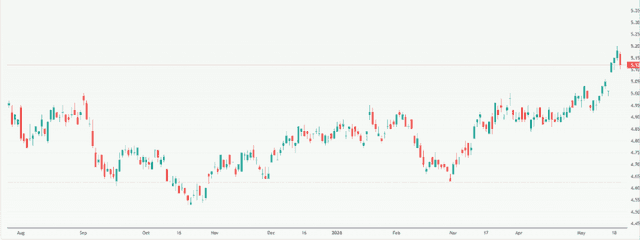
30-year Treasury yield rises above 5%, highest since 2007, signaling major bond market pressure.
Bond ETFs fall as rising yields reduce bond prices, especially long-duration funds.
Higher yields increase mortgage rates, loans, and tighten overall financial conditions.
Inflation concerns and Fed uncertainty continue to drive volatility across global markets.
In May 2026, the U.S. 30-year Treasury yield climbed above 5.2% for the first time since 2007, sending shockwaves through the bond market. Long-term bond ETF dropped sharply as investors reacted to rising inflation fears, heavy government borrowing, and uncertainty around Federal Reserve policy. Higher yields are also pushing mortgage and loan costs upward. Now, many analysts believe the bond market could become the biggest driver of global financial trends in the months ahead.
Why the 30-Year Treasury Yield Is Surging Again?
Inflation Fears Return to the Bond Market
The 30-year U.S. Treasury yield has moved back above the 5% level in May 2026, a zone last seen in 2007. This move signals strong stress in the bond market. Inflation is still sticky in key areas like energy and services. Even small price pressures are keeping long-term yields high. Investors now demand more return to hold long-duration debt.
Weak Demand in Bond Auctions
Recent Treasury auctions have shown softer demand from global buyers. Foreign demand has also slowed in parts of 2025-2026. This pushes yields higher because the government must offer better returns to attract investors.
Policy Uncertainty from the Federal Reserve
The Federal Reserve is not signaling clear rate cuts yet. Markets are unsure if rates will stay “higher for longer.” This uncertainty adds pressure on long-term bonds.
Overall, the 30-year Treasury yield rise reflects inflation risk, weak demand, and policy confusion. Together, these forces are pushing the bond market into levels not seen in nearly two decades.
Bond ETFs are Sliding Toward 2007 Price Levels
Why Bond ETFs Fall When Yields Rise?
Bond ETFs move opposite to yields. When yields go up, bond prices fall. Long-duration ETFs are hit the hardest because they are more sensitive to interest rate changes. This is known as duration risk.
Why 2007 Levels Matter for Investors?
Many long-term bond ETFs are now trading near levels last seen before the 2008 financial crisis. This comparison matters because it shows how extreme the current repricing is. Investors who bought bonds during low-rate years are now seeing sharp losses.
Outflows Signal Investor Stress
Large fixed-income funds have reported steady outflows in recent months. Investors are shifting money toward cash and short-term instruments. This shift shows reduced confidence in long-term bonds.
The bond ETF decline is not just a price move. It reflects a deeper reset in how investors value safety and income in today’s high-rate world.
How Rising Treasury Yields Affect Stocks, Mortgages, and Consumers?
Pressure on Stock Market Valuations
Higher Treasury yields increase the “risk-free rate.” This reduces the value of future earnings in stock pricing models. Growth and tech stocks feel the most pressure. Investors often rotate away from high-valuation stocks during yield spikes.
Mortgage Rates Stay Elevated
Mortgage rates are closely tied to long-term Treasury yields. When the 30-year yield rises, home loan rates also increase. This reduces housing affordability and slows home buying demand.
Consumer Debt Becomes More Expensive
Credit card rates, auto loans, and personal loans also move higher. Households feel more financial pressure as borrowing costs rise across the economy.
Why Bonds Now Drive Market Mood?
Bond market moves are now a key signal for equity investors. A sharp rise in yields often leads to volatility in stocks. This link is stronger in 2025-2026 than in previous years. Overall, rising yields are tightening financial conditions across the entire economy.
What Analysts and Institutions are Warning About?
Higher Yields May Not Peak Yet
Several global banks suggest that long-term yields could stay elevated if inflation remains sticky. Some analysts even warn that yields may test higher ranges if fiscal deficits continue expanding.
Federal Reserve’s Delicate Position
The Fed is balancing inflation control with economic growth. Cutting rates too early could reignite inflation. Keeping rates high for too long could slow growth sharply.
Market Volatility Risk Remains High
Institutions warn that bond volatility can spill into equities. Tight financial conditions may increase recession risk if sustained for too long.
Role of AI-Based Market Tools
Modern AI stock analysis tools are increasingly used by traders to track yield movements, inflation signals, and bond ETF flows in real time. These tools help identify early shifts in market sentiment before traditional indicators react.
The overall message from analysts is clear: bond markets are entering a sensitive phase where small economic changes can create large market swings.
Historical Comparison: Is This Another 2007 Bond Market Moment?
Similarities to the 2007 Environment
Long-term yields above 5% are rare in modern markets. Like 2007, investors are now dealing with inflation uncertainty and tightening financial conditions. Bond prices are also under sustained pressure.
Key Differences in Today’s Market
Unlike 2007, banks today are better capitalized. Regulations are stronger. However, government debt levels are much higher now, which adds long-term risk to bond pricing.
What Investors Should Watch Next?
Key indicators include inflation reports, Treasury auction demand, and Federal Reserve commentary. Oil prices and global tensions also remain important drivers of yield direction. This comparison shows that while history rhymes, today’s bond market has its own unique risks.
Wrap Up
The rise in the 30-year Treasury yield above 5% marks a major shift in global markets. Bond ETFs are adjusting to a new high-rate reality, similar to levels last seen in 2007. Inflation pressure, weak demand, and policy uncertainty are driving the move. This change is affecting stocks, mortgages, and consumer borrowing. Investors now face a new cycle where bonds are no longer stable anchors, but active sources of market volatility.
Disclaimer:
The content shared by Meyka AI PTY LTD is solely for research and informational purposes. Meyka is not a financial advisory service, and the information provided should not be considered investment or trading advice.
What brings you to Meyka?
Pick what interests you most and we will get you started.
I'm here to read news
Find more articles like this one
I'm here to research stocks
Ask Meyka Analyst about any stock
I'm here to track my Portfolio
Get daily updates and alerts (coming March 2026)