
Key Points
Vodafone Idea stock surged after ₹23,649 crore AGR dues reduction announced on April 30, 2026.
Total AGR liability cut from ₹87,695 crore to ₹64,046 crore, easing financial pressure.
Repayment timeline extended till FY2041, improving cash flow stability.
Relief boosted investor confidence, but high debt and competition risks still remain.
On April 30, 2026, Vodafone Idea shares jumped after the Indian government reduced the telecom company’s AGR dues by ₹23,649 crore. The relief lowered Vi’s total dues to about ₹64,046 crore and gave the company a longer repayment timeline till FY2041.
Investors quickly reacted as the move improved Vodafone Idea’s chances of survival in India’s highly competitive telecom market. The news has also sparked fresh discussions about Vi’s future growth, fundraising plans, and possible 5G expansion.
Vodafone Idea Stock Rally Explained: What Triggered the Sharp Surge?
Vodafone Idea stock surged after the Indian government announced major relief on the company’s Adjusted Gross Revenue (AGR) dues. On April 30, 2026, the Department of Telecommunications (DoT) reduced Vi’s AGR liabilities by ₹23,649 crore. The dues were revised from ₹87,695 crore to ₹64,046 crore.
The announcement immediately improved investor sentiment. Traders saw the move as a lifeline for the struggling telecom company. Vodafone Idea shares gained sharply as markets expected better cash flow, easier fundraising, and stronger long-term survival chances.
The relief also comes at a time when India’s telecom sector is becoming more competitive due to aggressive 5G expansion by rivals.
Market Reaction After the AGR Announcement
Vodafone Idea shares witnessed strong buying activity after the news became public. Trading volumes also increased significantly on the NSE.
Earlier in April 2026, the stock had already rallied over 6% on hopes that the AGR reassessment would reduce liabilities further. The latest government decision confirmed those expectations.
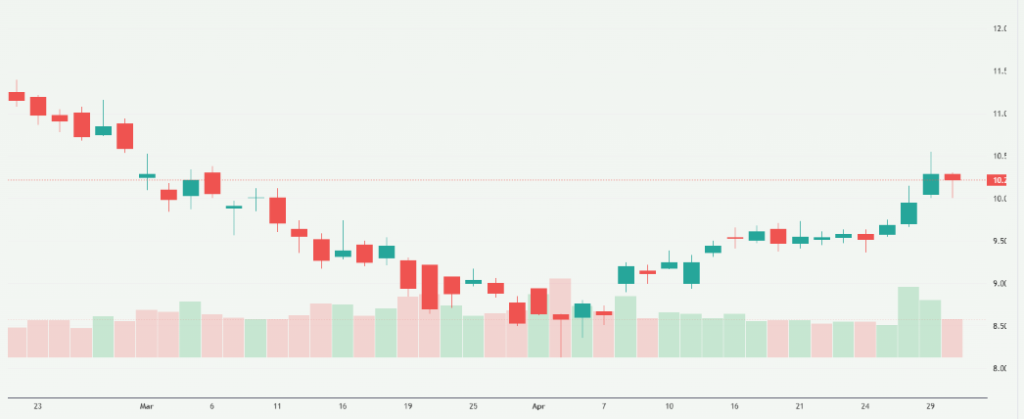
Analysts said investors reacted positively because:
- The company’s repayment burden became more manageable.
- Bankruptcy concerns have temporarily reduced.
- Vi gained more time to improve operations and raise capital.
The stock remains highly volatile, but the AGR relief improved short-term market confidence.
Why the ₹23,649 Crore Relief Matters for Vi?
The dues reduction is critical because Vodafone Idea has struggled under one of the heaviest debt burdens in India’s telecom industry.
The revised repayment structure allows the company to spread payments till FY2041. Under the new plan:
- Vi will pay around ₹100 crore annually between FY2032 and FY2035.
- Remaining dues will be cleared in equal installments till FY2041.
This gives the company breathing room to focus on:
- Expanding 4G and 5G services
- Improving subscriber retention
- Raising fresh investments
- Reducing operational pressure
For investors, the move signals that the government wants Vodafone Idea to remain operational instead of allowing the market to turn into a telecom duopoly dominated by Reliance Jio and Bharti Airtel.
What Is AGR, and Why Was Vodafone Idea Struggling?
Understanding the AGR Dispute
AGR stands for Adjusted Gross Revenue. It is the revenue telecom operators share with the Indian government as license and spectrum usage fees.
The dispute started years ago because telecom companies argued that AGR should include only telecom revenue. However, the government included non-telecom income too.
In 2019, the Supreme Court ruled in favor of the government. That decision created massive liabilities for telecom companies, especially Vodafone Idea.
How AGR Dues Hurt Vodafone Idea’s Financials?
The AGR ruling severely damaged Vodafone Idea’s balance sheet. The company already faced:
- Intense competition from Jio and Airtel
- Falling subscriber numbers
- Delayed 5G rollout
- Weak cash flow generation
After the AGR ruling, liabilities crossed ₹2 lakh crore when spectrum dues and other obligations were included.
The company’s survival increasingly depended on government support, equity conversion, and repayment restructuring.
Breakdown of the Government’s Relief Package for Vodafone Idea
AGR Dues Reduced by Nearly 27%
The biggest highlight of the package was the sharp reduction in AGR dues. According to the DoT’s revised assessment:
- Earlier dues: ₹87,695 crore
- Revised dues: ₹64,046 crore
- Total reduction: ₹23,649 crore
The reassessment followed reviews ordered after legal and regulatory discussions regarding interest calculations and penalties.
The reduction significantly improves Vodafone Idea’s repayment visibility.
New Repayment Timeline Till FY2041
The government also approved staggered repayments to reduce near-term financial stress. Under the revised schedule:
- Smaller annual payments will continue till FY2035.
- Remaining dues will be paid between FY2036 and FY2041.
This structure prevents sudden cash outflows and allows Vodafone Idea to focus on operations.
Reuters reported that the repayment model is designed to improve the company’s liquidity and operational sustainability.
Supreme Court and DoT Committee’s Role
The AGR reassessment process involved reviews by the Department of Telecommunications and internal committees.
The reassessment came after the Supreme Court allowed reconsideration of certain calculations and liabilities.
DoT committees reviewed:
- License fee calculations
- Interest and penalties
- Historical AGR accounting
The final revision resulted in the ₹23,649 crore reduction announced in April 2026.
What does this mean for Vodafone Idea’s Future Business Strategy?
Can Vi Finally Accelerate Its 5G Rollout?
One of Vodafone Idea’s biggest challenges has been the delayed 5G deployment. While Jio and Airtel rapidly expanded their 5G networks, Vi struggled due to funding shortages.
The AGR relief may now help the company:
- Invest more in network expansion
- Improve service quality
- Upgrade infrastructure
- Compete better in urban markets
Still, Vi remains behind rivals in 5G coverage and subscriber growth.
Improved Chances of Raising Fresh Capital
Lower liabilities improve Vodafone Idea’s ability to attract investors. Analysts believe the relief package could help the company:
- Secure bank financing
- Raise equity capital
- Explore strategic partnerships
- Negotiate vendor deals more easily
Reports also suggest some firms have shown interest in telecom investments linked to Vodafone Idea’s future recovery plans.
Key Financial Numbers Investors Should Watch Now
Debt, Subscriber Base, and ARPU Trends
Despite the relief, Vodafone Idea still faces major financial pressure. Key metrics investors are watching include:
- Total debt levels
- Subscriber additions
- Average Revenue Per User (ARPU)
- Cash flow performance
In a positive sign, Vi added subscribers in February 2026 for the first time in over five years. TRAI data showed a net addition of 21,927 users. The company must continue improving operational performance to maintain investor confidence.
Government Stake and Telecom Competition
The Indian government currently holds nearly 49% stake in Vodafone Idea after earlier debt-to-equity conversions.
This is important because policymakers do not want India’s telecom market controlled by only two private operators.
Maintaining competition helps:
- Control telecom tariffs
- Improve consumer choices
- Encourage network investments
That is one reason why the government continues supporting Vi through policy relief.
Risks That Could Still Limit Vodafone Idea’s Recovery
Persistent Financial Stress
Even after the AGR reduction, Vodafone Idea still carries huge liabilities. Major risks include:
- Spectrum dues
- Ongoing losses
- High network investment needs
- Weak profitability
Analysts warn that the AGR relief alone cannot solve the company’s structural challenges.
Subscriber Losses and Intense Competition
Reliance Jio and Bharti Airtel continue dominating the telecom market through aggressive 5G expansion and stronger finances. Vodafone Idea still faces risks from:
- Customer churn
- Limited rural penetration
- Delayed 5G monetization
- Tariff competition
Without faster operational recovery, investor optimism may fade again.
Vodafone Idea Stock Forecast and Technical Analysis
Short Stock Details and Forecast
Vodafone Idea remains a high-risk, high-volatility telecom stock. Current market trends suggest:
- Strong short-term momentum after AGR relief
- Better liquidity outlook
- Improved investor sentiment
According to Simply Wall St, analysts expect:
- Revenue growth of around 10.2% annually
- EPS growth is expected to be near 18.2% annually over the coming years
However, many brokerages still remain cautious due to weak fundamentals.
Technical Analysis Summary
Technical indicators currently show improving momentum. Recent analyst observations include:
- Support zone near ₹8
- Resistance range around ₹9.80–₹10.50
- Bullish “Hammer” reversal pattern formed on charts
- Recovery above the 20-day and 200-day moving averages
The stock also traded above its Volume Weighted Average Price (VWAP), which traders often view as a bullish sign.
Still, volatility remains extremely high.
What Meyka & Other Analysts Say About Vodafone Idea Stock?
Meyka notes AGR relief gives Vodafone Idea breathing space by easing cash pressure and boosting sentiment, but recovery depends on policy support, subscribers, fundraising, and expansion. Analysts are split, bullish views see lower insolvency risk and ARPU gains, while bears warn of high debt, dilution risk, and 5G delays.
Conclusion
Vodafone Idea’s ₹23,649 crore AGR relief marks one of the biggest turning points for the telecom company in recent years. The dues reduction and staggered repayment schedule have improved investor confidence and eased immediate financial pressure.
However, Vodafone Idea still faces major hurdles, including high debt, intense telecom competition, and delayed 5G expansion. The company’s future now depends on whether it can convert regulatory support into operational recovery, subscriber growth, and sustainable long-term profitability.
Disclaimer:
The content shared by Meyka AI PTY LTD is solely for research and informational purposes. Meyka is not a financial advisory service, and the information provided should not be considered investment or trading advice.
What brings you to Meyka?
Pick what interests you most and we will get you started.
I'm here to read news
Find more articles like this one
I'm here to research stocks
Ask Meyka Analyst about any stock
I'm here to track my Portfolio
Get daily updates and alerts (coming March 2026)