
Key Points
Dow Jones hit a record high as optimism grew over a potential U.S.–Iran agreement.
U.S. stock futures traded flat as investors assessed the sustainability of the rally.
Oil prices fell sharply, easing inflation concerns and supporting market sentiment.
Federal Reserve policy signals and upcoming economic data remain key market catalysts.
U.S. stock futures traded little changed on June 16, 2026, after the Dow Jones Industrial Average closed at a record high in the previous session. Investors welcomed signs of progress toward a potential U.S.–Iran agreement, which helped ease concerns about global energy supplies and geopolitical risks.
At the same time, lower oil prices added to market optimism. With Wall Street balancing strong momentum against lingering uncertainty, traders are now watching closely to see whether this rally has enough fuel to continue.
Dow Reaches Record Close as Investors Embrace U.S.–Iran Optimism
What Triggered the Rally?
Wall Street rallied sharply on June 15, 2026, after reports suggested progress toward a potential U.S.–Iran agreement. Investors viewed the development as a sign that tensions in the Middle East could ease in the coming months. The possibility of improved stability around key energy shipping routes boosted confidence across financial markets.
Lower geopolitical risk often encourages investors to move into stocks. That trend was visible across major indexes as buyers returned to both technology and industrial shares. Market participants also welcomed signs that global trade flows could face fewer disruptions if negotiations continue moving forward.
Key Market Performance Numbers
The rally was broad-based and supported by strong participation from multiple sectors. Key market moves included:
- Dow Jones Industrial Average gained about 469 points.
- S&P 500 advanced roughly 1.7%.
- Nasdaq Composite jumped more than 3%.
- Small-cap stocks also posted solid gains.
Technology companies led the advance as investors continued to favor growth stocks. Strong momentum in artificial intelligence-related businesses also helped lift overall market sentiment.
Why U.S. Stock Futures are Holding Flat Despite Record Highs?
Investors Shift From Excitement to Evaluation
Despite the strong rally, U.S. stock futures traded mostly flat during early trading on June 16. This pause is not unusual after a major market move.
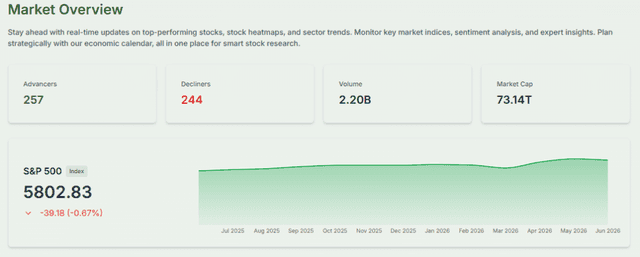
Investors now want more details about the proposed U.S.–Iran framework. Headlines can move markets quickly, but traders often wait for official agreements before making larger bets. Market participants are also reviewing potential economic impacts before extending the rally further.
Profit-Taking and Valuation Concerns
Another factor behind flat futures is profit-taking. Many investors lock in gains after record highs, especially when markets have risen quickly.
Valuation concerns are also returning to the conversation. Some analysts believe stock prices are already reflecting a significant amount of positive news. If earnings growth slows or economic data disappoints, markets could face short-term volatility.
Oil Prices Drop Sharply as Middle East Risk Premium Eases
Crude Oil Falls to Multi-Month Lows
Oil prices moved lower as investors reduced the geopolitical risk premium that had been built into energy markets.
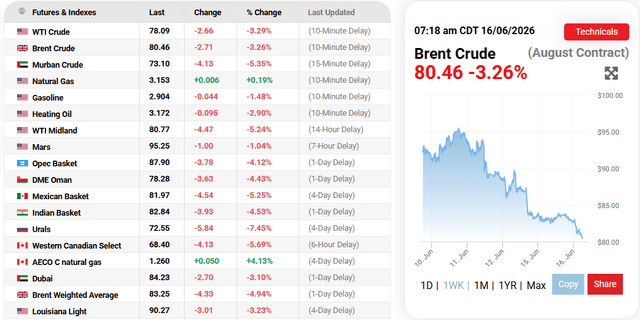
Brent crude and West Texas Intermediate both declined after reports suggested progress in diplomatic discussions. Markets expect lower supply disruption risks if tensions continue to ease. A more stable outlook for the Strait of Hormuz is especially important because a large share of global oil shipments passes through the region.
Which Sectors Benefit Most?
Lower oil prices can benefit several industries.
Companies that may gain include:
- Airlines with lower fuel expenses.
- Transportation firms facing reduced operating costs.
- Consumer businesses that benefit from stronger spending power.
Meanwhile, energy producers may face pressure if crude prices remain weak. Lower fuel costs could also help slow inflation, which remains a major focus for investors and policymakers.
Key Market Drivers Investors are Watching This Week
Federal Reserve and Interest Rate Expectations
The Federal Reserve remains one of the biggest drivers of market sentiment. Investors continue to monitor inflation trends and interest-rate expectations.
Lower oil prices may support the argument for easing inflation pressures. If inflation continues to cool, policymakers could gain more flexibility in future rate decisions. Treasury yields and Fed commentary will remain closely watched throughout the week.
Economic Data and Corporate News
Upcoming economic reports could determine whether stocks extend recent gains. Investors are paying close attention to:
- Inflation indicators.
- Retail sales data.
- Labor market updates.
- Corporate earnings guidance.
Many traders also use an AI stock analysis tool to track market momentum and identify sectors attracting institutional buying interest.
Can the Record-Breaking Rally Continue?
Bullish and Bearish Scenarios
The market outlook depends heavily on whether positive headlines become lasting economic improvements. Continued progress between the U.S. and Iran could support risk assets and keep energy prices stable. However, renewed tensions or weaker economic data could quickly change investor sentiment.
Conclusion
The Dow’s record close highlights growing investor confidence, but markets are entering a critical phase. Traders are looking beyond headlines and focusing on concrete developments surrounding the U.S.–Iran agreement, inflation trends, and Federal Reserve policy. Lower oil prices and strong market momentum provide support, yet risks remain. If diplomatic progress continues and economic data stays healthy, Wall Street could have room for further gains during the second half of June 2026.
Disclaimer:
The content shared by Meyka AI PTY LTD is solely for research and informational purposes. Meyka is not a financial advisory service, and the information provided should not be considered investment or trading advice.
What brings you to Meyka?
Pick what interests you most and we will get you started.
I'm here to read news
Find more articles like this one
I'm here to research stocks
Ask Meyka Analyst about any stock
I'm here to track my Portfolio
Get daily updates and alerts (coming March 2026)