




Key Points
Southwest Airlines beat Q2 2026 earnings expectations with adjusted EPS of $0.94.
Weaker summer and full-year guidance overshadowed the strong quarterly results.
Higher fuel costs remain the biggest challenge for profit growth in 2026.
New revenue strategies and slower capacity growth aim to improve long-term profitability.
On 23 July 2026, Southwest Airlines reported second-quarter earnings that came in ahead of Wall Street expectations, but the market was not impressed. The airline also cut its profit forecast for the rest of the year, which shifted attention away from the strong quarterly results. Higher fuel prices and weaker summer earnings guidance quickly became the main concern. So why did better-than-expected earnings fail to reassure investors, and what does it mean for Southwest Airlines stock?
Southwest Airlines Q2 Earnings Beat Estimates, but Revenue Misses Expectations
What were the key financial highlights?
Southwest Airlines posted a stronger second quarter than analysts had expected on 22 July 2026. Adjusted earnings reached $0.94 per share, comfortably above Wall Street’s estimate of around $0.51. Net income totalled $233 million, while revenue rose 16% from a year earlier to $8.43 billion. Even with that growth, revenue came in just below market expectations.
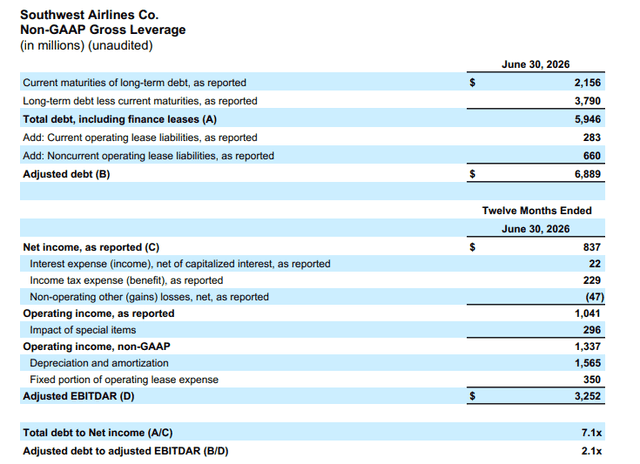
The airline also reported record business travel revenue and continued growth in its Rapid Rewards loyalty programme. Even so, the earnings beat did little to lift investor confidence. Shares fell in after-hours trading as the market looked past the quarterly numbers and focused on the company’s updated outlook.
Why did investors ignore the earnings beat?
Investors usually care more about what comes next than what has already happened. Southwest lowered its earnings outlook for the rest of 2026 as higher jet fuel prices continued to squeeze profit margins. Concerns about slower earnings growth during the peak summer travel season added more pressure. That outlook outweighed the company’s stronger-than-expected quarterly performance.
Summer Outlook Raises Fresh Concerns for Wall Street
Why did third-quarter guidance disappoint?
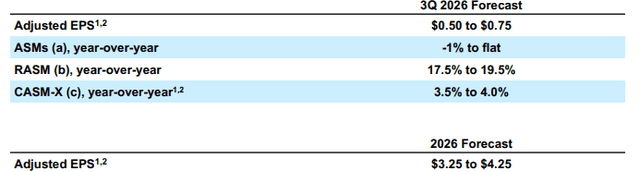
Southwest expects adjusted third-quarter earnings to range between $0.50 and $0.75 per share. That is below Wall Street’s consensus estimate of roughly $0.82 per share. The airline said volatile fuel prices remain its biggest challenge, even though passenger demand has stayed healthy. Ongoing geopolitical tensions have kept fuel costs elevated, making it harder for airlines to protect margins while keeping fares competitive.
Why was the full-year forecast reduced?
The airline now expects full-year adjusted earnings of $3.25 to $4.25 per share, replacing its earlier forecast of at least $4.00 per share. Management said higher fuel expenses, which added nearly $900 million in costs during the second quarter, drove the revision.
Even with those higher costs, Southwest believes stronger ticket pricing, steady business travel demand, and additional revenue sources can support earnings over time. Investors will now watch whether fuel prices ease during the second half of the year and whether that improves profitability.
What’s Driving Southwest’s New Revenue Strategy?
How is Southwest earning more from each passenger?
Southwest is relying less on ticket sales alone. The airline is generating more revenue through checked baggage fees, assigned seating, extra-legroom options, corporate travel, Rapid Rewards memberships, and co-branded credit card partnerships. These changes have helped increase average fares and unit revenue without adding a large number of new flights.
Why is capacity growth slowing?
Rather than expanding aggressively, Southwest plans to increase capacity by only about 1.5% in 2026. The company wants to generate more revenue from its existing network while keeping operating costs under control. The strategy puts profitability ahead of rapid expansion and gives the airline more flexibility as market conditions remain uncertain.
What Does It Mean for Southwest Airlines Stock?
Southwest Airlines (NYSE: LUV) is still in a transition period. Meyka’s AI stock analysis tool suggests investors should pay close attention to earnings guidance, fuel prices, and revenue growth instead of focusing only on quarterly earnings.
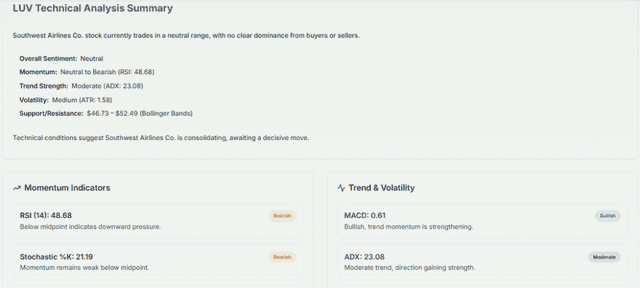
Technical indicators show mixed short-term momentum after the guidance cut, while the longer-term picture depends on improving margins. Other analysts also expect Southwest’s pricing strategy and broader revenue mix to support earnings if fuel costs begin to decline.
What Meyka says: Southwest’s long-term outlook remains positive if the company continues increasing revenue per passenger while keeping operating costs under control.
Conclusion
Southwest Airlines delivered stronger quarterly earnings than expected, but weaker guidance for the months ahead changed the market’s reaction. Fuel costs continue to weigh on profits, even as the airline expands new revenue sources and keeps travel demand steady. The next few quarters will show whether those efforts are enough to improve margins and rebuild investor confidence in LUV stock.
Disclaimer:
The content shared by Meyka AI PTY LTD is for research and informational purposes only. Meyka is not a financial advisory service, and the information provided should not be treated as investment or trading advice.
What brings you to Meyka?
Pick what interests you most and we will get you started.
I'm here to read news
Find more articles like this one
I'm here to research stocks
Ask Meyka Analyst about any stock
I'm here to track my Portfolio
Get daily updates and alerts (coming March 2026)