



Samsung Group Announces 140 Trillion Won Investment to Expand Display and Semiconductor Manufacturing

Key Points
Samsung will invest 140 trillion won in AI, semiconductor, and display expansion.
New HBM facilities will increase AI chip production.
OLED and micro display output will support next-generation devices.
The investment will create jobs and strengthen South Korea's tech industry.
Samsung Group announced on July 2, 2026, that it will invest 140 trillion won, or more than $100 billion, to expand semiconductor and display manufacturing in South Korea. The investment focuses on AI memory chips, advanced packaging, and next-generation OLED and XR display technologies.
New production facilities are planned for the Chungcheong region. The announcement comes as demand for AI hardware continues to grow worldwide. For investors and industry watchers, the plan offers a clearer picture of Samsung’s long-term manufacturing strategy and South Korea’s position in the global chip market.
Samsung’s 140 Trillion Won Investment Plan
Key Highlights
Samsung Group confirmed on July 2, 2026, that it will invest 140 trillion won, about $90 billion, across South Korea’s Chungcheong region. The funding will expand production of AI semiconductors, advanced display panels, batteries, and semiconductor materials. It also supports South Korea’s efforts to strengthen its semiconductor and AI manufacturing industries.
The investment includes:
- 67 trillion won for Samsung Display’s OLED production facilities in Asan and Cheonan.
- 56 trillion won for Samsung Electronics’ HBM memory and semiconductor packaging operations in Onyang and Cheonan.
- 9 trillion won for next-generation battery research and development at Samsung SDI.
- 8 trillion won for AI server package substrates through Samsung Electro-Mechanics.
The projects are expected to continue through 2040. Along with expanding production, they are likely to create jobs, attract suppliers, and increase industrial activity across the region.
How Samsung Will Expand Semiconductor Manufacturing?
New HBM Production Facilities
Samsung Electronics plans to expand production of High-Bandwidth Memory (HBM), one of the fastest-growing memory technologies used in AI computing. The company will build new manufacturing and advanced packaging facilities in Cheonan and Onyang to increase output for AI servers, cloud platforms, and data centers.
Why Is HBM So Important?
HBM offers much higher memory bandwidth while using less power than traditional DRAM. It has become a standard component alongside AI accelerators developed by companies such as NVIDIA and AMD. As demand for generative AI continues to increase, memory manufacturers are investing heavily to keep pace.
Samsung is also increasing investment in advanced chip packaging. Better packaging improves the connection between processors and memory, allowing AI systems to deliver higher performance and better energy efficiency. These technologies are now widely used across cloud computing, AI model training, and enterprise data centers.
Investors following semiconductor companies can also use an AI stock analysis tool to compare earnings trends, market performance, and the potential impact of rising AI infrastructure spending.
Samsung Display Expansion Targets Next-Generation Technologies
Investment in Advanced OLED and Micro Displays
Samsung Display will invest 67 trillion won to expand manufacturing in Asan and Cheonan. The company plans to increase production of advanced OLED panels and next-generation micro displays for emerging technologies.
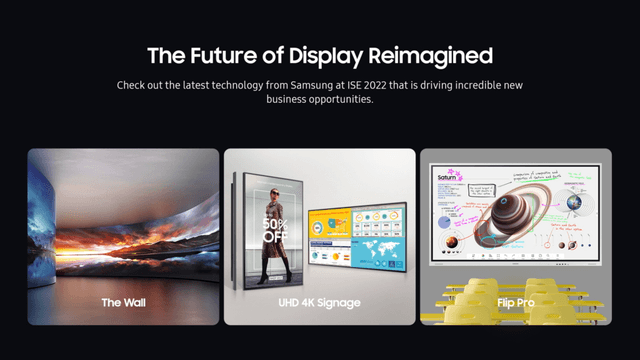
The expanded production will support:
- Foldable smartphones
- Extended Reality (XR) headsets
- Automotive display systems
- Premium laptops and tablets
- Future wearable devices
Demand for thinner, brighter, and more power-efficient displays continues to grow as AI-powered consumer electronics become more common. Samsung expects its display business to work alongside its semiconductor division as demand for advanced hardware increases.
Why This Investment Matters for South Korea’s Tech Industry?
The investment extends beyond Samsung’s own production capacity. It supports South Korea’s long-term plan to expand semiconductor manufacturing and AI technology development. New facilities are expected to create skilled jobs, improve regional infrastructure, and encourage suppliers to invest near Samsung’s production sites.
The government also wants to increase semiconductor exports while reducing dependence on overseas manufacturing. Combined with investments from SK hynix and other technology companies, the Chungcheong region is expected to become one of Asia’s largest semiconductor production centers over the next decade.
Global Semiconductor Competition Intensifies
Samsung announced the investment as competition across the semiconductor industry continues to grow. Companies including TSMC, SK hynix, and businesses within the NVIDIA ecosystem are expanding production of AI chips and advanced packaging technologies.
By increasing investment in HBM memory, OLED displays, and AI manufacturing infrastructure, Samsung is working to strengthen its position in a market where demand continues to rise.
Conclusion
Samsung’s 140 trillion won investment adds significant manufacturing capacity across semiconductors, advanced packaging, OLED displays, and battery technologies. The company is increasing production in response to rising demand for AI hardware while expanding its presence in South Korea.
If the projects move forward as planned, Samsung will increase its manufacturing capabilities, support regional economic growth, and remain one of the world’s largest semiconductor and display producers.
Disclaimer:
The content shared by Meyka AI PTY LTD is solely for research and informational purposes. Meyka is not a financial advisory service, and the information provided should not be considered investment or trading advice.
What brings you to Meyka?
Pick what interests you most and we will get you started.
I'm here to read news
Find more articles like this one
I'm here to research stocks
Ask Meyka Analyst about any stock
I'm here to track my Portfolio
Get daily updates and alerts (coming March 2026)