




Key Points
Ryanair’s Q1 2026 profit fell 34% to €538 million.
Passenger numbers grew 6% to 61.3 million, but lower fares hurt earnings.
Higher jet fuel costs and operating expenses reduced profit margins.
Investors are watching fuel prices, summer demand, and Ryanair’s growth outlook.
On 20 July 2026, Ryanair shares fell after Europe’s largest low-cost airline reported a 34% decline in first-quarter profit. Higher jet fuel costs and weaker ticket prices reduced margins during the period. Passenger numbers continued to grow, but lower summer fares raised concerns about earnings growth. The latest results show the pressure airlines face as costs rise and travellers become more focused on cheaper flights.
Ryanair Q1 2026 Profit Drops 34% Despite Passenger Growth
Strong Traffic Numbers Fail to Protect Margins
Ryanair reported a sharp fall in quarterly earnings on 20 July 2026 as rising expenses reduced profits. The airline’s first-quarter net profit dropped 34% to €538 million, compared with €819.9 million in the same period last year.
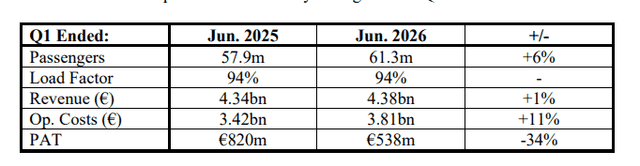
Passenger demand remained strong despite the profit decline. Ryanair carried 61.3 million passengers during the quarter, an increase of around 6% from the previous year. The airline also maintained a load factor of about 94%, meaning most available seats were filled.
Higher passenger numbers were not enough to offset rising costs. Fuel expenses, airport charges, and staffing costs increased during the period, putting pressure on the airline’s margins.
Revenue Growth Slows as Ticket Prices Decline
Ryanair generated around €4.38 billion in revenue during the quarter, but lower ticket prices limited growth. The airline cut fares to attract customers as competition increased across European routes.
Average fares declined by around 6% year-on-year. This created pressure because Ryanair’s business model depends on high passenger volumes and tight cost control.
CEO Michael O’Leary said summer fares could remain weaker than expected as consumers remain cautious and travel demand becomes harder to predict.
Higher Jet Fuel Costs Become Ryanair’s Biggest Earnings Challenge
Why are Rising Oil Prices Hurting Ryanair’s Profits?
Fuel remains one of Ryanair’s largest expenses, leaving the airline exposed to changes in global oil prices. During the quarter, operating costs increased by around 11% to €3.81 billion.
Higher crude oil prices, partly linked to Middle East tensions in 2026, increased costs for airlines across the sector. Jet fuel prices directly affect profits because carriers either absorb higher expenses or raise fares, which can reduce demand.
Ryanair reduced some of the impact through fuel hedging, but continued oil price volatility remains a risk for future earnings.
How Does Ryanair’s Fuel Strategy Protect the Business?
Ryanair has used fuel hedging for years to manage cost changes. The airline covered a large share of its fuel requirements at lower prices, helping reduce the impact of market increases.
Still, hedging does not remove all exposure. If oil prices stay high, fuel expenses could continue to affect profitability.
The main cost pressures include:
- Higher jet fuel prices
- Rising airport fees
- Labour cost inflation
- Currency movements affecting expenses
The company continues to focus on cost control while expanding its European route network.
Why are Lower Fares Creating Pressure Across Europe’s Airline Sector?
Are Travellers Becoming More Price Sensitive?
European travellers are paying closer attention to flight prices as inflation and economic uncertainty affect spending habits. Many customers are booking flights later and comparing more options before making decisions.
This trend supports demand for low-cost airlines like Ryanair, but it also limits the company’s ability to increase fares. Higher passenger numbers do not always lead to stronger profits when airlines need to offer discounts to fill seats.
How Is Airline Competition Affecting Ticket Prices?
Competition across European aviation has increased as airlines continue restoring capacity and adding routes. Ryanair faces pressure from other budget carriers and traditional airlines offering lower prices on short-haul flights.
The airline’s large network and efficient operating model help it compete, but weaker fares across the market could continue reducing profit margins in the near term.
Ryanair Outlook: Can the Low-Cost Airline Recover Growth?
What are Ryanair’s Growth Plans for 2026 and Beyond?
Despite weaker earnings, Ryanair continues to expand its operations. The airline expects passenger traffic growth of around 4% for fiscal 2027 as it adds routes and increases fleet capacity.
The company is also investing in newer aircraft, which can improve fuel efficiency and lower operating costs over time. Ryanair’s low-cost structure remains central to its strategy.
Investors are also using AI stock analysis tools to track airline earnings trends, fuel costs, and market sentiment more efficiently.
What Should Investors Watch After the Earnings Report?
Ryanair’s performance will depend on several factors:
- Recovery in summer ticket prices
- Stability in global oil markets
- Consumer travel demand
- European economic conditions
Analysts will watch whether the airline can improve margins while maintaining passenger growth. Ryanair’s decision not to provide full-year profit guidance reflects uncertainty around fuel prices, fares, and travel demand.
Conclusion
Ryanair’s latest results show that strong passenger growth cannot fully offset rising costs and weaker fares. The airline continues to benefit from its low-cost model, but fuel prices and competition remain challenges. Future earnings will depend on ticket price recovery, stable energy costs, and Ryanair’s ability to manage expenses across its European network.
Disclaimer:
The content shared by Meyka AI PTY LTD is for research and informational purposes only. Meyka is not a financial advisory service, and the information provided should not be treated as investment or trading advice.
What brings you to Meyka?
Pick what interests you most and we will get you started.
I'm here to read news
Find more articles like this one
I'm here to research stocks
Ask Meyka Analyst about any stock
I'm here to track my Portfolio
Get daily updates and alerts (coming March 2026)