




Key Points
Ola Electric Q4 net loss stood at ₹395 crore in FY26.
Revenue dropped 45% YoY due to weak EV scooter demand.
Rising competition from TVS, Bajaj Auto, and Ather Energy.
The company focuses on cost cuts and battery localization for recovery.
Ola Electric reported a net loss of ₹395 crore in its Q4 FY26 results, while revenue dropped 45% year-on-year as demand for electric scooters slowed across India. The earnings, announced in May 2026, come at a time when competition in the EV market is rising fast. Companies like TVS and Bajaj are gaining ground, putting extra pressure on Ola Electric’s growth plans. Investors are now watching closely to see whether cost cuts and new launches can help the company recover momentum.
Ola Electric Q4 FY26 Results Estimated Snapshot
Ola Electric reported another weak quarter as pressure in India’s electric scooter market continued to grow. The company posted a net loss of around ₹395 crore in Q4 FY26, while revenue dropped nearly 45% year-on-year due to lower deliveries and weaker demand across the EV segment. Earlier quarterly filings already showed stress in the business. In Q3 FY26, revenue fell 55% to ₹470 crore, while losses stood at ₹487 crore.
Key Q4 highlights included:
- Revenue decline due to lower scooter sales
- Continued margin pressure despite cost cuts
- Weak retail demand in premium EV scooters
- Focus on automation and localization to improve profitability
Why Did Ola Electric Revenue Fall 45% YoY?
Is India’s EV Scooter Demand Slowing?
India’s electric two-wheeler market remains competitive, but demand growth has slowed compared to 2024 levels. Reduced subsidies and cautious consumer spending have affected sales across the sector. Ola Electric also faced pressure from aggressive rivals like TVS Motor Company, Bajaj Auto, and Ather Energy.
Did Falling Deliveries Hurt Ola Electric?
Yes. Vehicle registrations and deliveries remained under pressure during FY26. Earlier reports showed Ola’s scooter sales dropped sharply in Q3 FY26 to 32,680 units from 84,029 units a year earlier.
The company also faced:
- Service-related complaints
- Delivery delays
- Intense pricing competition
- Lower market share in urban EV markets
Analysts believe these factors weakened customer confidence and reduced repeat demand.
Cost-Cutting Measures Help Narrow Losses
How Is Ola Electric Trying to Reduce Losses?
Ola Electric has started major restructuring efforts to improve margins and reduce cash burn. In January 2026, the company announced layoffs affecting nearly 5% of its workforce as part of an automation push.
The company is also focusing on:
- Manufacturing battery cells in-house
- Lowering dependency on imports
- Expanding automation across operations
- Improving supply-chain efficiency
In May 2026, Ola Electric approved a ₹2,000 crore investment in EV and battery cell technology units. The goal is to reduce long-term production costs and improve profitability.
Market Share Battle Intensifies in India’s EV Scooter Segment
Are Rivals Taking Market Share Away From Ola Electric?
Competition in India’s EV scooter market has become much stronger over the past year. Companies with wider dealer networks and better service systems are growing faster.
Ather Energy reported strong Q4 FY26 numbers with revenue rising nearly 74% and losses narrowing sharply due to higher deliveries and better unit economics.
Meanwhile, Bajaj Auto continued expanding its EV business with double-digit margins and record quarterly profits.
Ola Electric, once India’s dominant EV scooter maker, is now facing:
- Falling market share
- Stronger legacy competition
- Pricing pressure
- Higher customer expectations
What Management Said About FY27 Growth Plans?
What Is Ola Electric’s Recovery Strategy?
Management remains focused on reaching profitability through cost reduction and scale expansion. The company plans to launch affordable electric scooters and increase localization in battery production.
According to Reuters, Ola Electric believes in-house battery manufacturing can improve margins significantly over the next few years.
The company is also:
- Expanding automation
- Improving distribution reach
- Scaling manufacturing capacity
- Investing in battery technology
Many investors are now using AI stock analysis tools to track EV sector trends, delivery growth, and future profitability forecasts more accurately.
Ola Electric Share Price Outlook and Technical Analysis
What are Analysts Saying About Ola Electric Stock?
Market sentiment around Ola Electric remains cautious due to slowing revenue growth and ongoing losses. Analysts believe the stock may remain volatile until the company shows stable delivery growth and stronger margins.
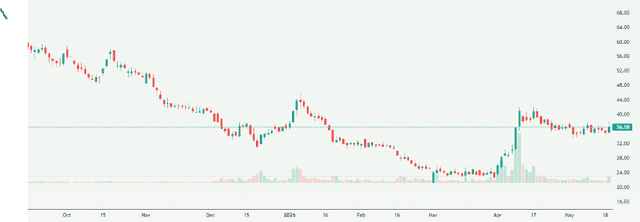
Technical Analysis Summary
- Trend remains weak in the short term
- Key resistance seen near previous quarterly highs
- Volume recovery needed for bullish momentum
- Support depends on future delivery numbers and earnings stability
What Meyka Says?
According to Meyka AI stock analysis platform, investors should closely monitor:
- Monthly EV registrations
- Gross margin improvement
- Battery localization progress
- Market share trends against rivals
Several brokerages also expect FY27 to be a crucial turnaround year for the company.
Key Risks Investors Should Watch
Ola Electric still faces major operational and financial risks despite ongoing restructuring efforts.
Key concerns include:
- Intense competition in India’s EV market
- Weak consumer demand
- Margin pressure from discounting
- Regulatory uncertainty around EV subsidies
- Execution risks in battery manufacturing
However, the company could benefit if EV adoption accelerates again in India. Affordable product launches, stronger service quality, and successful battery localization may help improve investor confidence over the next few quarters.
Final Words
Ola Electric’s Q4 FY26 results highlight the growing challenges in India’s EV scooter market. Revenue pressure, falling deliveries, and rising competition continue to weigh on the company. Still, cost-cutting efforts, battery localization, and new product plans could support a recovery in FY27 if execution improves and demand stabilizes.
Disclaimer:
The content shared by Meyka AI PTY LTD is solely for research and informational purposes. Meyka is not a financial advisory service, and the information provided should not be considered investment or trading advice.
What brings you to Meyka?
Pick what interests you most and we will get you started.
I'm here to read news
Find more articles like this one
I'm here to research stocks
Ask Meyka Analyst about any stock
I'm here to track my Portfolio
Get daily updates and alerts (coming March 2026)