




Key Points
Oil prices fell over 4% after easing US-Iran tensions reduced supply concerns.
Brent crude and WTI erased recent gains as geopolitical risks eased.
Lower oil prices could help reduce fuel costs and ease inflation pressures.
Investors now watch the Strait of Hormuz, OPEC+, and economic data for the next market move.
On July 27, 2026, oil prices fell by more than 4% after signs emerged that tensions between the United States and Iran were easing. The shift reduced concerns about major supply disruptions in the Middle East. Brent crude and West Texas Intermediate (WTI) both gave back recent gains as traders adjusted their positions following the improving geopolitical outlook. The drop could affect fuel prices, inflation, and financial markets, making it a closely watched move for investors and consumers.
Oil Prices Drop More Than 4% as Markets Welcome US-Iran De-escalation
Why did Brent and WTI reverse recent gains?
Oil prices dropped sharply on July 27, 2026, after fresh signs suggested that tensions between the United States and Iran were cooling. Traders quickly reduced expectations of supply disruptions, triggering a broad sell-off across crude markets.
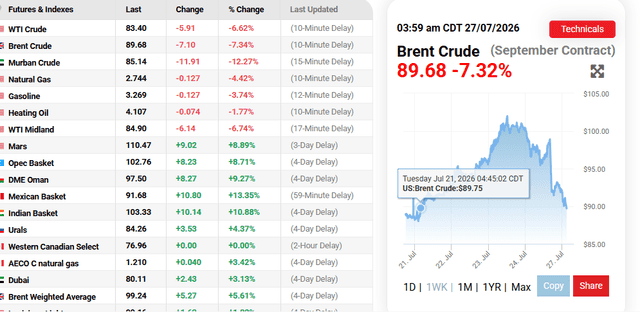
Brent crude fell almost 5% to around $92 per barrel, while West Texas Intermediate (WTI) slipped to roughly $84 per barrel. Only a few days earlier, both benchmarks had traded above $100 as fears grew that conflict in the Middle East could disrupt oil supplies.
The move shows how quickly oil prices respond to geopolitical events. During periods of conflict, traders often build a risk premium into crude prices. When those risks begin to fade, that extra premium can disappear just as quickly.
Why did traders react so quickly?
Recent diplomatic developments eased concerns that military action could interrupt oil exports from the Gulf. As confidence improved, many investors sold crude futures and secured profits from the previous rally.
Oil prices usually react faster than stock markets because supply expectations have an immediate effect on pricing. Automated trading systems and hedge funds added to the selling pressure after prices broke below several technical support levels.
Even with the latest decline, analysts say volatility could return if negotiations lose momentum or tensions rise again.
The Strait of Hormuz Remains the Market’s Biggest Risk
Why does this waterway drive global oil prices?
Despite the recent drop, the Strait of Hormuz remains the world’s most significant oil shipping route. Around 20% of global oil consumption passes through this narrow waterway every day.
Any disruption could tighten global supplies within a short period and push crude prices sharply higher. That is why traders closely follow military developments and shipping activity across the Gulf.
Although tanker traffic has improved, markets are still watching insurance costs, vessel movements, and naval activity throughout the region.
Has the geopolitical risk disappeared?
No. Several developments could quickly push oil prices higher again:
- New military incidents in the Gulf.
- Additional sanctions affecting Iranian oil exports.
- Disruptions to commercial shipping.
- Attacks on energy infrastructure.
Many market analysts believe the recent decline reflects lower immediate risk rather than a lasting resolution. Oil prices could remain volatile over the coming weeks if conditions change.
Who Benefits and Who Loses From Cheaper Oil?
How could lower oil prices help consumers?
If crude prices remain lower, fuel and transportation costs could gradually decline.
Some of the sectors that may benefit include:
- Airlines with lower jet fuel expenses.
- Logistics companies facing reduced transport costs.
- Manufacturers that rely on petroleum-based materials.
- Consumers through lower gasoline prices.
Lower energy costs can also reduce inflationary pressure. That may give central banks more flexibility when making future interest rate decisions.
Which sectors face pressure?
Oil producers and energy companies often come under pressure when crude prices fall because lower prices can reduce expected earnings.
Many investors have shifted toward industries that benefit from cheaper energy, including transportation and consumer-focused businesses.
Analysts are also watching technical indicators closely. Investors using the Meyka AI stock analysis tool can compare trends across the energy sector with broader market signals before making investment decisions. Several investment banks say geopolitical developments are likely to have a greater influence on oil prices than short-term supply data.
What Could Move Oil Prices Next?
Which geopolitical events should investors watch?
Several developments could change market sentiment quickly:
- Progress in US-Iran diplomatic talks.
- Security conditions around the Strait of Hormuz.
- New sanctions or military action.
- OPEC+ production decisions.
Any negative development could bring back the geopolitical premium that recently disappeared from oil prices.
Which economic data matters most?
Investors should also keep an eye on:
- Weekly US crude inventory reports.
- Federal Reserve policy decisions.
- China’s manufacturing and oil demand data.
- Global inflation and economic growth figures.
These indicators will provide a clearer picture of whether demand will remain strong enough to support crude prices during the second half of 2026.
Conclusion
The latest fall in oil prices shows how quickly crude markets respond to geopolitical developments. Easing tensions between the United States and Iran have lowered immediate concerns about supply disruptions, but uncertainty remains. Investors will continue watching the Strait of Hormuz, OPEC+ decisions, and major economic data for signs of the market’s next move. If tensions rise again, oil prices could recover just as quickly as they fell.
Disclaimer:
The content shared by Meyka AI PTY LTD is for research and informational purposes only. Meyka is not a financial advisory service, and the information provided should not be treated as investment or trading advice.
What brings you to Meyka?
Pick what interests you most and we will get you started.
I'm here to read news
Find more articles like this one
I'm here to research stocks
Ask Meyka Analyst about any stock
I'm here to track my Portfolio
Get daily updates and alerts (coming March 2026)