




Key Points
Curiosity Mars rover found a massive honeycomb polygon field on Mars.
Each polygon measures 1.5 to 3 inches, or 4 to 8 centimeters, across.
The panorama was captured on Martian sols 4,930 and 4,931.
Scientists have three theories but no confirmed cause for the pattern.
NASA’s Curiosity Mars rover has uncovered its largest-ever field of honeycomb-textured polygons, stretching as far as its cameras can see. The discovery came while the rover climbed a Martian valley nicknamed “Valle Grande” on June 19 and 20, 2026. Each polygonal fracture measures roughly 1.5 to 3 inches, or 4 to 8 centimeters, across, wrapping even around a nearby butte.
NASA released the images and accompanying analysis on Tuesday, July 29, 2026. Here’s a full breakdown of what the Mars rover found and why scientists say it “took their breath away.”
What The Mars Rover Actually Captured
Curiosity recorded a full 360-degree panorama over two consecutive Martian days at Valle Grande. Mission scientists say the scale of this particular polygon field stands out from anything the rover has documented before.
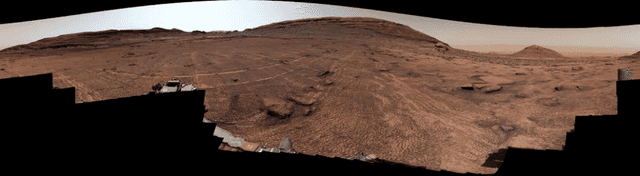
- Panorama capture dates: June 19 and 20, 2026.
- Martian sols recorded: the mission’s 4,930th and 4,931st days on Mars.
- Individual polygon size: 1.5 to 3 inches (4 to 8 centimeters) across.
- Nearby landmark: a 20-foot (6-meter) sand-capped butte nicknamed “Miraflores.”
Mission project scientist Ashwin Vasavada of NASA’s Jet Propulsion Laboratory called the sighting the most striking landscape he’s reviewed in over two decades on the mission. The polygons extended in every direction the rover’s cameras could reach.
Why This Discovery Surprised NASA Scientists
Curiosity has spotted small honeycomb patches before, but never at Valle Grande’s scale. That distinction is what set this particular finding apart from prior polygon sightings during the mission’s 14-year run.
- Mission duration on Mars: 14 years, since landing on August 5, 2012.
- Prior polygon sightings: limited to small, scattered patches until now.
- This field’s extent: covered the entire visible terrain in all directions.
- JPL’s official description: “an expanse of terrain covered in surface features called polygons.”
Vasavada said his team measured the shapes and chemistry carefully, hoping the data reveals clues about formation. NASA has not yet confirmed a single definitive explanation for how this specific field developed.
Three Competing Theories Behind The Honeycomb Pattern
NASA scientists have proposed three separate geological processes that could explain the polygonal fractures. Each theory draws on comparisons to similar features already documented on Earth’s surface.
- Theory one: repeated wet-dry cycles, similar to mud cracks in dried lake beds.
- Theory two: temperature cycling, where warm and cold extremes stress the surface repeatedly.
- Theory three: compression, where buried sediment gets squeezed and forces water out.
- Confirmed cause: none of the three theories has been officially verified yet.
Some polygons the mission previously found clearly formed as mud cracks, according to NASA’s own analysis. This new, much larger field may involve one dominant process or some combination of all three mechanisms.
How This Fits Curiosity’s Broader Mars Legacy
This honeycomb discovery adds to a growing list of significant findings from Curiosity’s long-running mission. The rover continues building evidence about Mars’ ancient, potentially habitable past.
- Prior major finding: carbon-based molecules considered possible precursors to RNA and DNA.
- Broader mission goal: determining whether ancient Mars could have supported microbial life.
- Current rover activity: continuing its ascent up Mount Sharp, a 3-mile-tall (5-kilometer) peak.
- Mission operator: NASA’s Jet Propulsion Laboratory, managed by Caltech in Pasadena.
Billions of years ago, lakes and streams likely covered Mount Sharp’s lower foothills, based on Curiosity’s accumulated evidence. This new polygon field adds another data point to that broader picture of Mars’ ancient, wetter climate.
Bottom Line
Curiosity’s honeycomb polygon field at Valle Grande stands out as one of the most visually striking discoveries in the rover’s 14-year history on Mars. With three competing theories on the table and no confirmed answer yet, scientists have a genuine mystery to work through.
NASA’s ongoing analysis of the polygons’ chemistry may eventually pin down whether mud cracking, temperature cycling, or compression created this landscape. For now, Curiosity keeps climbing Mount Sharp, adding fresh data to humanity’s evolving picture of ancient Mars.
Disclaimer:
The content shared by Meyka AI PTY LTD is for research and informational purposes only. Meyka is not a financial advisory service, and the information provided should not be treated as investment or trading advice.
What brings you to Meyka?
Pick what interests you most and we will get you started.
I'm here to read news
Find more articles like this one
I'm here to research stocks
Ask Meyka Analyst about any stock
I'm here to track my Portfolio
Get daily updates and alerts (coming March 2026)