




Microsoft shares (NASDAQ: MSFT) have dropped nearly 17% year-to-date in 2026, raising fresh concerns among investors. As of February 18, 2026, the stock is trading close to the $400 level, pressured by rising costs linked to artificial intelligence expansion. While Microsoft remains a global tech leader, its aggressive spending on AI data centers, cloud infrastructure, and advanced chips has sparked fears about shrinking profit margins.
Markets are now questioning how quickly these massive investments can turn into steady earnings. This sudden shift in sentiment has erased hundreds of billions from Microsoft’s market value and fueled wider volatility across tech stocks. For investors and analysts alike, the key question is clear: Is this dip a warning sign, or a rare buying opportunity?
Microsoft Stock Performance Snapshot: 2026 YTD Reality Check
How has Microsoft stock performed so far in 2026?
Microsoft shares (NASDAQ: MSFT) have fallen nearly 17% year-to-date (YTD) as of February 18, 2026, wiping out around $613 billion in market capitalization. The stock is currently trading near $398-$412, sharply lower from its 2025 peak above $550.
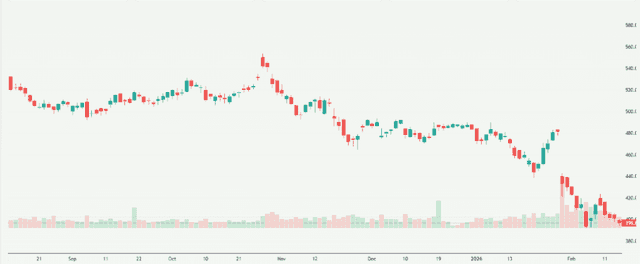
This decline reflects investor anxiety over rising AI-related costs, slowing margin expansion, and delayed monetization of AI investments.
Key performance metrics:
- Current Price: $411.21
- YTD Change: -17%
- Market Cap Loss: ~$613 billion
- 52-week high: $555.45
- Support Zone: $395–$400
How does Microsoft compare with other big tech stocks?
Microsoft’s decline mirrors a broader selloff across AI-heavy tech stocks.
Investors are shifting capital away from high-valuation AI stocks toward defensive sectors, including healthcare, energy, and materials.
What’s Driving the 17% Decline? Inside Microsoft’s AI Margin Squeeze?
Is AI spending hurting Microsoft’s profitability?
Yes. Microsoft’s AI capital expenditure surged to $37.5 billion in Q4 2025, up 66% year-over-year, creating near-term margin pressure. For FY2026, Microsoft’s AI and cloud infrastructure investment is projected to reach $100-$145 billion, fueling concerns over delayed return on investment. Main spending areas:
- AI data centers
- Azure cloud expansion
- Custom AI chip development
- Energy and cooling infrastructure
Why are investors worried about AI monetization?
Enterprise AI adoption remains strong, but most clients are still testing AI tools rather than deploying them at full scale. This delays revenue realization from:
- Microsoft Copilot
- Azure OpenAI services
- Enterprise automation solutions
Investors now want profit clarity, not just innovation leadership.
Are rising costs squeezing Microsoft’s margins?
Yes. Microsoft’s cost of revenue rose 19% YoY, while revenue increased 17% YoY, compressing operating margins. Key cost drivers include:
- Memory chip shortages
- Energy inflation
- Rising cloud infrastructure costs
This mismatch has triggered valuation resets across AI stocks.
Azure Growth vs Profitability: A Cloud Business Under Pressure
Is Azure still growing fast?
Yes. Microsoft Azure posted ~39% year-over-year revenue growth, driven by AI workloads and enterprise migration. However, cloud margins are tightening, mainly due to the high compute costs of AI models.
Does OpenAI dependence create risk?
Yes. Nearly 45% of Microsoft’s $625 billion cloud backlog is tied to OpenAI workloads. Heavy reliance on a single AI partner raises revenue concentration risk. Any slowdown in OpenAI usage could impact Azure’s growth trajectory.
Wall Street Reaction: Downgrades, Target Cuts & Investor Anxiety
Why did analysts downgrade Microsoft stock?
In early February 2026, Stifel downgraded MSFT from Buy to Hold, cutting its price target from $540 to $392, citing:
- Margin compression
- High AI infrastructure spending
- Cloud supply constraints
This triggered a sharp selloff.
What do analysts expect next?
Despite short-term fears, Wall Street consensus remains bullish:
- Consensus rating: Strong Buy
- Average 12-month target: $590-$600
- Upside potential: ~45%
Broader Market Trend: AI Spending Panic Hits Big Tech
Why are tech stocks falling together?
The world’s top hyperscalers are expected to invest $650 billion in AI infrastructure in 2026, up 60% YoY. Investors now fear:
- Capital inefficiency
- Slower ROI
- AI infrastructure oversupply
This shift has sparked capital rotation into safer sectors.
Technical Outlook: Can MSFT Stock Hold the $400 Level?
What does technical analysis suggest?
MSFT currently trades both 50-day and 200-day moving averages, signaling a bearish trend. Technical indicators:
- RSI (14): ~30 → Oversold
- MACD: Bearish
- Support: $392–$395
- Resistance: $405–$412
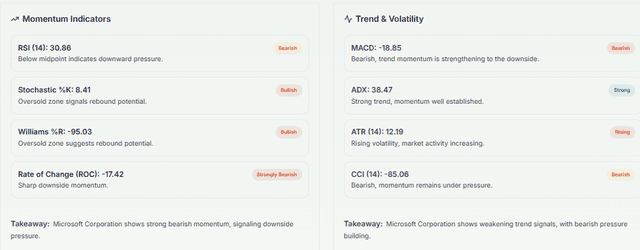
A break below $390 could open downside toward $350. However, oversold conditions suggest short-term bounce potential.
What Meyka Says About Microsoft Stock?
According to Meyka’s AI stock forecasting model, MSFT presents short-term weakness but strong long-term upside. Meyka Forecast Summary:
- 1-Month Target: $407
- 1-Year Target: $527
- 3-Year Target: $632
- 5-Year Target: $737
Overall sentiment: Neutral
Short-term outlook: Bearish
Long-term outlook: Bullish
This aligns with broader analyst expectations that AI profitability will accelerate post-2026.
What Could Reverse the Downtrend? Key Catalysts Ahead
Several events could trigger MSFT stock recovery:
- Strong Azure AI revenue growth
- Margin stabilization signals
- Reduced capital spending guidance
- Enterprise AI adoption surges
- NVIDIA earnings outlook clarity
Even a small improvement in AI profit metrics could rapidly lift investor confidence.
Conclusion: Is Microsoft’s 17% Dip a Risk or Opportunity?
Microsoft’s 17% YTD decline reflects market fear, not business weakness. Azure growth remains strong, enterprise adoption is expanding, and AI leadership is intact. However, profitability concerns dominate short-term sentiment.
According to Meyka’s AI stock analysis tool, MSFT still offers strong long-term upside, suggesting that current price levels may represent strategic accumulation zones for patient investors.
For now, volatility will persist. But if Microsoft proves AI spending efficiency, the stock could regain leadership in the next market cycle.
Frequently Asked Questions (FAQs)
Microsoft’s stock is falling in early 2026 due to rising AI infrastructure costs, heavy spending, margin pressure, and investor concerns about slow profit growth from artificial intelligence projects.
As of February 18, 2026, analysts remain neutral. Some view the 17% drop as a long-term buying chance, while others advise caution due to high costs and market volatility.
In 2026, analysts expect Microsoft stock to trade between $525 and $600, based on cloud growth, AI revenue progress, cost control, and overall market conditions.
Disclaimer:
The content shared by Meyka AI PTY LTD is solely for research and informational purposes. Meyka is not a financial advisory service, and the information provided should not be considered investment or trading advice.
What brings you to Meyka?
Pick what interests you most and we will get you started.
I'm here to read news
Find more articles like this one
I'm here to research stocks
Ask Meyka Analyst about any stock
I'm here to track my Portfolio
Get daily updates and alerts (coming March 2026)