




Key Points
Bank of England kept the Bank Rate at 3.75% on July 31, 2026.
The MPC voted 6-3, with three members backing an immediate rate hike.
Sticky inflation, wage growth, and energy prices remain the biggest concerns.
Future UK interest rate decisions will depend on upcoming inflation and economic data.
On July 31, 2026, the Bank of England kept its benchmark interest rate at 3.75%, choosing to wait for more evidence that inflation is moving back to target. While price pressures have eased in recent months, the decision was not unanimous. Several policymakers argued that borrowing costs should increase if inflation starts to climb again. That has renewed questions about where UK interest rates could go next and what the latest decision means for homeowners, businesses, and investors.
What happened at the July 2026 Bank of England meeting?
Key decision and vote split
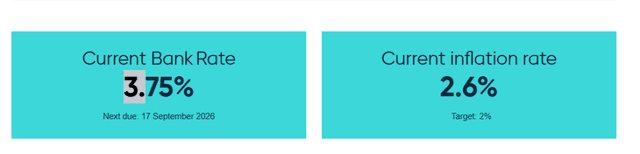
On July 31, 2026, the Bank of England (BoE) left the Bank Rate at 3.75%, in line with market expectations. The decision followed a 6-3 vote by the Monetary Policy Committee (MPC). Six members supported keeping rates unchanged, while three backed an immediate 0.25 percentage point increase.
Although inflation has slowed, the split shows that some policymakers remain concerned about price pressures. For now, the Bank prefers to wait for more economic data before changing policy.
Why does this vote matter?
The 6-3 vote suggests the BoE is still cautious about inflation. Financial markets expected the Bank to hold rates, but the number of members calling for a rate increase was larger than many had anticipated. That has strengthened expectations that borrowing costs could rise later if inflation or wage growth proves more persistent than expected. Investors will now pay even closer attention to upcoming inflation and labour market data.
Why did the Bank not cut rates despite falling inflation?
Inflation is lower, but still above target
Inflation in the UK has fallen sharply from the peaks recorded in 2022 and 2023. According to the Office for National Statistics (ONS), the Consumer Prices Index (CPI) reached 2.6% in June 2026. While that is much closer to the BoE’s 2% target, policymakers believe it is still too early to reduce interest rates.
Services inflation remains elevated, and wage growth is still stronger than the Bank would like to see. If demand strengthens further, those factors could slow progress in bringing inflation back to target.
Energy prices changed the conversation
Global events also influenced the Bank’s decision. During July, tensions in the Middle East pushed oil prices higher before they eased later in the month. The BoE warned that higher energy costs could feed through to transport, manufacturing, and household bills.
If businesses pass those costs on to consumers, inflation could pick up again. That risk was enough for policymakers to keep interest rates unchanged rather than begin cutting them.
Could the Bank of England raise rates again?
What does the BoE expect next?
The Bank of England expects inflation to remain uneven during the second half of 2026. Its latest forecasts indicate that inflation could move higher for a period before gradually returning to the 2% target over the medium term.
Officials also made it clear that future decisions will depend on incoming economic data rather than a fixed timetable. Every major inflation report, employment update, and wage release will help shape the next interest rate decision.
What could trigger another rate hike?
Several developments could push the Bank towards another increase in interest rates.
- Higher oil and gas prices that increase household and business costs.
- Strong wage growth that keeps services inflation elevated.
- Faster consumer spending that adds to inflationary pressure.
- Inflation remaining above the BoE’s target for longer than expected.
Many economists believe another rate hike remains possible if these risks become more pronounced. Until then, investors and businesses will continue watching each new economic report for clues about the Bank’s next move.
What 3.75% means for homeowners, savers, and businesses?
What does it mean for mortgage holders?
Leaving the Bank Rate unchanged means borrowers with tracker or variable-rate mortgages will not see an immediate increase in monthly repayments. Even so, many homeowners coming to the end of fixed-rate mortgage deals are still likely to refinance at higher rates than those available a few years ago.
Impact on savers and businesses
Savings accounts are expected to continue offering relatively attractive returns while interest rates remain at current levels. Businesses, on the other hand, still face expensive borrowing costs. Higher loan rates can delay investment, expansion, and hiring, particularly for smaller companies.
Investors are also relying on economic indicators and tools such as an AI stock analysis tool to assess how changing interest rates may affect financial markets and business performance.
What should investors watch before the next BoE meeting?
The next Bank of England decision will depend on a series of economic indicators. Investors should keep an eye on:
- UK inflation (CPI) data.
- Wage growth and employment figures.
- Energy and oil price movements.
- Consumer spending trends.
- Comments from Governor Andrew Bailey and other MPC members.
Together, these indicators will provide the clearest picture of whether the BoE is likely to keep rates at 3.75% or consider another increase later this year.
Conclusion
Holding interest rates at 3.75% gives borrowers some short-term certainty, but it does not mean inflation concerns have disappeared. The split within the Monetary Policy Committee shows there is still disagreement over the right path for monetary policy.
Inflation, wage growth, and energy prices will remain the main factors behind future decisions, making the next round of economic data especially important for households, businesses, and financial markets.
Disclaimer:
The content shared by Meyka AI PTY LTD is for research and informational purposes only. Meyka is not a financial advisory service, and the information provided should not be treated as investment or trading advice.
What brings you to Meyka?
Pick what interests you most and we will get you started.
I'm here to read news
Find more articles like this one
I'm here to research stocks
Ask Meyka Analyst about any stock
I'm here to track my Portfolio
Get daily updates and alerts (coming March 2026)