



Indian Market Today: Sensex Falls Below 77,000, Nifty Near 24,000 as US-Iran Conflict Rattles Investors

Key Points
Sensex slipped below 77,000, while Nifty traded near 24,000 on July 13, 2026.
US-Iran tensions and rising crude oil prices triggered broad market selling.
Financial, auto, and metal stocks led the decline across Indian markets.
Investors are closely watching oil prices, FII activity, and upcoming corporate earnings for market direction.
On July 13, 2026, the Indian stock market opened the week under pressure as rising tensions between the United States and Iran unsettled investors across global markets. The Sensex slipped below 77,000, while the Nifty traded close to the 24,000 mark after broad-based selling. Higher crude oil prices, continued foreign investor outflows, and growing uncertainty in global markets weighed on sentiment. Here’s a closer look at what drove today’s decline and the factors investors are watching.
Indian Market Today: Sensex and Nifty Performance at a Glance
Indian equities moved lower on July 13, 2026, as investors reacted to weak global cues. The BSE Sensex dropped 0.78% to 76,965.69, falling below the 77,000 level. The Nifty 50 lost 0.71% to close at 24,034.10, remaining just above the psychological 24,000 mark.
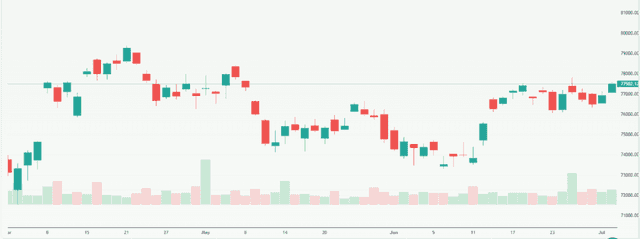
Selling spread across the market, with all 16 sectoral indices finishing in negative territory. Financial, auto, and metal stocks were among the biggest drags, each declining by about 1% as investors reduced exposure to risk.
| Index | Level | Change |
| Sensex | 76,965.69 | -0.78% |
| Nifty 50 | 24,034.10 | -0.71% |
Why Is the Indian Stock Market Falling Today?
What triggered today’s sell-off?
Fresh tensions between the United States and Iran were the main reason behind today’s market weakness. Investors grew concerned that the conflict could disrupt oil shipments through the Strait of Hormuz, which carries roughly one-fifth of the world’s oil supply. As those concerns increased, traders shifted money into safer assets and reduced positions in equities.
How are higher oil prices affecting India?
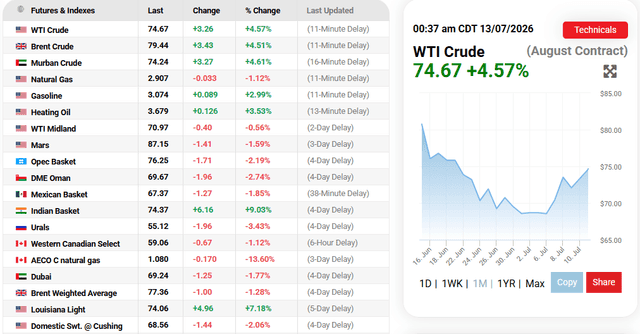
Brent crude oil rose about 4% to nearly $79 per barrel following the geopolitical developments. Since India imports most of the crude oil it consumes, higher prices raise import costs and add to inflation worries. They can also squeeze corporate profit margins and reduce consumer spending, making investors more cautious about the outlook for listed companies.
Why are investors becoming more cautious?
The Indian rupee remained under pressure, while foreign institutional investors continued to book profits after the market’s recent gains. At the same time, higher global bond yields and uncertainty over future interest rate decisions added to investor concerns. These factors combined to create a cautious mood throughout the trading session.
Top Sector Movers and Stocks in Focus
Financial, auto, metal, and IT stocks recorded the biggest losses as investors moved away from risk-sensitive sectors. Most large-cap stocks traded lower and pulled the benchmark indices deeper into negative territory.
A few stocks managed to outperform despite the broader weakness.
- L&T Finance gained around 3.2% after reporting healthy earnings and stronger loan growth.
- Just Dial surged nearly 13% after posting better-than-expected quarterly results and announcing management changes that were well received by investors.
Meyka Stock View
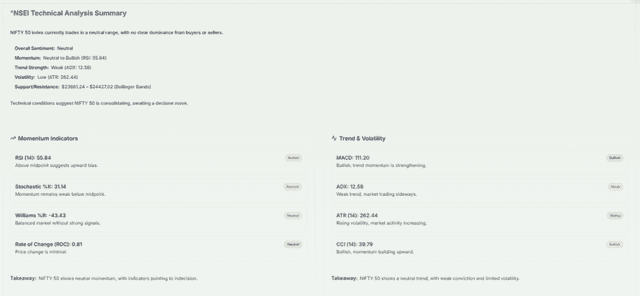
According to Meyka, the near-term outlook for Indian equities remains cautious because geopolitical tensions and higher crude oil prices are likely to keep market volatility elevated. From a technical perspective, the 24,000 level on the Nifty remains an area that traders are watching closely for support.
Investors can also use the Meyka AI stock analysis tool to monitor technical signals, market sentiment, and changing price trends before making investment decisions.
What Should Investors Watch Next?
Market direction will depend largely on how global events unfold over the coming days. Investors should keep an eye on:
- New developments in the US-Iran conflict.
- Brent crude oil prices and their effect on inflation.
- Foreign institutional investor (FII) buying or selling activity.
- The movement of the Indian rupee against the US dollar.
- Quarterly earnings reports from major Indian companies.
Technical analysts say the 24,000 level remains an important support zone for the Nifty. If the index falls below that level and stays there, selling pressure could increase. On the other hand, if oil prices stabilise and geopolitical tensions ease, investor confidence may improve.
Several global brokerage firms also continue to maintain a positive long-term view on Indian equities, supported by steady economic growth and expectations of healthy corporate earnings.
Conclusion
The Indian market came under pressure as global uncertainty pushed investors toward safer assets. Higher oil prices, continued foreign investor selling, and concerns around the US-Iran conflict all contributed to today’s decline. Even with near-term volatility, investors will be watching crude oil prices, corporate earnings, and global developments to judge whether the market can stabilise in the sessions ahead.
Disclaimer:
The content shared by Meyka AI PTY LTD is solely for research and informational purposes. Meyka is not a financial advisory service, and the information provided should not be considered investment or trading advice.
What brings you to Meyka?
Pick what interests you most and we will get you started.
I'm here to read news
Find more articles like this one
I'm here to research stocks
Ask Meyka Analyst about any stock
I'm here to track my Portfolio
Get daily updates and alerts (coming March 2026)