




Key Points
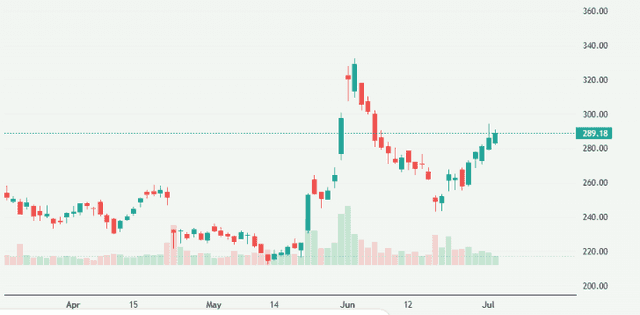
IBM shares fell 25.21%, the steepest single-day drop since 1968.
Clients rushed hardware orders before expected price hikes hit.
Infrastructure revenue dropped 7%; software still grew 5% year-over-year.
Full Q2 earnings report arrives July 22, 2026, from IBM.
IBM shares crashed 25.21% on July 14, 2026, marking the stock’s worst single-day drop since 1968. The selloff followed a preliminary Q2 earnings warning. IBM posted adjusted EPS of $2.93, missing the $3.01 consensus estimate. Revenue came in at $17.2 billion, below the $17.86 billion analysts expected.
CEO Arvind Krishna blamed a sudden capital expenditure shift, as clients rushed hardware orders ahead of anticipated price hikes. The drop erased billions in market value in a single trading session.
Why IBM Shares Fell So Sharply
- IBM shares closed near $217 on Tuesday, down from prior levels above $290.
- The decline surpassed IBM’s previous worst day, a 23.7% drop on October 19, 1987.
- Infrastructure revenue fell 7% as clients diverted spending toward servers and memory.
- Software revenue still grew 5%, aided by HashiCorp and Confluent acquisitions.
Krishna explained that clients shifted quarterly capex toward servers, storage, and memory in late June. They moved to secure supply-constrained infrastructure before expected price increases. This reprioritization hit IBM harder than the company had forecasted internally. Krishna admitted IBM “did not anticipate the magnitude” of this shift.
The Mainframe and Memory Squeeze
IBM’s (NYSE: IBM) new z17 mainframe launched in April with an AI accelerator chip. Krishna called it the strongest mainframe program start in company history. Despite that, mainframe sales missed internal targets during the quarter. A global memory shortage compounded the pressure on infrastructure margins. Rising chip costs made hardware fulfillment more expensive across IBM’s product lines. This shortage also boosted rival memory suppliers like Micron and SK Hynix.
Sector-Wide Ripple Effects
IBM’s warning rattled software and consulting peers during Tuesday’s session. Oracle shares (NYSE: ORCL) fell 2.74%, while Microsoft dropped 1.55% in sympathy trading. Accenture slid 2.86%, reflecting fears of broader enterprise IT budget tightening. ServiceNow and Salesforce also declined amid concerns over delayed technology spending.
Analysts noted the pullback stemmed from AI-driven capex reallocation, not weak software demand overall. Consulting revenue rose just 1%, though GenAI-related signings showed continued strength.
What Analysts Are Watching Next
- IBM will report full Q2 2026 results on July 22, 2026.
- HSBC downgraded IBM shares, citing near-term execution risk.
- Investors want clarity on deferred deals and updated infrastructure guidance.
- The XLK tech ETF still gained 1.29% the same day.
The IBM shares selloff stands out because the broader technology sector remained resilient. The XLK Technology Select Sector ETF rose 1.29% on July 14. This divergence suggests investors view IBM’s miss as company-specific, not systemic. Peers focused on AI infrastructure and chips largely avoided the same selling pressure.
IBM’s Strategic Response
Krishna described the missed deals as delayed rather than permanently lost. He pointed to Project Lightwell, an AI-powered cybersecurity initiative launched with Red Hat in May. IBM also committed $10 billion toward quantum computing development through 2029. These moves signal IBM’s attempt to reposition around AI infrastructure demand. Management expects some deferred spending to return once supply constraints ease later in 2026.
Valuation After the Drop
Following the plunge, IBM’s price-to-earnings ratio stood near 19.07x on a trailing basis. That compares to a five-year median P/E closer to 25.31x for the company. The stock’s forward-looking valuation now appears meaningfully compressed versus historical norms. IBM’s next earnings call on July 22 will offer the first full accounting of Q2 performance.
Bottom Line
The IBM shares collapse reflects a sudden capex shift toward AI-driven hardware demand. Clients prioritized servers, memory, and storage over software and mainframe purchases in June. This timing squeeze, paired with a global memory shortage, hit IBM’s infrastructure segment hardest. Software and consulting divisions still posted modest growth, suggesting the weakness stayed contained.
IBM’s July 22 earnings call should clarify whether deferred deals return this year. Until then, IBM shares remain a closely watched signal for enterprise tech spending trends.
Disclaimer:
The content shared by Meyka AI PTY LTD is for research and informational purposes only. Meyka is not a financial advisory service, and the information provided should not be treated as investment or trading advice.
What brings you to Meyka?
Pick what interests you most and we will get you started.
I'm here to read news
Find more articles like this one
I'm here to research stocks
Ask Meyka Analyst about any stock
I'm here to track my Portfolio
Get daily updates and alerts (coming March 2026)