



HSBC (LSE: HSBA) Announces $1B Share Buyback After Q2 Pretax Profit Beats Estimates at $10.1B

HSBC (LSE: HSBA) reported better-than-expected second-quarter results on August 4, 2026, giving investors fresh reasons to watch the stock. The bank posted $10.1 billion in pretax profit, ahead of market estimates, and announced a new $1 billion share buyback alongside its interim dividend. The quarter reflected steady business performance despite an uncertain global economy. So, what helped HSBC deliver stronger earnings, and what do these announcements mean for shareholders through the rest of 2026?
HSBC Beats Expectations With Strong Q2 Earnings
What drove HSBC’s $10.1 billion pretax profit?
HSBC reported another solid quarter on August 4, 2026. Second-quarter pretax profit reached $10.1 billion, comfortably above analyst expectations. Revenue came in at $19.1 billion, beating consensus estimates of around $18.6 billion. Strong lending activity, higher fee income, and continued demand for wealth management services, particularly across Asia, supported the results.
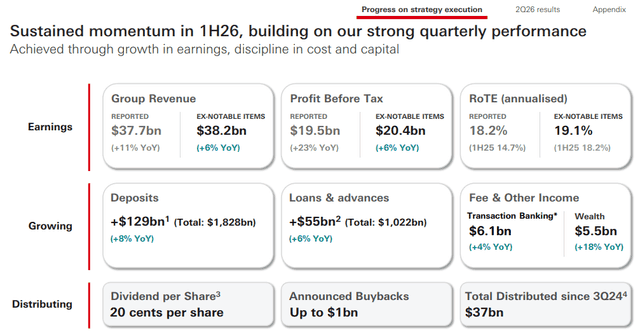
The bank’s first-half pretax profit rose to $19.5 billion, up 23% from the same period last year. Investors responded positively because HSBC continued to grow even as economic activity slowed in some regions and interest-rate expectations shifted.
Key highlights included:
- Q2 pretax profit: $10.1 billion
- Q2 revenue: $19.1 billion
- First-half pretax profit: $19.5 billion
- Results came in above market forecasts
Why Is HSBC Buying Back Another $1 Billion of Shares?
What does the new buyback mean for investors?
HSBC announced a new $1 billion share buyback, its first repurchase programme since beginning the process of taking Hang Seng Bank private. A buyback reduces the number of shares in circulation, which can increase earnings per share and improve returns for existing shareholders.
The bank also declared an interim dividend of $0.10 per share. Together, the dividend and buyback reflect management’s confidence in HSBC’s capital position and its ability to generate cash.
For investors looking for income, these capital returns show that HSBC plans to reward shareholders while continuing to invest in businesses that support long-term growth.
Wealth Management and Higher Interest Income Powered Growth
Why is Asia still HSBC’s biggest growth engine?
Asia remained HSBC’s strongest earnings contributor during the quarter. Wealth management revenue increased 18% year over year, helped by higher customer inflows and stronger investment activity across Hong Kong and other Asian markets. The bank’s focus on affluent clients continues to support revenue growth.
HSBC also raised its 2026 net interest income guidance to more than $46 billion. Strong lending income and steady customer activity helped improve the outlook despite changing expectations for global interest rates. The revised guidance gives investors a clearer picture of the bank’s earnings potential for the remainder of the year.
CEO Georges Elhedery’s Strategy Is Reshaping HSBC
How is HSBC becoming a more efficient bank?
CEO Georges Elhedery is continuing to streamline HSBC by selling businesses where the bank sees limited long-term value. Recent transactions include the sale of its Singapore insurance business, its Australian mortgage portfolio, and its retail banking operations in Egypt. These sales allow HSBC to focus more resources on higher-return businesses.
The bank has also increased its cost-saving target from $1.5 billion to $2 billion while keeping its goal of achieving a return on tangible equity (RoTE) of at least 17% through 2029. Management expects a simpler business structure to improve efficiency and support stronger shareholder returns.
HSBC: What Investors Should Watch Next?
Can HSBC continue its momentum?
Investors will be watching whether HSBC can maintain its earnings momentum through the second half of 2026. Areas to follow include wealth management growth, loan demand, credit quality, and the progress of the latest share buyback programme.
HSBC Stock Snapshot
- Exchange: London Stock Exchange
- Ticker: HSBA
- Sector: Banking
According to Meyka, HSBC has a B+ fundamental rating with a 12-month price target of HK$169.38, suggesting further upside based on its valuation and financial performance. Meyka’s technical analysis places the stock’s Relative Strength Index (RSI) at 48.64, indicating neutral momentum rather than overbought or oversold conditions. Investors can also use the Meyka AI stock analysis tool to track changes in valuation, technical indicators, and market momentum.
Other analysts remain generally positive. Data tracked by the Financial Times shows a mix of Buy, Outperform, and Hold recommendations, with the median 12-month price target sitting slightly above recent trading levels.
Conclusion
HSBC delivered a stronger second quarter than analysts expected. Higher wealth management income, steady lending growth, a $1 billion share buyback, and an improved net interest income forecast point to healthy financial performance. Economic risks remain, but the bank continues to generate solid earnings while returning capital to shareholders. Attention now shifts to the second half of 2026 and whether HSBC can keep that performance on track.
Disclaimer:
The content shared by Meyka AI PTY LTD is for research and informational purposes only. Meyka is not a financial advisory service, and the information provided should not be treated as investment or trading advice.
What brings you to Meyka?
Pick what interests you most and we will get you started.
I'm here to read news
Find more articles like this one
I'm here to research stocks
Ask Meyka Analyst about any stock
I'm here to track my Portfolio
Get daily updates and alerts (coming March 2026)