How Geopolitical Volatility Is Reshaping the Way Retail Traders Approach Markets: A Fortrade Review

During periods of market declines and heightened volatility in early 2026, retail trading activity remained elevated, with many traders continuing to engage actively in the markets. That observation, reflected in trading activity data across multiple platforms, highlights a notable shift compared with previous years: many retail participants appeared to remain actively engaged during periods of geopolitical instability, rather than broadly reducing market exposure.
The data behind this shift is now substantial enough to be examined seriously. Analysts at Fortrade, an FCA-regulated firm, have been monitoring how the pattern has developed across different market conditions and asset classes throughout the year.
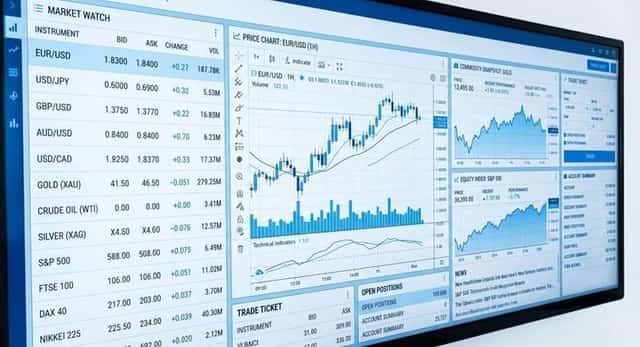
Alt-text: Record retail trading volumes recorded across platforms in early 2026
The numbers from early 2026 tell a clear story
Retail traders were all-in from the opening weeks of the year, with net stock inflows exceeding $350 million and options inflows surpassing $300 million in January alone, both record highs according to data cited by Citadel Securities.
What makes these figures notable is the context in which they occurred. The period coincided with renewed Middle East tensions, escalating trade disputes between major economies, and significant currency market instability. These are conditions that historically led retail participants to reduce exposure. In 2026, the opposite happened.
The figures may indicate a change in how a segment of retail market participants engages with periods of uncertainty. Rather than stepping back from volatility, some active traders appear to remain engaged during such conditions, adjusting their activity in response to prevailing market movements. However, it is not yet clear whether this reflects a structural shift in behaviour or a period-specific response to recent market conditions.
Behaviour has shifted across multiple asset classes
The increase in activity has not been confined to a single market. Equity indices, energy markets, and currency pairs have all seen elevated retail participation during the most turbulent periods of the year. Each asset class has attracted attention for different reasons, although a common feature has been the presence of geopolitical developments contributing to periods of price movement. Trading activity during these periods suggests that market participants have remained active in responding to volatility, rather than disengaging from it.
In energy markets, the reaction to Middle East tensions pushed crude prices sharply higher before diplomatic indicators triggered a partial retreat. The intraday ranges during this period were wide enough to attract short-term participants in significant numbers, with day trading activity in commodity-linked instruments rising noticeably during peak volatility windows. However, it is important to keep in mind that trading in volatile markets carries risk, and price movements can be rapid and unpredictable.
In currency markets, pairs involving the pound, the yen, and commodity-linked currencies such as the Canadian and Australian dollar saw increased retail activity, as market participants responded to a combination of central bank policy expectations and geopolitical developments. Fortarde notes that engagement across multiple asset classes has been broad. This may suggest that recent increases in activity are not confined to a single market event, although the extent to which this reflects a change in underlying participant behaviour remains subject to further observation.
Alt-text: Retail trading activity spanning multiple asset classes during periods of geopolitical volatility in 2026
Retail trading activity and market behaviour in volatile conditions
Not all of the recent increase in retail participation has been directionally aggressive. Data from early 2026 indicates a rise in the use of defensive options strategies among retail investors, with a growing number of participants adopting structured approaches to managing downside exposure rather than solely taking outright directional positions.
This development suggests that the increase in retail trading activity is not purely speculative in nature. A portion of the activity reflects a more considered approach to risk, with participants remaining active in volatile market conditions while also implementing defined parameters to limit exposure prior to trade.
The combination of elevated participation levels alongside more structured risk management techniques represents a notable shift in behaviour. It indicates that segments of the retail trading population may be becoming more experienced and methodical, with engagement extending beyond trade volume to include greater attention to position structuring and risk control.
What Record Volumes May Indicate About Market Functioning
Trading at record volumes during periods of sustained geopolitical stress is not solely a reflection of retail confidence. It may also be considered in the context of how market structure has evolved. Tighter spreads, faster execution, and broader instrument accessibility have reduced some of the practical barriers to participation during volatile periods compared with a decade ago, although the extent to which this has influenced observed activity is not straightforward to isolate.
The result is a market where retail flow has become a more consistent presence during high-volatility events rather than appearing only in calmer conditions. This changes how liquidity behaves around major news events and how quickly price discovery adjusts when geopolitical developments break unexpectedly.
Fortrade notes that recognising this structural shift is part of navigating the current environment effectively, and its market analysis section tracks how these dynamics are playing out across currencies, commodities, and indices in real time.
Where the trend goes from here
The first quarter of 2026 saw trading volumes higher than many market participants may have anticipated, given the prevailing geopolitical backdrop. While periods of uncertainty are often associated with reduced retail participation, recent platform data suggests this relationship may be more variable than previously thought. It is not yet clear whether this reflects a longer-term shift in behaviour or a shorter-term deviation from historical trends.
Fortrade notes that a more relevant question at this stage is not whether retail traders will continue engaging with volatile markets, but how that engagement may evolve as conditions develop over the rest of the year. If geopolitical pressures persist, as current indicators indicate they may, some of the patterns observed in Q1 could also persist. However, outcomes will depend on a range of factors, and it is not possible at this stage to determine the extent or duration of any continuation. Whether volume levels remain elevated or average is likely to be influenced by the degree and persistence of price movement associated with the broader geopolitical environment.
Disclaimer:
The content shared by Meyka AI PTY LTD is solely for research and informational purposes. Meyka is not a financial advisory service, and the information provided should not be considered investment or trading advice.
What brings you to Meyka?
Pick what interests you most and we will get you started.
I'm here to read news
Find more articles like this one
I'm here to research stocks
Ask Meyka Analyst about any stock
I'm here to track my Portfolio
Get daily updates and alerts (coming March 2026)