



Halma FY Profit Jumps 22% as Revenue Rises 15% to £2.58B, but Single Customer Now Drives 20% of Sales

Key Points
Halma FY2026 profit rose 22% while revenue increased 15% to £2.58B.
AI-driven photonics demand boosted strong growth across key business segments.
One major customer now contributes around 20% of total revenue, raising risk concerns.
FY2027 outlook shows slower but steady double-digit growth expectations.
Halma reported another year of strong growth on June 11, 2026, with annual revenue rising 15% to £2.58 billion and profit increasing 22%. The UK-based safety and technology group benefited from rising demand for photonics products used in AI-powered data centers.
While the record results highlight the company’s growth momentum, investors are paying close attention to a new challenge. One customer now accounts for 20% of total sales, raising important questions about future risk and sustainability.
Halma’s FY2026 Financial Performance Breaks New Records
Revenue Climbs Above £2.5 Billion Milestone
Halma delivered one of its strongest years on record for the fiscal year ended March 31, 2026. Revenue increased 15% to £2.58 billion from £2.25 billion a year earlier. The company also achieved 16% organic revenue growth, showing that demand remained strong across its business portfolio despite economic uncertainty.
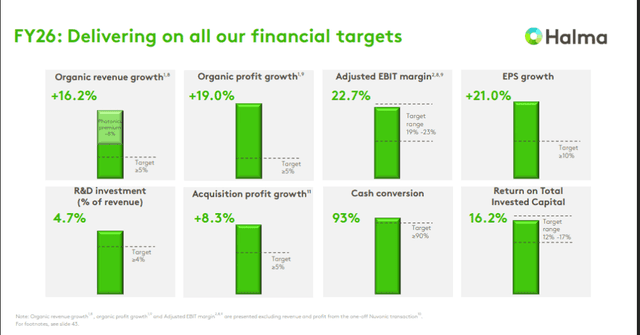
Growth came from all three operating sectors:
- Safety
- Environment & Analysis
- Healthcare
This broad-based performance highlights the resilience of Halma’s business model and diversified technology portfolio.
Profit Growth Outpaces Sales Expansion
Profit growth was even stronger than revenue growth. Adjusted EBIT rose 22% to £594.5 million, compared with £486.3 million in FY2025. The adjusted EBIT margin improved to 23%, up from 21.6% last year.
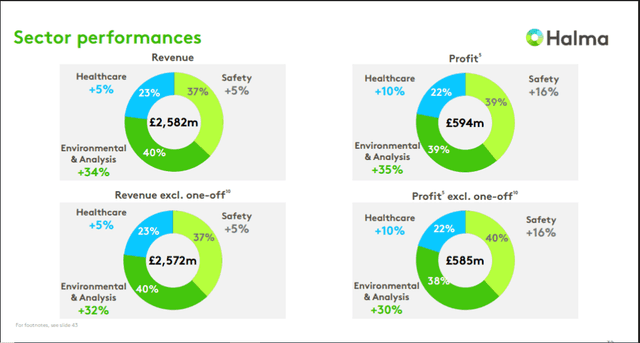
The company also recorded its 23rd consecutive year of adjusted profit growth. That achievement is rare among FTSE 100 companies and demonstrates consistent execution through different economic cycles.
Dividend Increase Signals Confidence
Halma announced a final dividend of 15.11 pence per share, a 7% increase from the previous year. Total annual dividends reached 24.74 pence per share.
This marks the company’s 47th consecutive year of dividend growth of at least 5%. Management said the increase reflects confidence in future growth opportunities and strong cash generation.
How AI Data Centers Fueled Halma’s Fastest-Growing Business?
Why Is Photonics Driving Growth?
The biggest growth driver in FY2026 was Halma’s photonics business. According to the company, photonics contributed roughly eight percentage points to overall organic growth during the year.
Photonics technologies are increasingly used in AI data centers, cloud infrastructure, and advanced networking systems. Demand has surged as major technology firms continue investing billions in artificial intelligence infrastructure.
Avo Photonics and Long-Term Customer Relationships
Halma acquired Avo Photonics in 2011. The business manufactures advanced optical and electronic components used in high-performance systems.
A long-standing relationship with a major hyperscale technology customer has helped accelerate growth. That partnership has become increasingly valuable as AI-related spending expands across global data centers.
Why Investors are Watching the AI Connection?
Investors increasingly view Halma as an indirect AI beneficiary. Unlike chip manufacturers, Halma supplies enabling technologies that support AI infrastructure growth.
Many analysts believe AI investment will remain a multi-year trend. Investors often use an AI stock analysis tool to identify companies benefiting from this broader ecosystem rather than focusing only on semiconductor firms.
The Hidden Risk: One Customer Now Generates 20% of Revenue
Customer Concentration Climbs from 15% to 20%
Despite impressive results, a growing concern emerged in the FY2026 report. One unnamed technology customer now accounts for approximately 20% of total group revenue, up from 15% in FY2025.
Why Customer Dependence Matters?
Customer concentration can create risks even for high-performing businesses.
Potential concerns include:
- Reduced bargaining power during contract renewals
- Revenue volatility if spending slows
- Greater dependence on one industry cycle
While Halma remains diversified across many sectors, investors are monitoring this trend closely.
Market Reaction Highlights Investor Concerns
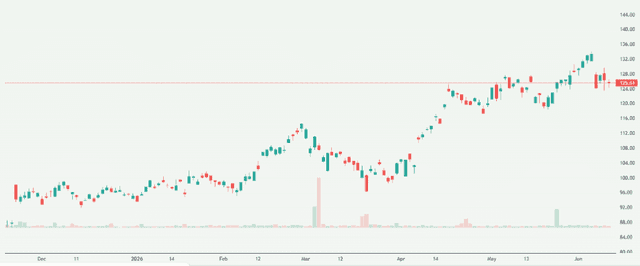
On June 11, 2026, Halma shares fell sharply after management provided FY2027 guidance. Although expectations remained positive, some investors worried that future growth could become too dependent on one customer relationship.
FY2027 Outlook: Can Halma Sustain Its Momentum?
Growth Forecast Slows
Management expects low double-digit organic revenue growth in FY2027. This remains healthy but is below the exceptional 16% organic growth achieved in FY2026.
Photonics Contribution Expected to Moderate
Halma expects photonics to contribute about five percentage points to growth in FY2027, compared with eight percentage points in FY2026.
Conclusion
Halma delivered outstanding FY2026 results with record revenue, profit, and dividend growth. Strong demand from AI-related photonics applications helped fuel performance and reinforced the company’s long-term growth story. However, rising dependence on a single technology customer introduces a new challenge for investors to watch.
If Halma can continue expanding across its broader portfolio while reducing concentration risk, the company appears well-positioned to sustain growth and shareholder returns in the years ahead.
Disclaimer:
The content shared by Meyka AI PTY LTD is solely for research and informational purposes. Meyka is not a financial advisory service, and the information provided should not be considered investment or trading advice.
What brings you to Meyka?
Pick what interests you most and we will get you started.
I'm here to read news
Find more articles like this one
I'm here to research stocks
Ask Meyka Analyst about any stock
I'm here to track my Portfolio
Get daily updates and alerts (coming March 2026)