
Key Points
Google Nest users reported widespread service issues due to a suspected global outage.
The disruption affected smart speakers, thermostats, cameras, and connected home devices.
Cloud dependency in smart homes highlights risks of centralized system failures.
Despite outages, long-term growth in smart home and AI-powered ecosystems remains strong.
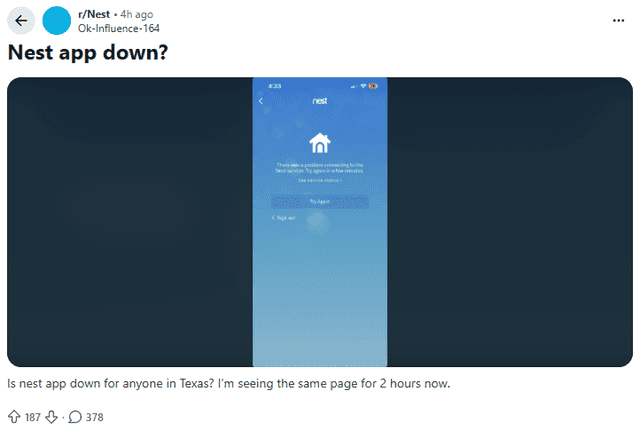
Users of Google Nest reported widespread service disruptions as a suspected outage affected core smart home functions including device connectivity, voice assistant response, and app access. The issue quickly gained attention across user forums and social platforms as thousands of customers experienced inconsistent performance.
Reports indicate that the disruption impacted multiple services within the Google Nest ecosystem, including smart speakers, thermostats, doorbells, and security cameras. Many users stated that devices became unresponsive or failed to sync with the Google Home application.
The incident highlights the growing dependence on cloud-based smart home systems and raises concerns about reliability in connected ecosystems that are increasingly part of daily life.
Users Report Device Failures and Connectivity Issues
The suspected outage led to a wide range of user complaints affecting key Google Nest features.
Common issues reported include:
- Devices not responding to voice commands.
- Google Home app failing to load or sync devices.
- Smart thermostats showing offline status.
- Security cameras experiencing delayed or missing feeds.
- Smart speakers unable to connect to Wi-Fi services.
Some users reported intermittent functionality, where devices worked temporarily before disconnecting again. The inconsistency suggested a backend service disruption rather than individual hardware failures.
The scale of reports indicates a potentially global issue, although official confirmation from Google was still limited at the time of reporting.
Cloud Dependency Highlights Smart Home Vulnerability
The Google Nest outage highlights a key challenge in modern smart home ecosystems: dependency on cloud infrastructure.
Most smart home devices rely on:
- Cloud-based authentication systems.
- Remote servers for device communication.
- Continuous internet connectivity.
- Centralized data processing.
When backend systems experience disruption, even physically functional devices can become temporarily unusable.
This incident shows how deeply integrated cloud services are in everyday household technology and how a single outage can affect thousands of users simultaneously.
Impact on Smart Home Market Confidence
The disruption involving Google Nest also raises broader questions about reliability in the smart home industry, which is expected to grow rapidly over the next decade.
The global smart home market is projected to exceed $200 billion by 2030, driven by:
- Increased adoption of IoT devices.
- Growth in home automation systems.
- Rising demand for energy-efficient smart thermostats.
- Expansion of AI-powered home assistants.
However, service outages like this can temporarily impact consumer confidence and highlight operational risks in cloud-dependent ecosystems.
From a stock market perspective, companies involved in smart home technology and cloud infrastructure are closely watched by investors due to their exposure to recurring service reliability issues.
Role of AI in Smart Home Ecosystems
Artificial intelligence plays a major role in the functionality of Google Nest devices.
AI is used for:
- Voice recognition and natural language processing.
- Energy optimization in smart thermostats.
- Motion detection in security cameras.
- Predictive automation for household routines.
As AI systems become more complex, they rely heavily on continuous cloud communication. This increases efficiency but also raises the risk of system-wide disruption during outages.
While Google Nest is not directly categorized as an AI stocks asset, it is part of the broader AI-driven smart home ecosystem under Alphabet Inc..
User Dependence on Smart Home Systems Increasing
The outage shows how dependent modern households have become on smart home systems like Google Nest.
Common household uses include:
- Climate control automation.
- Home security monitoring.
- Voice-activated assistance.
- Energy usage optimization.
- Remote device control.
In many homes, these systems are now fully integrated into daily routines, meaning even short outages can significantly disrupt convenience and security functions.
Potential Causes of the Service Disruption
Although no official root cause was confirmed, industry experts suggest several possible reasons for the Google Nest outage:
- Cloud server instability or overload.
- Software update deployment errors.
- API communication failure between services.
- Regional network disruptions.
- Authentication system failure.
Large-scale platforms like Google’s smart home ecosystem typically operate across multiple data centers, but even minor backend issues can cascade across global users.
Tech Infrastructure Reliability Under Spotlight
The incident places renewed focus on reliability in large-scale cloud ecosystems operated by major technology companies.
Modern smart home platforms depend on:
- Distributed cloud architecture.
- Real-time synchronization systems.
- High-availability server networks.
- Continuous software updates.
Even with advanced infrastructure, temporary outages remain a known risk in highly connected systems. This is especially important as smart homes become more integrated with critical household functions such as security and energy management.
Market Reaction and Investor Perspective
From an investor standpoint, outages in ecosystems like Google Nest are generally seen as operational risks rather than financial disruptions.
However, they can influence:
- Brand trust and consumer retention.
- Long-term adoption rates of smart home devices.
- Competitive positioning in the IoT market.
- Perception of cloud reliability.
For stock market investors analyzing technology giants like Alphabet, such incidents are usually short-term concerns unless they become frequent or prolonged.
The broader AI and IoT ecosystem remains a key growth driver for tech companies, especially as smart devices become more widespread globally.
Smart Home Industry Growth Continues Despite Issues
Despite the outage, the smart home industry continues to grow rapidly.
Key growth drivers include:
- Rising adoption of connected devices.
- Increased use of voice assistants.
- Expansion of home security systems.
- Growth in energy-efficient smart technologies.
Analysts expect long-term demand for ecosystems like Google Nest to remain strong as households increasingly adopt automation and AI-driven convenience systems.
Cybersecurity and System Resilience Concerns
Events like this also highlight cybersecurity and system resilience concerns in connected ecosystems.
Important considerations include:
- Protection against service disruptions.
- Data security in cloud-based systems.
- Redundancy in global server networks.
- Reliability of software updates.
As smart homes become more widespread, ensuring uptime and security will remain a top priority for technology providers.
Conclusion
The suspected outage affecting Google Nest disrupted services for thousands of users, highlighting the risks associated with cloud-dependent smart home ecosystems. While the issue caused temporary inconvenience, it also underscored the growing importance of reliability in connected home technology.
As smart home adoption continues to rise globally, companies like Alphabet Inc. will face increasing pressure to maintain stable and resilient infrastructure. Despite short-term disruptions, long-term demand for AI-powered home automation systems remains strong across the global stock market and AI stocks ecosystem.
FAQs
Google Nest is a smart home ecosystem by Google that includes devices like speakers, thermostats, cameras, and doorbells.
Users reported a suspected outage likely linked to cloud service or backend system issues, although official confirmation was limited.
No. Most reports suggest a cloud or software-level issue rather than hardware failure in individual devices.
Disclaimer:
The content shared by Meyka AI PTY LTD is solely for research and informational purposes. Meyka is not a financial advisory service, and the information provided should not be considered investment or trading advice.
What brings you to Meyka?
Pick what interests you most and we will get you started.
I'm here to read news
Find more articles like this one
I'm here to research stocks
Ask Meyka Analyst about any stock
I'm here to track my Portfolio
Get daily updates and alerts (coming March 2026)