Gold Prices Head for Weekly Loss as Spot Gold Falls 0.2% to $4,465 Ahead of U.S. Payrolls

Key Points
Gold prices fell 0.2% ahead of the U.S. payrolls report.
Rising Treasury yields and dollar strength pressured bullion markets.
Weak gold demand in India and China added downside pressure.
Traders are watching Fed policy signals and inflation data closely.
Gold prices moved lower on June 5, 2026, as investors waited for the latest U.S. nonfarm payrolls report for clues on future Federal Reserve interest rate decisions. Spot gold slipped 0.2%, extending weekly losses after a strong rally earlier this year. Rising Treasury yields and cautious market sentiment also pressured bullion prices. Traders across global markets are now closely watching economic data and geopolitical developments, both of which could shape the next major move in gold prices.
Gold Prices Slip as Investors Await U.S. Payrolls Data
Spot Gold Falls 0.2% in Friday Trading
Spot gold fell 0.2% to nearly $4,465 per ounce on June 5, 2026. U.S. gold futures also moved lower near $4,491 during early trading hours. The precious metal is now heading toward a weekly loss as investors stay cautious before the latest U.S. nonfarm payrolls report.
According to Reuters, gold prices have dropped nearly 2% this week after hitting record highs earlier in 2026. Rising Treasury yields and a stronger U.S. dollar also reduced investor demand for bullion.
Why Does the U.S. Payrolls Report Matter for Gold?
The U.S. jobs report strongly affects Federal Reserve policy expectations. Strong employment numbers usually increase the chances of higher interest rates staying in place for longer. That creates pressure on gold because bullion does not pay interest. Economists expect around 80,000 to 95,000 jobs to be added in May 2026, while unemployment may remain near 4.3%. Investors are waiting for the data before making large market moves.
What are Traders Watching Right Now?
Traders are closely monitoring:
- Treasury yield movement
- U.S. dollar strength
- Federal Reserve commentary
- Inflation data trends
Many investors now use an AI stock analysis tool to track commodity trends, market sentiment, and macroeconomic signals in real time before major economic releases.
Rising Oil Prices and Inflation Fears Weigh on Bullion
How are Oil Prices Affecting Gold Markets?
Middle East tensions pushed crude oil prices higher this week. Concerns around Iran, Israel, and shipping routes near the Strait of Hormuz increased fears of supply disruptions. Brent crude prices climbed above recent support levels, adding fresh inflation concerns across global markets. Higher inflation may force the Federal Reserve to delay interest rate cuts, which often hurts gold prices in the short term.
Why Is Safe-Haven Demand Staying Weak?
Gold usually benefits during geopolitical uncertainty. However, traders are currently focusing more on rising bond yields and the stronger U.S. dollar. This shift has limited safe-haven buying despite ongoing global tensions. Analysts say investors are waiting for clearer economic signals before returning aggressively to gold markets.
Weak Physical Demand in Asia Adds to Market Pressure
India and China Gold Demand Slows
Physical demand in India and China weakened during the first week of June 2026. High gold prices discouraged jewelry buyers and retail investors. Dealers in major Asian markets reported lower premiums as buyers waited for possible price corrections before making purchases. China’s slower economic recovery also reduced consumer spending on luxury products and gold jewelry.
ETF Flows Show Softer Investor Appetite
Gold-backed ETF inflows slowed during the second quarter of 2026. Some institutional investors shifted toward equities and fixed-income assets after gold’s strong rally earlier this year. Analysts also noted profit-booking activity from short-term traders after bullion reached historic highs above $5,500 earlier in 2026.
Gold’s 2026 Rally Faces a Reality Check
Is Gold Still in a Bullish Trend?
Despite recent losses, gold remains one of the top-performing assets of 2026. Central bank buying, geopolitical uncertainty, and inflation fears supported the massive rally earlier this year. Analysts believe long-term fundamentals still remain positive for bullion prices.
Key Levels Traders are Watching
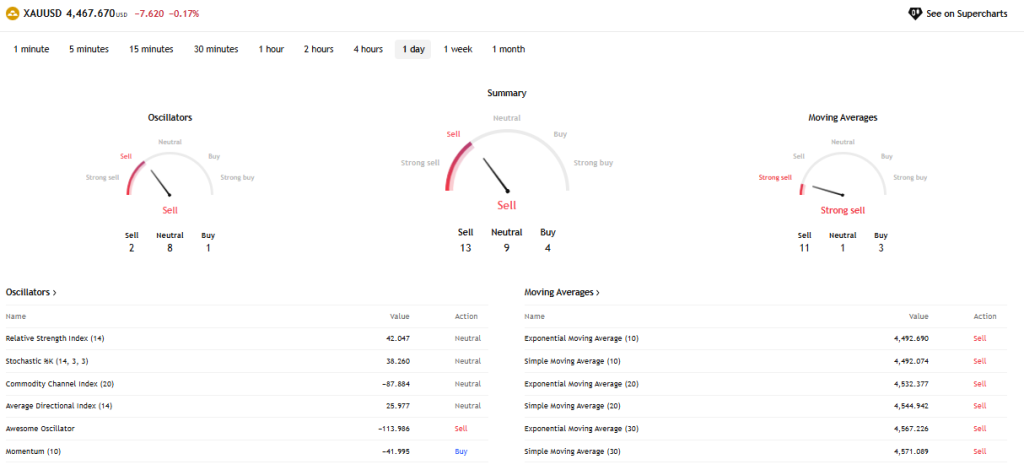
Technical analysts are watching support near the $4,400 level. Resistance remains between $4,500 and $4,550. A breakout above resistance could restart bullish momentum, while weaker economic data may increase volatility across commodity markets.
Final Words
Gold prices are moving toward a weekly decline as investors prepare for the crucial U.S. payrolls report. Rising Treasury yields, stronger dollar movement, and inflation concerns are currently limiting bullish momentum in bullion markets. Still, long-term support remains strong due to geopolitical risks and central bank demand. The next direction for gold prices will likely depend on upcoming labor market data and future Federal Reserve policy signals in the weeks ahead.
Disclaimer:
The content shared by Meyka AI PTY LTD is solely for research and informational purposes. Meyka is not a financial advisory service, and the information provided should not be considered investment or trading advice.
What brings you to Meyka?
Pick what interests you most and we will get you started.
I'm here to read news
Find more articles like this one
I'm here to research stocks
Ask Meyka Analyst about any stock
I'm here to track my Portfolio
Get daily updates and alerts (coming March 2026)