FTSE 100 Falls 0.23% as UK House Prices Slip to £298,806 and Hormuz Risks Pressure Markets

Key Points
FTSE 100 slipped 0.23% as investors turned cautious amid economic and geopolitical concerns.
UK house prices fell to £298,806, marking the third consecutive monthly decline.
Strait of Hormuz tensions pushed oil prices higher and renewed inflation worries.
Investors are closely watching Bank of England policy and upcoming economic data.
The FTSE 100 slipped 0.23% on June 5, 2026, as investors reacted to fresh signs of weakness in the UK housing market and growing tensions in the Middle East. Average UK house prices fell to £298,806, marking another month of decline and raising concerns about consumer confidence.
At the same time, fears over potential disruptions in the Strait of Hormuz pushed oil prices higher. These developments are creating new challenges for markets and could shape investor sentiment in the weeks ahead.
FTSE 100 Slides as Investors Shift to Risk-Off Mode
Index Performance and Key Market Drivers
The FTSE 100 fell 0.23% on June 5, 2026, as investors reacted to weaker UK housing data and growing geopolitical uncertainty. The decline came after Halifax reported that UK house prices fell for a third consecutive month, highlighting softer demand across the property market. At the same time, concerns over Middle East tensions continued to influence global markets.
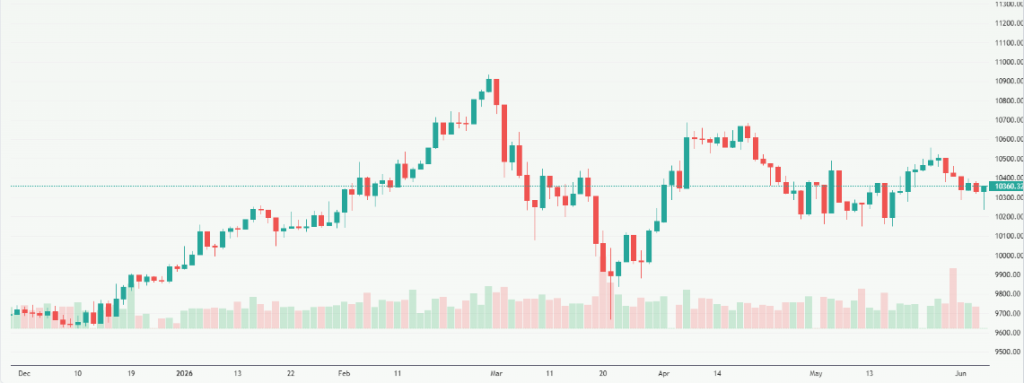
Higher oil prices and inflation worries have made investors more cautious. Financial, retail, and consumer-focused stocks faced pressure as traders reassessed the outlook for economic growth and interest rates.
Why Geopolitics Is Dominating Market Sentiment?
Markets remain focused on the Strait of Hormuz, one of the world’s most important energy shipping routes. Any disruption could affect global oil supplies and push energy costs higher.
For the UK economy, rising oil prices could increase inflation pressures. That creates uncertainty around future Bank of England policy decisions. Investors are now paying close attention to geopolitical developments because they can quickly impact energy markets, borrowing costs, and consumer spending.
UK House Prices Fall to £298,806 for Third Straight Month
What Does the Latest Halifax Housing Data Show?
Fresh Halifax data showed that average UK house prices slipped 0.1% in May to £298,806. This marked the third consecutive monthly decline. Economists had expected a modest increase, making the result a negative surprise for markets.
Annual house price growth slowed to just 0.5%, well below expectations of 1.0%. The figures suggest affordability pressures continue to weigh on buyers despite some easing in mortgage rates.
Regional performance remains mixed. Northern Ireland recorded annual growth of 7.8%, while London and parts of southern England continued to experience price weakness.
Why are Buyers Still Under Pressure?
Mortgage affordability remains a major challenge. Halifax reported that higher inflation expectations have kept borrowing costs elevated despite recent mortgage-rate reductions.
Many first-time buyers are delaying purchases because monthly repayments remain high. Demand has weakened as households face rising living costs and economic uncertainty. Property experts also point to increased housing supply, which has shifted negotiating power toward buyers.
Hormuz Risks and Rising Oil Prices Add Inflation Pressure
Why Does the Strait of Hormuz Matter?
The Strait of Hormuz handles a significant share of global oil exports. Any disruption can quickly raise energy prices worldwide.
Recent tensions in the Middle East have increased fears about supply disruptions. Those concerns have supported higher oil prices and renewed inflation risks across Europe and the UK.
For businesses, higher fuel costs increase operating expenses. For consumers, they can lead to higher transportation, heating, and everyday goods costs.
How Could This Affect UK Markets?
Higher energy costs may slow economic growth and delay potential interest-rate cuts. That creates challenges for sectors dependent on consumer spending.
Investors increasingly use an AI stock analysis tool alongside traditional economic indicators to monitor how energy prices, inflation, and geopolitical events may affect market performance. Current conditions suggest volatility could remain elevated throughout the summer.
FTSE100: What Investors are Watching Next?
Will the Bank of England Change Course?
The Bank of England faces a difficult balancing act. Slower housing activity supports the case for lower rates, but rising energy prices may keep inflation elevated.
Markets currently expect policymakers to remain cautious until inflation trends become clearer. Upcoming inflation reports and labour-market data will play a key role in shaping expectations.
Key Data Points to Monitor
Investors are watching:
- UK inflation releases
- Mortgage approval numbers
- Housing demand indicators
- Oil price movements
- Developments in the Middle East
These factors will likely determine whether the FTSE 100 can recover or face further downside pressure during the coming months.
Final Words
The FTSE 100’s 0.23% decline reflects growing concerns about both domestic and global risks. UK house prices have now fallen for three straight months, while uncertainty surrounding the Strait of Hormuz continues to support higher oil prices.
Together, these factors are weighing on investor confidence. Until inflation eases and geopolitical tensions stabilize, market sentiment is likely to remain cautious, making upcoming economic data especially important for investors.
Disclaimer:
The content shared by Meyka AI PTY LTD is solely for research and informational purposes. Meyka is not a financial advisory service, and the information provided should not be considered investment or trading advice.
What brings you to Meyka?
Pick what interests you most and we will get you started.
I'm here to read news
Find more articles like this one
I'm here to research stocks
Ask Meyka Analyst about any stock
I'm here to track my Portfolio
Get daily updates and alerts (coming March 2026)